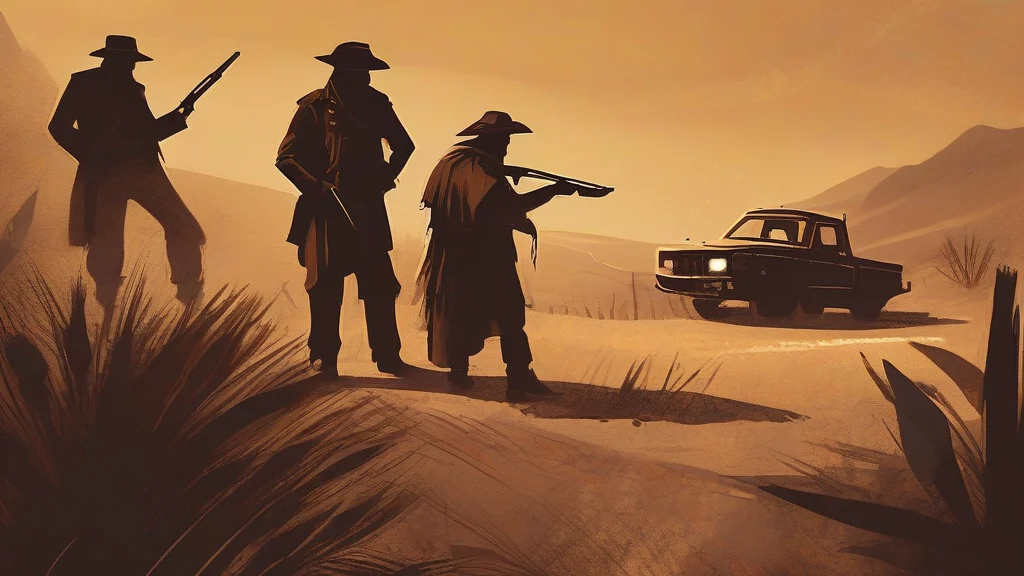
What does banditti mean?
"Banditti" is the traditional, Italian-derived plural of "bandit," referring to armed robbers or outlaws who operate in organized groups, typically in mountainous or remote countryside. The word entered English during the early modern period, when Italy's lawless roads were notorious across Europe, and it carried vivid connotations of danger and adventure for travelers on the Grand Tour. In the eighteenth and nineteenth centuries it was widely used in travel writing, fiction, and painting criticism, often lending outlaws a romantic, picturesque quality rather than a purely criminal one. Over time, the regular English plural "bandits" displaced it, so that today "banditti" appears chiefly in literary, historical, and scholarly contexts. Writers may still choose it deliberately to evoke an older, more atmospheric register — the menace of masked figures ambushing travelers at a mountain pass, or the dramatic canvases of Romantic painters. Understanding "banditti" therefore offers both a precise historical term and a window into how language preserves the flavor of past eras.
nounThe plural of "bandit": robbers or outlaws who operate in armed gangs, especially in remote or rural regions. Also used historically as a collective term for such groups.
- Armed robbers or outlaws operating in groups, considered collectively (plural of bandit)
- A body of such robbers as a distinct gang or troop (archaic/historical usage)
"Travelers in the mountains feared ambush by the banditti who controlled the pass."
"The stagecoach route through the Apennines was long plagued by banditti."
"Painters of the Romantic era delighted in depicting banditti lurking among classical ruins."
"Banditti" is already a plural form, borrowed from Italian. It should not be given another plural ending. In contemporary usage, prefer "bandits" unless deliberately evoking a historical register.
"The innkeeper warned of banditti roaming the coastal road after dark."
English borrowed "banditti" straight from Italian — where "bandito" literally meant a person "proscribed" or "banned" by official decree, making the outlaw's very name a legal label turned romantic legend.
Reviewed by Deb Chak, Editor. AI-assisted content curated by RJS Tech Solutions LLP.
Etymology of banditti
"Banditti" comes from Italian "bandito," meaning one who has been "banded" — proscribed or outlawed by public decree — ultimately derived from the Germanic root behind words like "ban" and "banish." The Italianate plural entered English in the seventeenth century and flourished in eighteenth- and nineteenth-century writing about Italy and its lawless regions. Cognates sharing this lineage include "contraband" (goods against the ban) and "abandon" (to give over under ban). Modern English has largely reverted to the regular plural "bandits."
Related word forms
How banditti is actually used
Register: literary and historical. The Italianate plural was common in 18th–19th century writing but is now archaic in everyday use; modern writers almost always use "bandits." It survives mainly in historical fiction, travel literature, and art criticism describing Romantic-era paintings of outlaws.
Easily confused with banditti
"Banditti" is an older, Italianate spelling of the plural of bandit, now largely replaced by the regular English plural "bandits"; both mean armed robbers.
A bandit is a single robber or outlaw, while banditti refers to a group of them.