
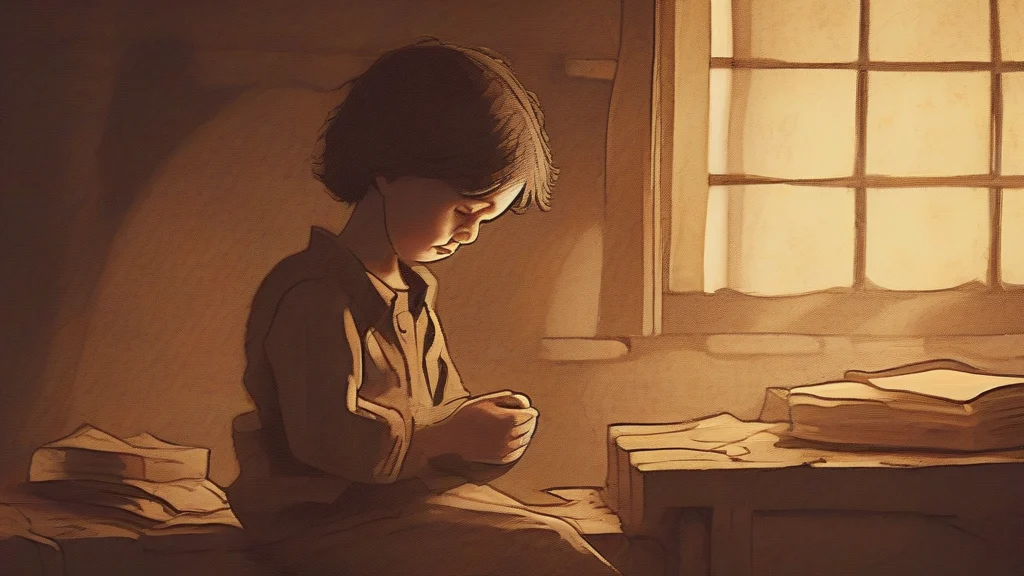
What does bantling mean?
Bantling is an archaic English noun denoting a young child, particularly one who is small, frail, or of humble or uncertain parentage. The word circulated widely from the sixteenth century onward, appearing in the writings of writers such as Ben Jonson and later novelists who used it to evoke poverty, illegitimacy, or pitiable circumstances. Its etymology is debated: some authorities connect it to the German 'Bankert' or 'Bänkling', terms for a child begotten on a bench, implying illegitimacy, while others suggest a link to 'bandlet' or related words. In practice, bantling came to serve as a general — if somewhat derogatory — label for a brat or waif. Today the word is essentially obsolete, surviving in historical fiction, period drama, and scholarly writing about early modern England. It remains useful to readers and writers seeking authentic period vocabulary, and it offers an evocative alternative to modern terms like child or infant when describing the vulnerable youngsters of earlier centuries.
nounA young child, especially one who is small, weakly, or of uncertain or humble parentage. The word is chiefly archaic, surviving mostly in literary and historical contexts.
- A small or young child (archaic).
- A child of humble, obscure, or illegitimate birth; a foundling or waif.
"The old ballad tells how the foundling bantling was left at the abbey door one winter's night."
"She scooped up the shivering bantling and wrapped it in her own cloak."
"The chronicler described the king as having been a sickly bantling at birth, not expected to survive the year."
Standard pluralization; rarely needed given the word's obsolescence.
"The workhouse yard swarmed with ragged bantlings."
This long-forgotten term for a child appears in Shakespeare-era English — and its very name may trace back to German 'Bänkling', meaning a child exposed on a bench.
Reviewed by Deb Chak, Editor. AI-assisted content curated by RJS Tech Solutions LLP.
Where does bantling come from?
Bantling entered English in the sixteenth century, with early appearances in Tudor-era writing. Its origin is disputed: many etymologists hold that it derives from the German 'Bänkling' or 'Bankert' (a child conceived on a bench, hence illegitimate), possibly via Dutch; others argue for a native origin connected to words like 'bandlet'. Whatever its exact source, the word settled into English usage as a term for a young child, especially one of lowly or doubtful birth, before fading from common use by the nineteenth century. It shares its sense of 'child' with northern British terms such as 'bairn', though these are of separate derivation.
How bantling is actually used
Archaic and rare in modern usage; encountered mainly in historical fiction, older literature, and scholarly discussion. Historically it often carried a slightly pejorative or pitying tone when applied to children of uncertain parentage.
Easily confused with bantling
A bastard is an illegitimate child by legal status; a bantling is simply a small or young child, though the term historically carried connotations of lowly or dubious origins.