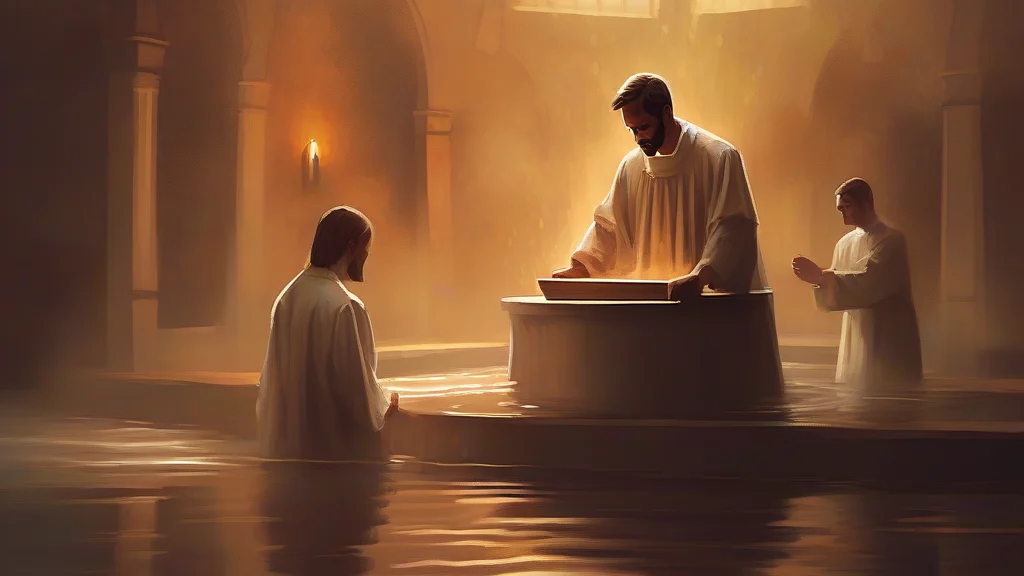
What does baptise mean?
Baptise is a verb meaning to admit a person into the Christian Church through the rite of baptism — traditionally by immersing them in water, or by pouring or sprinkling water over them as a symbol of spiritual cleansing and rebirth. It is also used more loosely to mean giving something or someone a name, or initiating a newcomer into a challenging new experience, as in the familiar idiom 'a baptism of fire'. The spelling 'baptise' is characteristic of British English, while Americans typically write 'baptize'; the two are otherwise identical in meaning and pronunciation. The word carries solemn, ceremonial connotations in its religious use, where it remains one of the central sacraments of Christianity, practised in infancy in many traditions and upon adult profession of faith in others. Its figurative uses extend this sense of ritual initiation into everyday language.
verbTo admit a person into the Christian Church by the sacramental rite of immersion in, or sprinkling with, water. More broadly, to give someone or something a name, or to initiate them into a new activity or experience.
- To administer the Christian rite of baptism, typically by immersion in water or by pouring or sprinkling water over the head, as a sign of admission to the Church.
- Figuratively, to initiate someone into a new experience or field of activity, often their first exposure to it.
- To give a name to something or someone (overlapping with 'christen').
"The priest baptised the infant before a small gathering of family and friends."
"After weeks of instruction, the adult converts were baptised in the river on Easter morning."
"His first day on the trading floor was a real baptism of fire."
The word 'baptise' comes from an ancient Greek term for dipping — which is why some churches still plunge believers fully underwater rather than sprinkling them.
Reviewed by Deb Chak, Editor. AI-assisted content curated by RJS Tech Solutions LLP.
Etymology of baptise
Baptise derives from the Ancient Greek 'baptizein', meaning 'to dip or immerse', itself related to the Greek 'baptos' ('dyed, dipped'). The term entered Latin as 'baptizare' and reached English through Old French in the medieval period, long tied to the Christian sacrament. Cognates include 'baptism', 'Baptist', and 'baptistry', all sharing the same Greek root. In modern usage, British English retains the '-ise' ending while American English prefers '-ize'.
Related word forms
How baptise is actually used
Baptise is chiefly used in formal and religious contexts. The spelling 'baptise' is standard in British English, while 'baptize' is preferred in American English; both are acceptable in most international contexts. The figurative phrase 'baptism of fire' describes a harsh initiation into a difficult situation and is well established in idiomatic usage.
Easily confused with baptise
Baptise is simply the British spelling of the same verb; baptize is the American spelling — the meaning is identical.