What does barcarole mean?
A barcarole is a song traditionally sung by Venetian gondoliers, marked by a lilting, rocking rhythm that mirrors the steady motion of rowing a boat across calm water. The word also denotes art-music compositions modeled on these songs, typically set in a flowing compound meter such as six-eight time. Composers have long been drawn to the form: Chopin's Barcarolle for solo piano is considered one of his supreme achievements, and the celebrated duet in Act II of Offenbach's opera The Tales of Hoffmann — known simply as the Barcarolle — has become one of the most recognizable melodies in Western music. In English usage the word appears both in its anglicized spelling, barcarole, and in the French-derived form barcarolle, which is common in musical titles. Evocative of moonlit canals and Venetian romance, the word belongs chiefly to the vocabulary of music criticism, program notes, and literary description rather than daily conversation.
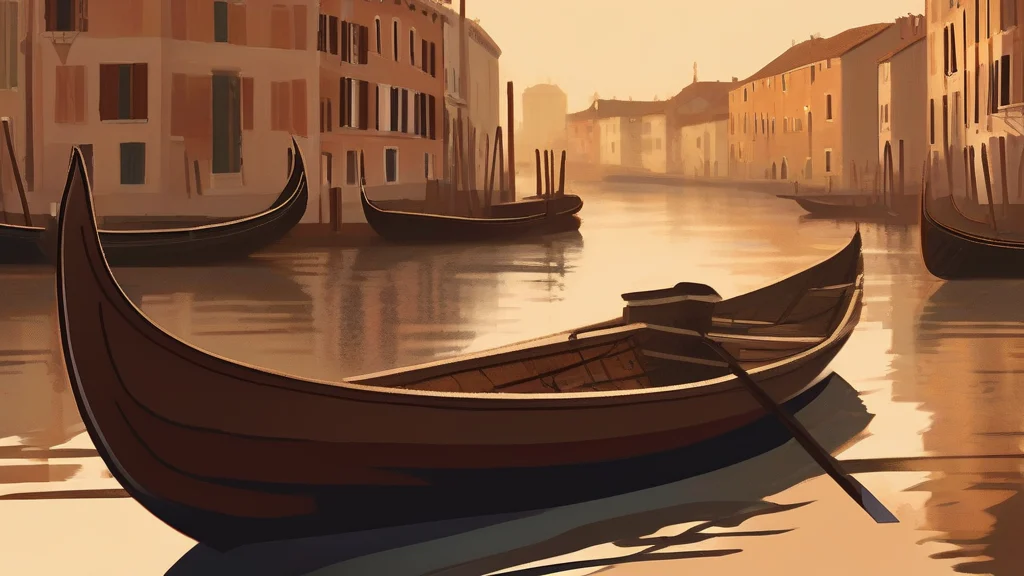
nounA barcarole is a traditional song sung by Venetian gondoliers, characterized by a gently rocking rhythm evoking the motion of rowing a boat. The term also refers to instrumental or vocal compositions written in imitation of this style.
- A traditional Venetian gondolier's boat song, typically in a moderate six-eight or other compound meter suggesting the motion of rowing.
- An instrumental or vocal composition, usually for piano or opera, composed in the style of such a boat song.
"The pianist closed her recital with Offenbach's famous barcarole, its lilting rhythm conjuring moonlit canals in Venice."
"Chopin's Barcarolle in F-sharp major is widely regarded as one of the greatest works ever written for solo piano."
"As dusk fell over the lagoon, a lone barcarole drifted across the water from a passing gondola."
The standard English plural is 'barcaroles'; the French-influenced plural 'barcarolles' also appears, particularly in musical writing.
"The recital featured three barcaroles, each evoking a different hour on the Venetian lagoon."
The gentle rocking rhythm of every barcarole is no accident — it mimics the stroke of a gondolier's oar gliding through the canals of Venice.
Reviewed by Deb Chak, Editor. AI-assisted content curated by RJS Tech Solutions LLP.
Etymology of barcarole
The word derives from Italian 'barcarola', itself formed from 'barca', meaning boat, which traces back through Late Latin 'barca' — the same root that gives us 'barge' and the nautical sense of 'bark'. It entered English in the early eighteenth century, initially referring to the actual songs of Venetian boatmen before expanding to cover imitative compositions. The French form 'barcarolle' became especially widespread in the nineteenth century as composers adopted the genre, and it remains the preferred spelling in many musical contexts today.
How barcarole is actually used
In classical music contexts, the word often appears as the French spelling 'barcarolle', especially in titles by composers such as Offenbach and Chopin. The term carries romantic, picturesque connotations associated with Venice and is used almost exclusively in musical and literary discussion rather than everyday speech.
Easily confused with barcarole
Barcarolle is simply the French-derived spelling of the same word and means exactly the same thing; 'barcarole' is the anglicized form.