
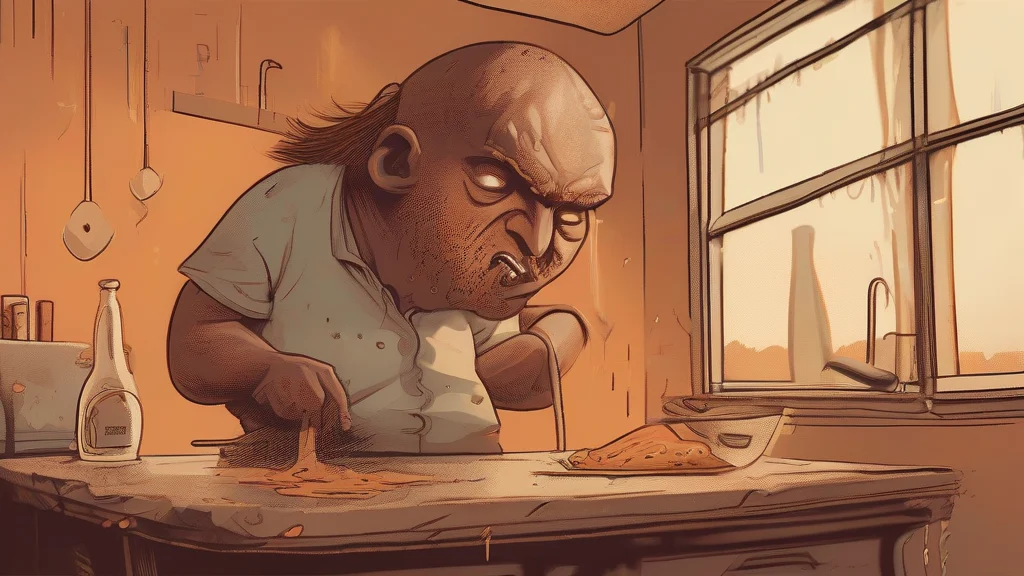
What does barfed mean?
Barfed is the past tense and past participle of barf, an informal English verb meaning “vomited.” It can function transitively, as in “he barfed his dinner,” or intransitively, as in “she barfed after the ride.” In predicative constructions, barfed can describe the result of an episode: “The dog was found barfed behind the shed.” The word is especially associated with everyday speech, but it is also used in medical, veterinary, and journalistic descriptions when a plain term is preferred to more formal language. Its tone varies with context: it may sound matter-of-fact, humorous, childish, or deliberately vulgar. Barfed has both British and American usage and is not restricted to a particular region. Compared with the more formal “vomited,” it often has a blunt, immediate, and occasionally comic quality. The form is useful because it concisely reports both the completed action and, predicatively, the condition of the person or animal involved.
verb (past tense and past participle)Barfed is the past tense and past participle of barf, an informal verb meaning to vomit. It can also be used predicatively to describe someone or something that has vomited.
- Vomited; expelled the contents of the stomach.
- Having vomited, especially when used predicatively.
"The dog barfed all over the carpet after eating too quickly."
"After the long flight, she barfed into the wastepaper basket."
"The cat was found barfed and dehydrated in the garden."
“Barfed” is the blunt, unsentimental way to report that lunch did not stay put.
Reviewed by Deb Chak, Editor. AI-assisted content curated by RJS Tech Solutions LLP.
Where does barfed come from?
Barfed is the past tense and past participle of barf, whose precise origin is uncertain. The verb became established in modern informal English and is now used in both British and American speech. Because its early derivation is not securely documented, no close cognates can be identified with confidence.
Related word forms
How barfed is actually used
This is informal and often sounds childish, comic, or blunt rather than literary. It can describe involuntary illness, animal behavior, and intoxicated or seasick people, and using it about a person may be insensitive or insulting.