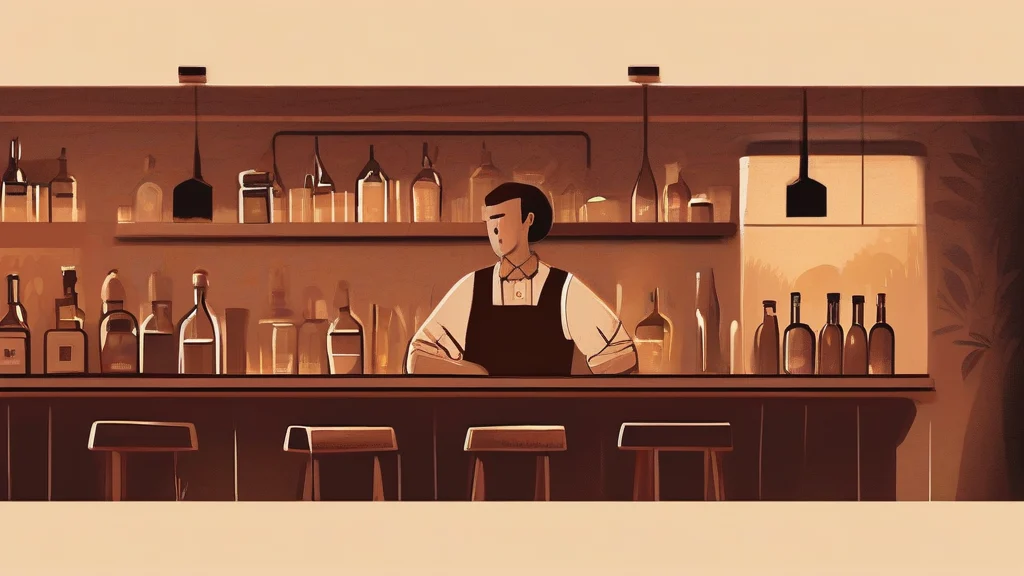
What does barperson mean?
A barperson is a person who serves drinks — typically beer, wine, and spirits — to customers from behind the counter of a pub, bar, or other licensed premises. The word arose as a gender-neutral alternative to the older, sex-specific terms 'barman' and 'barmaid', and it appears most often in Britain, particularly in formal contexts such as job advertisements, contracts, and official notices where an inclusive occupational title is required. In casual conversation it is less common than its alternatives: many speakers still say 'barman' or 'barmaid', while 'bartender', originally American but now widely understood, has become a popular neutral option on both sides of the Atlantic. A barperson's work involves taking orders, pouring and mixing drinks, handling payments, keeping the bar stocked and clean, and often chatting with customers — a role central to the social life of pubs. Though modest in register, the word captures a real shift in how English names occupations, trading gendered labels for terms that describe the job rather than the worker.
nounA person who serves drinks behind the bar of a pub or similar establishment; a gender-neutral alternative to 'barman' or 'barmaid'.
- A person who serves drinks behind the counter of a pub, bar, or similar licensed establishment.
"The barperson recommended a local ale that wasn't on the menu."
"The new barperson at the Crown remembered every regular's usual order."
"She worked as a barperson through university to help pay her rent."
The plural follows standard English formation; some writers prefer 'bar staff' when referring to the group collectively.
"The pub hired two extra barpersons for the festive season."
'Barperson' is one of the rare words invented purely to fix a grammar problem — replacing 'barman' and 'barmaid' with a single term that works for everyone.
Reviewed by Deb Chak, Editor. AI-assisted content curated by RJS Tech Solutions LLP.
Etymology of barperson
The word is a straightforward compound of 'bar', the counter from which drinks are served (a usage dating back to the early 17th century), and 'person', which comes from Latin 'persona', originally meaning a mask worn by actors. It emerged in late 20th-century Britain alongside other '-person' coinages such as 'chairperson' and 'spokesperson', created to replace gendered job titles. Its relatives through the Latin root include 'personal', 'personnel', and 'impersonate'.
How barperson is actually used
The word is chiefly British and is used mainly in formal, legal, or job-advertising contexts where a gender-neutral occupational title is preferred. In everyday speech, most Britons simply say 'barman', 'barmaid', or borrow the Americanism 'bartender'; 'barperson' can sound slightly bureaucratic or deliberately inclusive.
Easily confused with barperson
A barista prepares and serves coffee in a café, whereas a barperson serves alcoholic drinks behind a pub or bar.