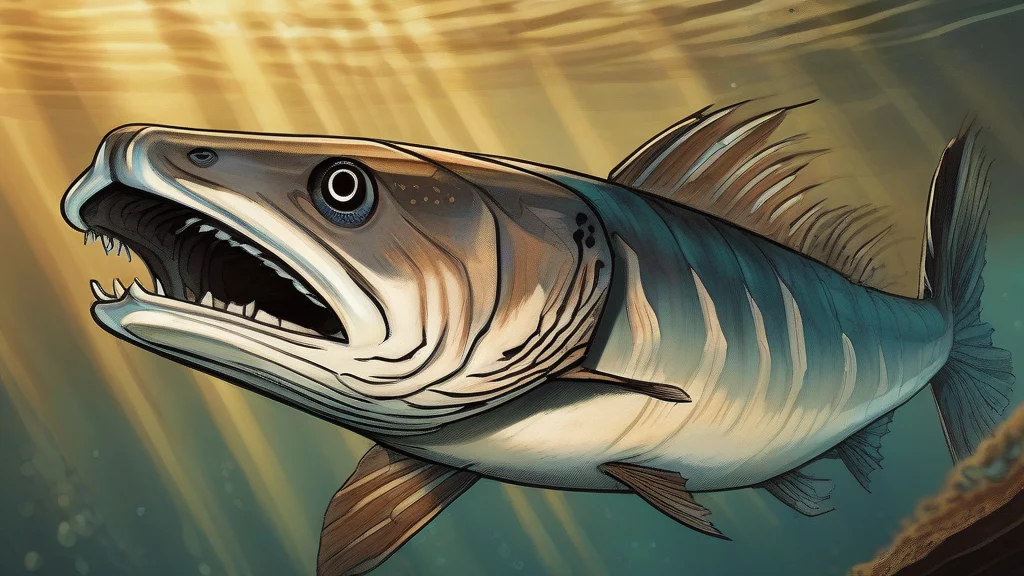
What does barracuda mean?
A barracuda is a long, sleek predatory fish belonging to the genus Sphyraena, found in tropical and subtropical waters worldwide. Instantly recognizable by its elongated silver body, protruding lower jaw, and rows of razor-sharp teeth, the great barracuda can grow to around six feet in length and is a formidable hunter of smaller fish. Because of its menacing reputation, the word has taken on a vivid figurative life in English: calling someone a barracuda suggests they are aggressive, cutthroat, or relentlessly competitive, a label often applied to lawyers, executives, or athletes. The term entered English from Spanish in the seventeenth century via Caribbean contact, and it remains a staple of both marine biology writing and popular culture. Whether describing a real reef predator or a ruthless negotiator, barracuda reliably evokes speed, danger, and predatory instinct.
nounA large, predatory marine fish of the genus Sphyraena, found in tropical and subtropical oceans, known for its elongated body, protruding lower jaw with sharp teeth, and fearsome appearance. The word is also used figuratively for a fiercely aggressive or predatory person.
- The fish: any of various long, slender, predatory marine fishes of the genus Sphyraena, with sharp teeth and a protruding lower jaw, found in warm seas.
- Figurative use: a person regarded as aggressive, ruthless, or predatory.
"A barracuda hovered motionless in the blue, its silver flank flashing as it turned."
"Divers watched a great barracuda patrol the reef's edge, utterly still except for the slow beat of its tail."
"In the boardroom she was known as a barracuda — no deal escaped her unscathed."
The standard plural is 'barracudas'. In American English, 'barracuda' is sometimes left unchanged when referring to multiple fish collectively, but 'barracudas' is always acceptable.
"A school of barracudas circled slowly beneath the boat."
The great barracuda can reach six feet long, and its teeth are so sharp that swimmers are warned against wearing shiny jewelry in its waters — it mistakes glints for prey.
Reviewed by Deb Chak, Editor. AI-assisted content curated by RJS Tech Solutions LLP.
Etymology of barracuda
Barracuda entered English in the early seventeenth century, borrowed from Spanish, which had adopted the word from indigenous Caribbean languages during European colonization of the Americas. Its ultimate origin is generally traced to a native Caribbean source, though the precise language of first attestation remains uncertain. Related forms appear across Romance languages, including Spanish 'barracuda' and Portuguese 'barracuda', reflecting the shared colonial-era borrowing rather than descent from Latin or Greek roots.
How barracuda is actually used
The figurative sense carries strongly negative connotations of ruthlessness and aggression, often applied to businesspeople, lawyers, or competitors. In British English the plural is typically 'barracudas'; American usage also accepts 'barracuda' unchanged as a collective plural. The word is common in both everyday speech and nature writing.
Easily confused with barracuda
Barramundi is an edible Australian sport fish (Asian sea bass), while the barracuda is a toothy ocean predator; the names sound similar but refer to unrelated fish.
Picuda is a Spanish name for certain barracuda species, not a separate English word for a different animal.