What does ba mean?
The word "ba" occupies two very different niches in English. In everyday, informal usage it stands for the bleating cry of a sheep or goat, appearing mainly in children's books, songs, and casual speech where writers want the animal's voice rather than the formal term "bleat." Far older is its second life: in ancient Egyptian religion, the ba was one of the distinct elements making up a person, roughly the aspect of personality and vitality shown in art as a human-headed bird. Egyptians believed the ba left the burial chamber at night to roam and returned each dawn to reunite with the body, which is why preserving the corpse through mummification mattered so much. Though modest on its own, "ba" thus links a barnyard sound to one of history's most elaborate visions of the afterlife.
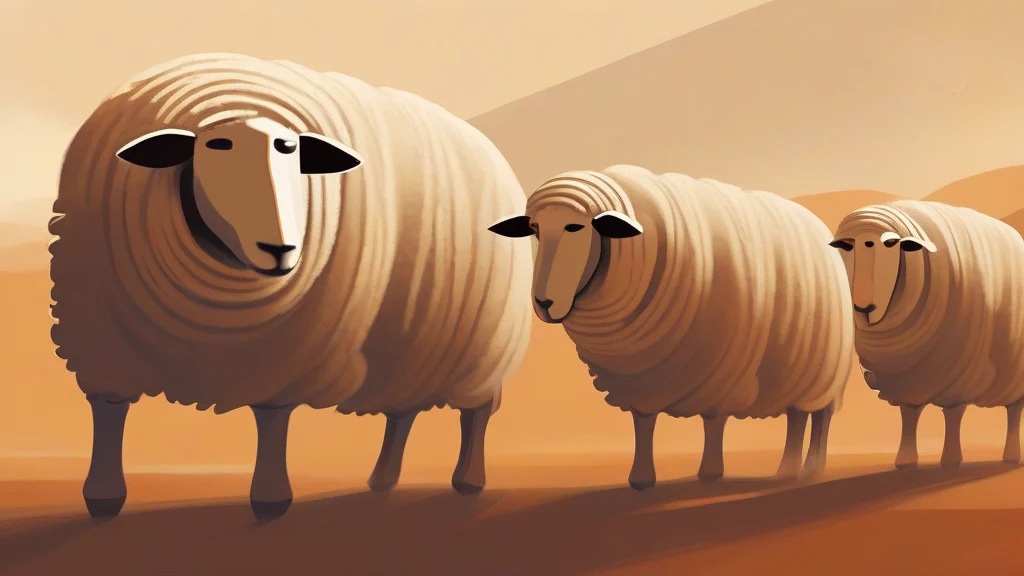
An informal representation of the bleating sound made by a sheep or lamb.
"The toy sheep went "ba, ba" whenever you squeezed it."
Informal register only; use "bleat" in formal writing.
In ancient Egyptian religion, one of the constituents of a person, conceived as the personality or vital force, typically depicted as a human-headed bird.
"Egyptians hoped their ba would fly freely between the tomb and the living world."
Rarely pluralized; when referring to multiple Egyptian soul-aspects, scholars write "bas."
"Tomb paintings often show the deceased's bas perched beside the sarcophagus."
The Egyptians split the soul into parts — and the "ba," the part that could leave the tomb each night, was pictured as a human-headed bird.
Reviewed by Deb Chak, Editor. AI-assisted content curated by RJS Tech Solutions LLP.
Etymology of ba
The animal-noise sense of "ba" is an imitative word, echoing the bleat of sheep much like "miaow" echoes a cat, and has no deeper etymology beyond onomatopoeia. The Egyptian sense comes directly from the ancient Egyptian language, in which "ba" denoted the mobile, vital component of a person; scholars transliterate it from hieroglyphs, and it entered English through translations of Egyptian texts during the modern study of Egyptology. Its cultural cousins include other Egyptian soul-concepts such as the ka and akh, which appear alongside it in religious writings.
How ba is actually used
As an animal-sound word, "ba" is highly informal and appears mostly in children's writing and casual speech; formal descriptions use "bleat." The mythological sense belongs entirely to discussions of ancient Egypt.
Easily confused with ba
"Bah" is an interjection expressing contempt or disgust, while "ba" is either a sheep's bleat or the Egyptian term for one element of the soul.