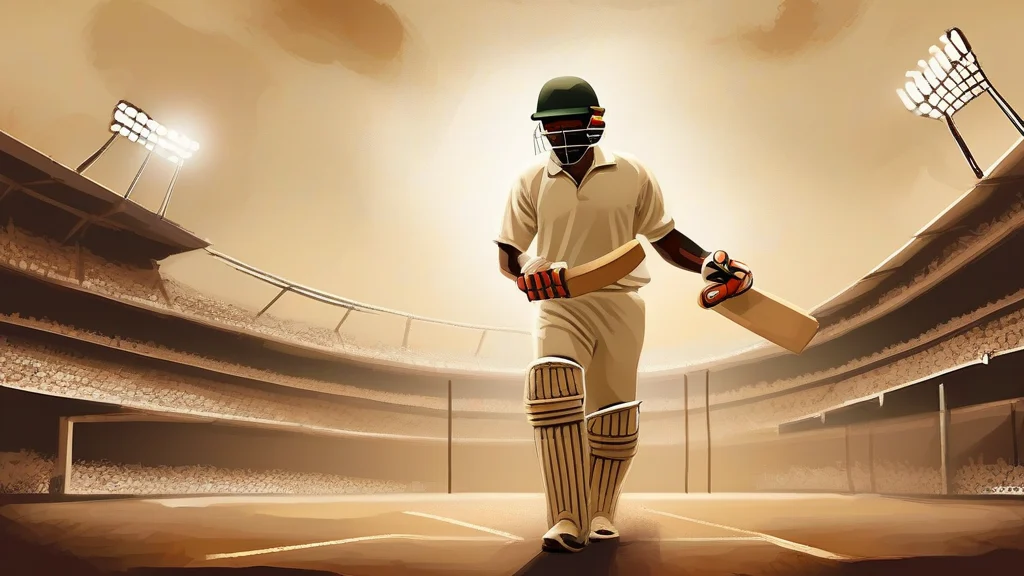
What does batsman mean?
A batsman is, above all, a cricketer whose job is to bat: to stand at the crease, defend the wicket against the bowlers, and score runs for the team. The word has been central to cricket's vocabulary since the eighteenth century, and phrases such as 'opening batsman', 'top-order batsman', and 'left-handed batsman' are fixtures of the game's commentary and journalism. By extension, the term can describe the striker in any bat-and-ball sport, though this broader use is now rare. Traditionally masculine in form, it was joined by 'batswoman' for female players, and in 2021 the sport's lawmakers formally adopted the gender-neutral 'batter' in its place — though 'batsman' remains deeply embedded in British and Commonwealth usage and in the historical record of the game. For anyone reading older match reports or classic cricket writing, the word is indispensable.
nounA player in cricket whose role is to bat, defending the wicket and scoring runs; the term is also used more broadly for a batter in other bat-and-ball sports.
- A cricketer whose primary role is batting — facing the bowling to defend the wicket and score runs.
- More generally, the player who strikes the ball with a bat in any bat-and-ball game.
"The young batsman compiled a patient century on the opening day of the Test."
"Australia's middle-order batsman steadied the innings with an unbeaten 85."
"Critics argued that calling every player a 'batsman' overlooked the women's game."
The plural follows the irregular man→men pattern. In official cricket terminology since 2021, 'batters' is preferred.
"Both openers fell cheaply, exposing the middle order's batsmen to the new ball."
For over two centuries cricket called its run-scorers 'batsmen' — until 2021, when the laws of the game were rewritten to make 'batter' the official term.
Reviewed by Deb Chak, Editor. AI-assisted content curated by RJS Tech Solutions LLP.
Etymology of batsman
The word derives from 'bat', the implement used to strike the ball, combined with the agent suffix '-man'; it emerged in English in the early days of organised cricket, by the eighteenth century. It belongs to the same Germanic root family as 'batter' and related strike-words. Its modern history is notable for a formal change: in September 2021 the Marylebone Cricket Club amended the Laws of Cricket to replace 'batsman' and 'batsmen' with the neutral terms 'batter' and 'batters'.
How batsman is actually used
The term is traditional and still widespread in British and Commonwealth cricket commentary, but the Marylebone Cricket Club officially replaced it with 'batter' in 2021 as a gender-neutral term; 'batswoman' was sometimes used before that change.
Easily confused with batsman
In cricket, 'batter' is the modern gender-neutral and officially preferred term for the same role, while 'batsman' is the traditional term still common in older commentary and British usage.
'Batsman' refers to cricket (or occasionally rounders), whereas baseball uses 'batter', and confusing the two games' terminology is a common error.