
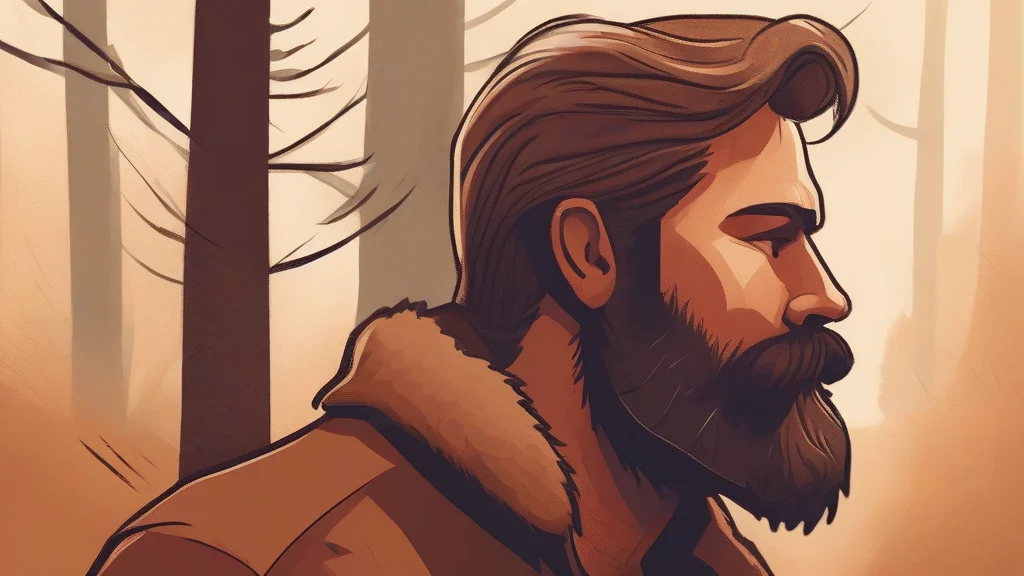
What does beardier mean?
Beardier is the comparative form of the adjective bearded, meaning that someone or something has more facial hair than another person or thing. Its most natural use is for a person whose beard has grown fuller, though it can also describe an animal or an object covered with hair. The word can function as a light-hearted label in descriptions of changing appearance: a person may look beardier after a holiday, with time, or because of a deliberate change in grooming. In figurative descriptions, beardier may suggest anything especially hairy, shaggy, or beard-like. Although the phrase more bearded is perfectly clear, beardier is more compact and gives a comparison a vivid, slightly humorous edge. It is standard in British and American English and is neither formal nor especially informal, though its sound makes it especially suited to descriptive or conversational writing. The term belongs to a wider English family based on beard, from Old French barbe and Latin barba, with barber among the best-known related words.
adjectiveHaving more facial hair, especially a beard, than someone or something else. It can also mean more hairy or beard-like in appearance.
- Having more facial hair, especially a beard, than someone or something else.
- More hairy, shaggy, or beard-like in appearance.
"By winter, he looked beardier than ever."
"The longer he went without shaving, the beardier he became."
"Winters in the mountains can make the forests look remarkably beardier."
Beardier captures that moment when a short stubble becomes a proper beard — with a touch of comparative drama.
Reviewed by Deb Chak, Editor. AI-assisted content curated by RJS Tech Solutions LLP.
Where does beardier come from?
The base noun beard entered English from Old French barbe, which derives from Latin barba. The adjective bearded was formed on this noun, and the English comparative suffix -ier produced beardier. Barber, barbette, and other related words belong to a wider family ultimately rooted in the same Latin word for beard.
Related word forms
How beardier is actually used
This is the comparative form of bearded, and it is standard in both British and American English. It is more compact and occasionally more humorous than the phrase more bearded, but it is suitable for neutral as well as informal descriptive writing.
Easily confused with beardier
Beardy means bearded or having a beard, while beardier is the comparative form and therefore means having more beard or facial hair.