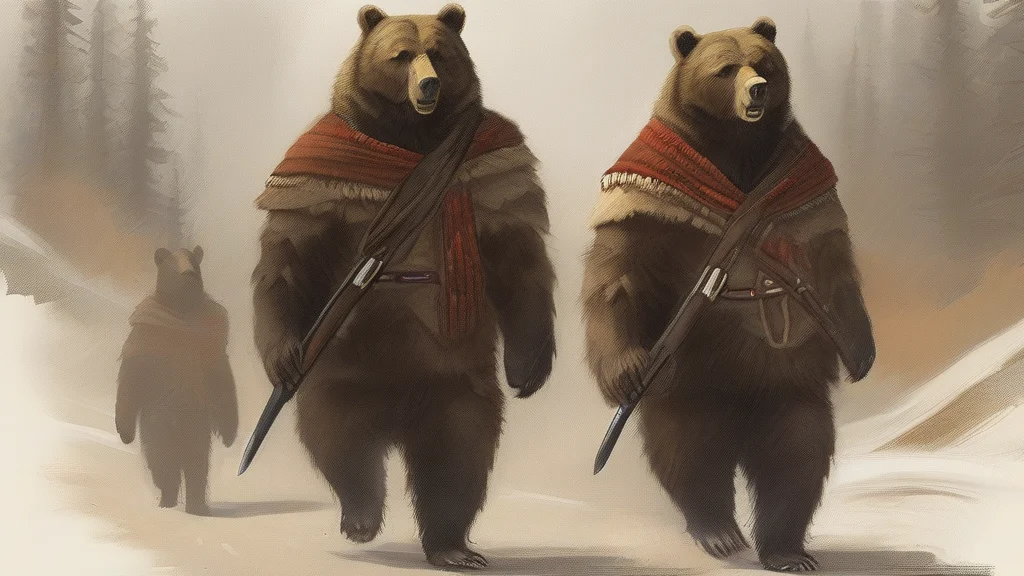
What does bearskin mean?
A bearskin is, in its most literal sense, the skin or pelt of a bear, typically preserved as a rug, garment, or hunting trophy. The word also names one of the most recognizable items of military dress in the world: the tall, cylindrical cap of black bearskin worn by grenadier and guard regiments, most famously the Foot Guards who stand sentry at royal palaces in London. In this ceremonial sense, the word connotes tradition, pageantry, and imperial history — the caps have been a feature of British military uniform since the late eighteenth century, inspired by Napoleonic-era European grenadiers. Beyond these two senses, bearskin appears in historical and literary contexts describing frontier clothing or rugged garments made from bear hide. Because of its association with real animal pelts, the military use of bearskins has attracted ongoing ethical debate, making the word a small but persistent flashpoint between tradition and animal welfare. Whether describing a fireside rug or a palace sentry's headdress, bearskin reliably evokes something imposing, traditional, and unmistakably ursine.
The skin or pelt of a bear, especially when used as a rug, garment, or covering.
"He draped the old bearskin over the cabin's wooden bench."
This literal sense is now somewhat dated, associated chiefly with historical or rural contexts.
A tall military cap made of black bearskin fur, worn especially by British Foot Guards and other grenadier regiments.
"The Queen's Guard stood rigid beneath his towering bearskin."
The plural follows standard English formation. It is most commonly encountered in reference to multiple military caps.
"Row upon row of bearskins bobbed above the parade ground."
The iconic British Guards' 'bearskin' isn't just fur for show — each cap can require an entire bear pelt, a fact that has fuelled protests by animal-rights campaigners for decades.
Reviewed by Deb Chak, Editor. AI-assisted content curated by RJS Tech Solutions LLP.
Etymology of bearskin
The word bearskin is a straightforward English compound of "bear" and "skin," formed transparently within English; "bear" itself derives from Old English "bera," of Germanic origin. The compound has been attested since at least the early modern period, originally denoting the animal's pelt. Its application to military headgear arose in the eighteenth century, when European grenadier regiments adopted tall caps of bear fur, a practice Britain later formalized into the famous Guards' caps known worldwide today.
How bearskin is actually used
In everyday modern usage, "bearskin" most often refers to the military headdress rather than to actual bear pelts. When referring to real pelts, the word carries a slightly old-fashioned or rustic register, evoking hunting lodges and frontier life.
Easily confused with bearskin
"Bearskin" is the pelt of a bear or a fur military cap, while "bare skin" means exposed human skin with nothing covering it — they sound identical but mean entirely different things.