What does beechmast mean?
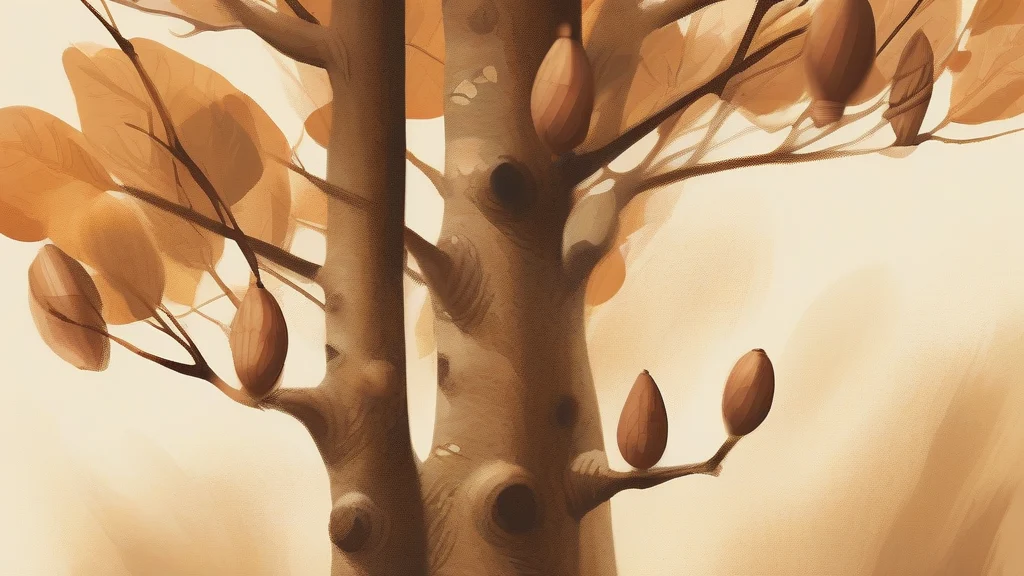
Beechmast is the collective term for the small, three-sided nuts produced by the European and American beech trees. Ripening in autumn inside prickly husks that split open on the ground, these shiny brown seeds are rich in oil and are a vital autumn food source for woodland creatures such as squirrels, jays, pigeons, deer, and wild boar. The word carries strong rural and traditional connotations, appearing most often in natural history writing, forestry reports, and accounts of country life. Historically, beechmast had real economic weight: farmers exercised ancient rights called pannage to turn pigs loose in beech woods so the animals could fatten on the fallen nuts. A good beechmast year — what foresters call a mast year — sees the trees produce an unusually heavy crop, a boom-and-bust cycle that shapes the populations of the animals depending on it.
nounThe small, three-sided, edible nuts of the beech tree, especially when considered collectively as food for wildlife or livestock.
- The edible three-sided nuts of the beech tree, especially as a collective crop on the forest floor.
"Squirrels and jays forage eagerly among the fallen leaves for beechmast in late autumn."
"Pigeons descended on the woodland floor to feed on the year's abundant beechmast."
"A heavy fall of beechmast meant the pigs would go into winter well fattened."
Rarely pluralised; the word normally functions as an uncountable mass noun referring to the nuts collectively.
"Different stands of beech yielded their beechmasts in alternating bumper years."
In centuries past, farmers drove pigs into beech woods each autumn to fatten them on beechmast — a practice so valuable that common rights to 'pannage' were written into medieval law.
Reviewed by Deb Chak, Editor. AI-assisted content curated by RJS Tech Solutions LLP.
Etymology of beechmast
Beechmast combines 'beech' with 'mast', an Old English word (mæst) meaning the nuts and fruit of forest trees gathered as food for animals, which descends from Proto-Germanic roots shared with German Mast ('fattening'). The element 'beech' likewise goes back to Old English bēce, from the same Proto-Germanic source that gives German Buche. The word has been used since at least early modern times in British agricultural and woodland contexts.
How beechmast is actually used
Chiefly a British term with a rural, traditional register; it appears mostly in writing about woodland ecology, natural history, and country life rather than everyday speech.
Easily confused with beechmast
Mast is the broader term for all forest-tree nuts and fruit gathered as animal fodder, of which beechmast — specifically the beech's nuts — is one kind.