What does beefing mean?
'Beefing' functions in two distinct ways. Most commonly today, it is the present participle of the informal verb 'to beef', meaning to complain, grumble, or voice dissatisfaction — often repeatedly and over relatively minor matters. Saying that someone 'is beefing about the weather' paints them as a habitual complainer, giving the word a mildly mocking tone. Separately, in agriculture, 'beefing' describes the process of rearing or fattening cattle specifically for beef production, as in 'beefing cattle'; this use is technical and largely restricted to farming circles. In modern slang, particularly in music and internet culture, 'beefing' has broadened further to describe an ongoing feud or personal conflict. The word derives from 'beef', which entered English from Old French 'buef', itself from Latin 'bos'. Its everyday usefulness lies in expressing complaint with vivid, colloquial economy.
Complaining or grumbling persistently about something.
"She's always beefing about how slow the trains are."
Informal register; implies somewhat petty or persistent complaint.
Engaged in a feud or ongoing conflict with someone (slang).
"The two rappers have been beefing for years."
Common in hip-hop culture and informal speech.
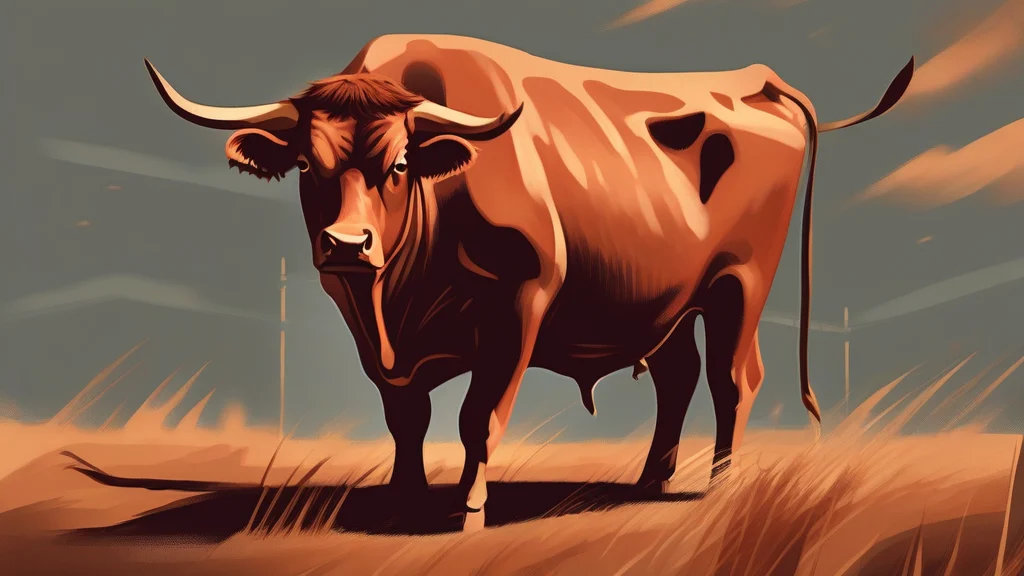
Rearing or fattening cattle for beef production.
"They switched from dairying to beefing their stock."
Technical, used mainly in agriculture.
Before 'beefing' meant complaining, it literally meant fattening cattle — and the slang leap from a slab of meat to a gripe is one of English's tastier etymological puzzles.
Reviewed by Deb Chak, Editor. AI-assisted content curated by RJS Tech Solutions LLP.
Etymology of beefing
'Beefing' derives from the verb 'to beef', built on the noun 'beef', which came into Middle English from Old French 'buef' (modern 'boeuf'), ultimately from Latin 'bos', meaning ox or cow. The agricultural sense of 'beefing' — fattening cattle for slaughter — reflects the noun's original reference to the animal as meat. The slang verb 'to beef', meaning to complain, emerged in American English in the late nineteenth century; its exact origin is debated, though it may relate to earlier expressions connecting complaints with soldiers' rations. Related forms include 'beefy' and the phrase 'beef up'.
Related word forms
How beefing is actually used
In its verbal sense, 'beefing' is informal and slightly negative in connotation, implying petty or persistent complaint rather than justified grievance. The agricultural sense ('beefing cattle') is technical and confined to farming contexts. In contemporary slang, especially in hip-hop and online usage, 'beef' and 'beefing' can also denote an ongoing feud or conflict between people.
Easily confused with beefing
'Briefing' is a session of detailed instruction or information-giving, while 'beefing' is either raising cattle for meat or complaining.