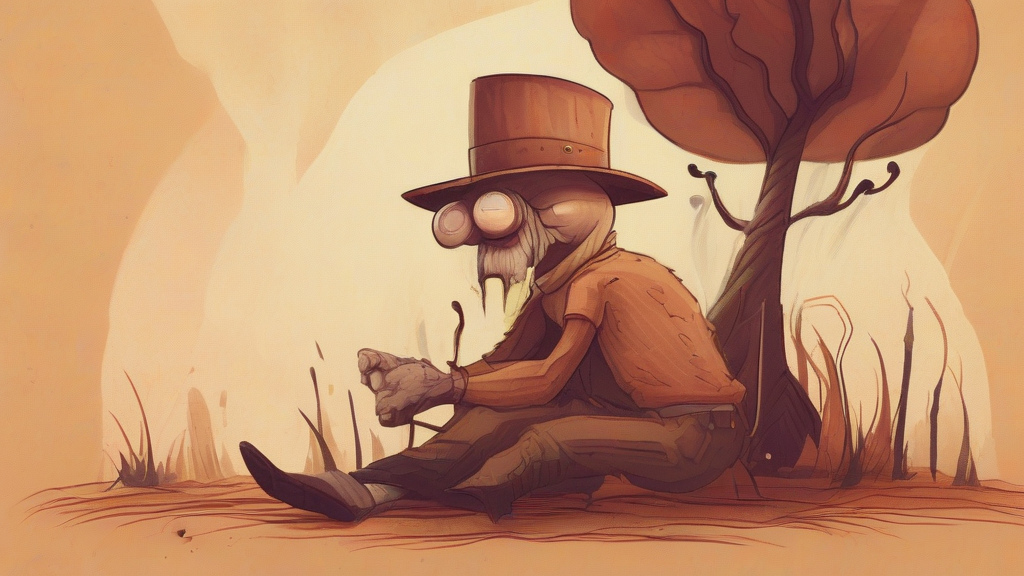
What does beetlehead mean?
Beetlehead is an old-fashioned English insult meaning a stupid or foolish person, equivalent to blockhead or dunce. It combines "beetle," which historically referred not only to the insect but also to a heavy wooden mallet used for driving wedges or compacting ground, with "head," suggesting a skull as dense and unyielding as wood. The word belongs chiefly to British vernacular speech of earlier centuries and survives today mainly in historical novels, dialect literature, or humorous attempts at archaic flavor. Like similar compound insults of its era — numbskull, dunderhead, blockhead — it expresses exasperated contempt for someone's slowness or folly. Because it is no longer current, modern readers are most likely to meet it in period writing, where its blunt force still comes through clearly.
nounA stupid or foolish person; a blockhead. The word is now chiefly archaic or dialectal, surviving mainly in older literature.
- A stupid or foolish person; a blockhead (archaic or dialectal insult).
""You beetlehead!" he cried, furious that the message had been delivered to the wrong house."
"The old schoolmaster would bellow "beetlehead!" at any boy who fumbled his Latin declensions."
"Only a beetlehead would leave the gate open with cattle loose in the lane."
Regular plural; rare outside historical or dialectal writing.
"The two beetleheads had propped the ladder against the wrong wall."
"Beetle" once meant a heavy wooden mallet — so calling someone a beetlehead was literally comparing their skull to a block to be hammered.
Reviewed by Deb Chak, Editor. AI-assisted content curated by RJS Tech Solutions LLP.
Etymology of beetlehead
Beetlehead was formed in English from "beetle," a word that in Middle English denoted both the insect and a heavy wooden mallet (from Old English "betel" or related forms), combined with "head." It follows the pattern of other compound insults built on "-head" such as blockhead and noddle-head. The word is attested by roughly the early modern period and remained in colloquial use into the nineteenth century before fading into dialectal and literary use.
How beetlehead is actually used
The word carries a strongly contemptuous, insulting tone and sounds old-fashioned today; it appears mostly in historical fiction, dialect writing, or deliberately archaic speech rather than everyday conversation.
Easily confused with beetlehead
A beetle is an insect (or a heavy mallet in older usage), whereas beetlehead is an insulting term for a foolish person.