What does bellwether mean?
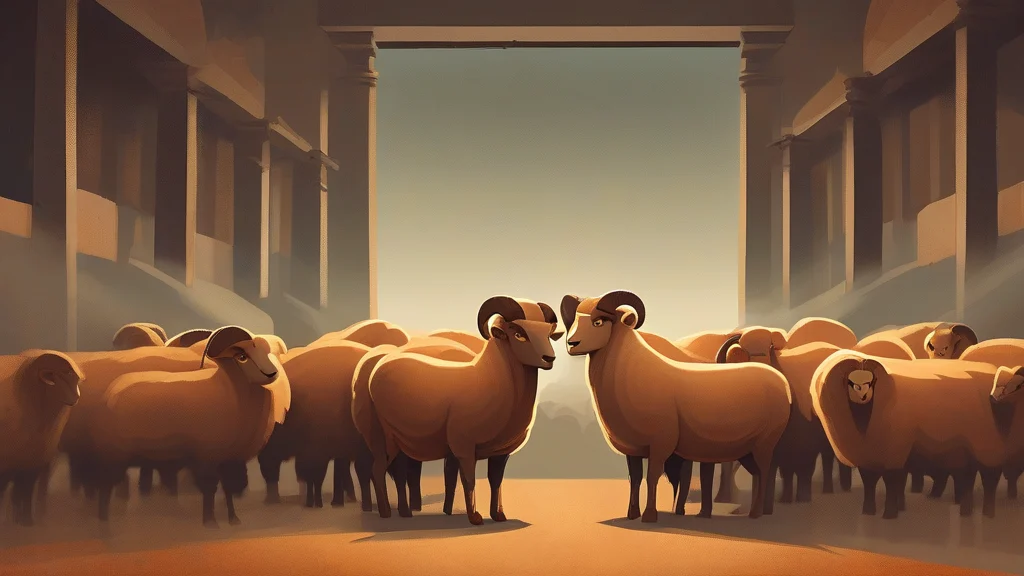
Bellwether refers to a person, place, or thing that serves as an indicator of a wider trend — most commonly used in politics and economics. A bellwether state, for example, is one whose election results reliably predict national outcomes; a bellwether stock signals the direction of its industry. The word has a strikingly pastoral origin: it comes from the practice of fitting a wether — a castrated ram — with a bell and placing it at the head of a flock of sheep, so that shepherds could track their animals by sound. Over time, the term shifted from describing the lead sheep itself to describing anything that leads or foreshadows what others will do. Today it carries a neutral-to-analytical tone and appears frequently in journalism, polling analysis, and market commentary. Its usefulness lies in naming the idea of a reliable predictor: something whose behaviour can be read as a signal of what is coming next.
nounA person or thing that leads or indicates a trend, especially in politics, economics, or public opinion. Originally, a wether (castrated ram) fitted with a bell and made to lead a flock of sheep.
- A person or thing that leads or indicates a trend (e.g. in politics or economics).
- Historical: a wether (castrated ram) wearing a bell that led a flock of sheep.
"Ohio has long been regarded as the bellwether state in presidential elections."
"The company's quarterly results are often seen as a bellwether for the broader tech sector."
"New Hampshire's primary results have historically served as a bellwether for the eventual nominee."
Regular plural formation. Used when referring to multiple indicator entities, such as several states or stocks that each act as trend-setters.
"Several Midwestern counties have served as bellwethers for national election outcomes over the past century."
A bellwether was once literally a castrated ram with a bell around its neck — now it predicts presidents.
Reviewed by Deb Chak, Editor. AI-assisted content curated by RJS Tech Solutions LLP.
Etymology of bellwether
Bellwether derives from Middle English, combining 'bell' with 'wether', an Old English word (weþer) for a castrated ram. Shepherds would bell the lead wether of a flock, making it easier to locate and manage the sheep. The word has been attested since the late medieval period in this literal sense, and by the 19th century it had acquired its figurative meaning as a leader or indicator of trends. It shares its root with the modern English word 'wether' and reflects the deep agricultural vocabulary of Old English.
How bellwether is actually used
Mostly used in formal, journalistic, and analytical contexts, especially political reporting and financial commentary. The literal sense (the leading sheep) is now largely historical but is often cited to explain the figurative one.
Easily confused with bellwether
Weather refers to atmospheric conditions; bellwether is a leader of trends, though both share the 'wether' element in spelling.