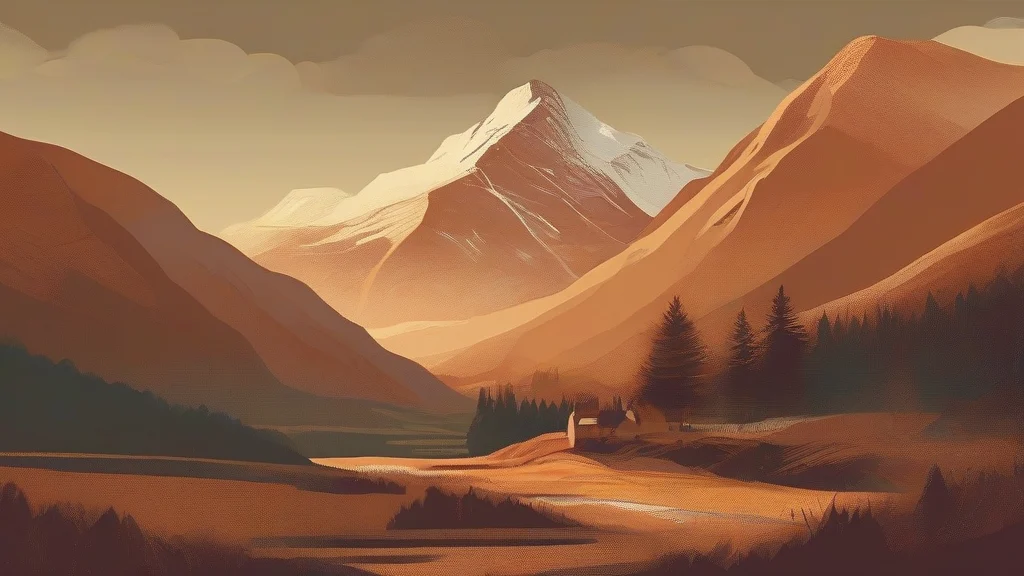
What does ben mean?
'Ben' is a Scottish word for a mountain, borrowed directly from Scottish Gaelic 'beinn'. It appears most often as the first element in the names of Highland peaks — Ben Nevis, the tallest mountain in the British Isles, Ben Lomond, and Ben Macdui among them — but it can also stand alone as a common noun, as when hillwalkers speak of 'the ben' they plan to climb. A separate, older Scots sense of 'ben' refers to the inner room of a small cottage, preserved in the phrase 'but and ben', which described the typical two-room dwelling of rural Scotland. Today the mountain sense dominates, and it carries strong associations with Highland landscape, hillwalking culture, and national identity. Outside Scotland the word is rare except in fixed place names, so encountering it in general use usually signals a Scottish context or a writer drawing deliberately on that heritage.
A mountain or mountain peak, especially in Scottish names and Highland usage.
"They spent the weekend bagging bens across the western Highlands."
Often capitalized in proper names such as Ben Nevis.
In older Scots usage: the inner room of a cottage, typically the room farthest from the door.
"The whole family slept together in the ben during the winter months."
Now historical or dialectal; best known through the phrase 'but and ben'.
Used when referring to multiple mountains informally, as in hillwalking talk about 'bagging the bens'; otherwise mostly confined to place names.
"The map was dotted with dozens of bens waiting to be climbed."
Every 'Ben' in Scotland isn't a person — it's a mountain, thanks to Gaelic 'beinn', the word behind Britain's highest peak, Ben Nevis.
Reviewed by Deb Chak, Editor. AI-assisted content curated by RJS Tech Solutions LLP.
Etymology of ben
The word comes from Scottish Gaelic 'beinn', meaning mountain, which was absorbed into Scots and English through the naming of Highland peaks; it is cognate with Irish 'binn' (a peak or summit). Its adoption into everyday Scots reflects centuries of Gaelic–Scots contact in the Highlands. The unrelated Scots architectural sense of 'ben', denoting the inner room of a cottage, developed separately within Scots itself, though its precise origins are uncertain.
How ben is actually used
As a common noun, 'ben' is largely restricted to Scottish English and Highland contexts; outside Scotland it survives almost exclusively in place names such as Ben Nevis, Ben Lomond, and Ben Macdui. The architectural sense (an inner room) is now historical or dialectal, encountered mainly in descriptions of traditional croft houses, where 'but and ben' described the outer and inner rooms.
Easily confused with ben
'Bent' is the past tense of bend or describes something curved or determined, whereas 'ben' is a noun meaning a mountain peak or inner room.
'Bene' is a Latin root meaning 'well' (as in benefactor), while 'ben' refers to a Scottish mountain or inner room.