What does benty mean?
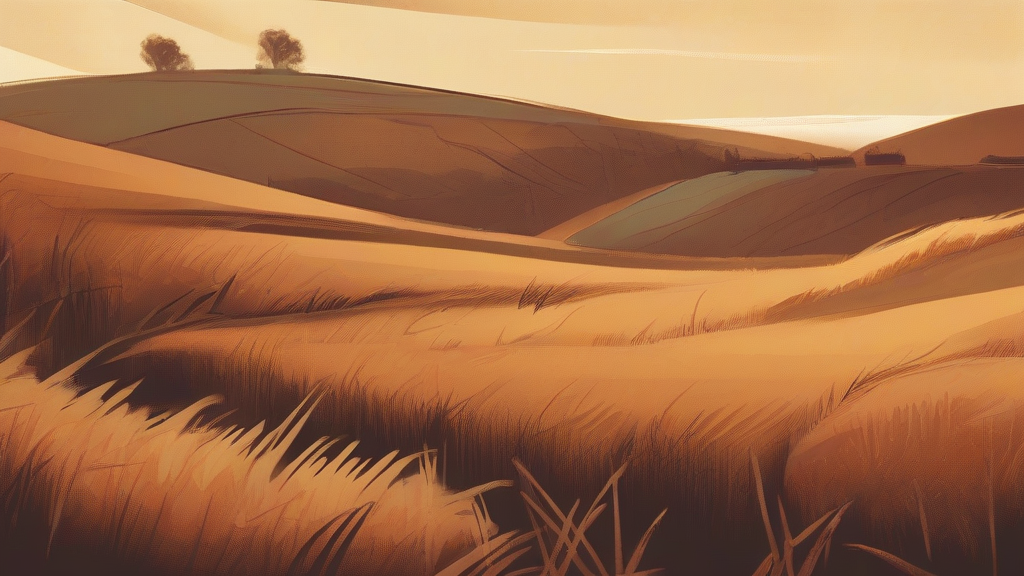
Benty is a chiefly Scottish and Northern English dialect adjective describing ground covered with bent — the coarse, wiry grasses that thrive on poor soils, heaths, moorland, and coastal links. To call land benty is to evoke a particular kind of rough, uncultivated terrain: not bare or barren, but clothed in tough, unpalatable herbage better suited to hardy sheep than to agriculture. The word derives simply from the noun bent plus the adjectival suffix -y, and it appears most often in older descriptive prose, rural writing, and accounts of the landscapes on which early golf was played. Though rare in contemporary speech, where speakers would prefer 'grassy' or 'rough', it survives as a vivid, evocative term for a distinctive northern landscape, retaining a rustic charm valued by writers with an ear for dialect vocabulary.
adjectiveCovered with, consisting of, or characteristic of bent — coarse, wiry pasture grasses. Used chiefly of land, describing rough, uncultivated ground overgrown with such grass.
- Covered with or abounding in bent (coarse, wiry pasture grass), used especially of rough or uncultivated ground.
- (Of vegetation or land) having the dry, harsh quality typical of bent-grass country.
"The sheep grazed contentedly on the benty hillside above the loch."
"They walked for miles across benty moorland without seeing another soul."
"The old course's greens were notoriously benty, punishing any shot that strayed."
Before golfers prized manicured fairways, they played on 'benty' links — the wiry coastal grass that gave early Scottish courses their wild character.
Reviewed by Deb Chak, Editor. AI-assisted content curated by RJS Tech Solutions LLP.
Etymology of benty
Benty is formed straightforwardly from the noun bent, meaning a species of coarse grass, combined with the adjectival suffix -y. The noun bent goes back to Old English beonet or beonnet, denoting a stiff reedy grass, and is related to similar Germanic forms. Benty arose in regional English, particularly Scots and Northern dialects, where bent-grass country was a familiar feature of moor and links.
How benty is actually used
A regional and somewhat archaic term, found mainly in Scots and Northern English dialect writing and in older descriptive accounts of landscape. It carries a rustic, literary flavor rather than everyday currency, and modern speakers would more likely say 'grassy' or 'rough'.
Easily confused with benty
Bendy means capable of bending or flexible, while benty describes land covered with coarse bent-grass.