What does besomed mean?
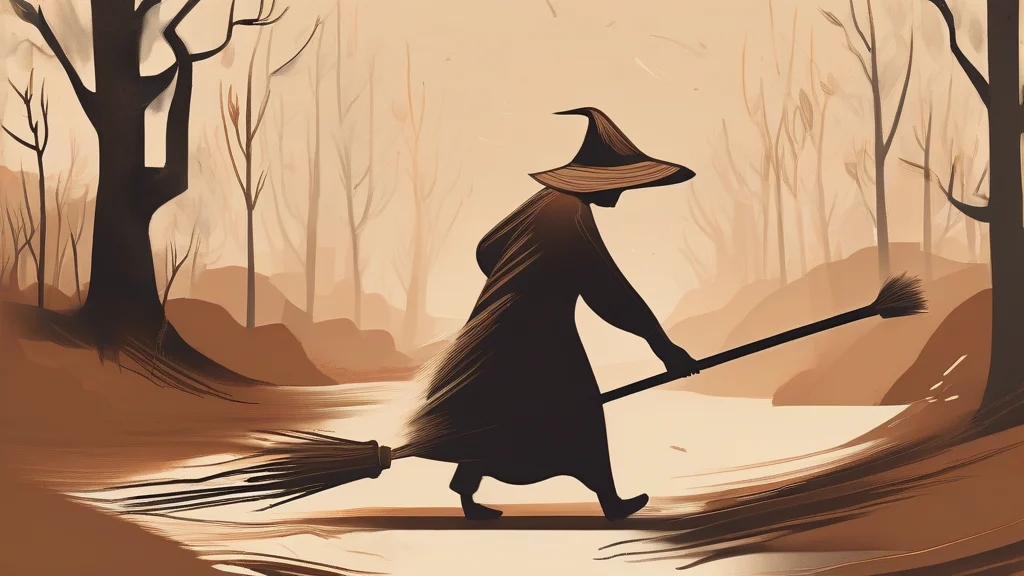
Besomed is the past tense and past participle of the verb 'besom', meaning to sweep with a besom — a traditional broom made by binding a bundle of twigs, typically birch or heather, to a wooden handle. The word is rare in modern usage and carries a distinctly rustic, old-world flavour: one is more likely to meet it in historical fiction, folklore, or descriptions of rural life than in everyday conversation. A path described as 'freshly besomed' evokes a cottage doorway swept clean of leaves, and the term often appears alongside imagery of hearths, thresholds, and even witches' brooms, which are classically besoms. Because the verb derives directly from the noun, understanding 'besom' makes 'besomed' immediately clear. It is best treated as a literary curiosity — precise in meaning, charming in tone, but uncommon enough that many readers will encounter it for the first time on the page.
verbSwept with a besom — a broom traditionally made from a bundle of twigs bound to a handle. Used chiefly as the past participle of the verb 'besom'.
- Swept clean using a besom (a twig broom); past tense and past participle of the verb 'besom'.
"The cottage path lay freshly besomed, every fallen leaf swept away."
"The hearth had been carefully besomed before the guests arrived."
"Each morning she besomed the stone step outside the shop."
Before plastic brooms, witches and housewives alike swept floors with a besom — a twig bundle so essential it gave English the rare verb 'to besom.'
Reviewed by Deb Chak, Editor. AI-assisted content curated by RJS Tech Solutions LLP.
Etymology of besomed
Besom comes from Old English 'besema', meaning a bundle of twigs used as a broom, and is related to similar words in other Germanic languages. The derived verb 'besom', meaning to sweep with such an implement, arose naturally from the noun in Middle English. The participle 'besomed' therefore belongs to a family of words rooted in early Germanic vocabulary for household implements.
Related word forms
How besomed is actually used
Rare and largely literary or dialectal; the noun 'besom' is far more common than the verb. Often encountered in historical fiction, folklore contexts, or descriptions of traditional rural life.
Easily confused with besomed
'Bosomed' relates to the bosom (e.g., 'full-bosomed'), while 'besomed' means swept with a besom broom.