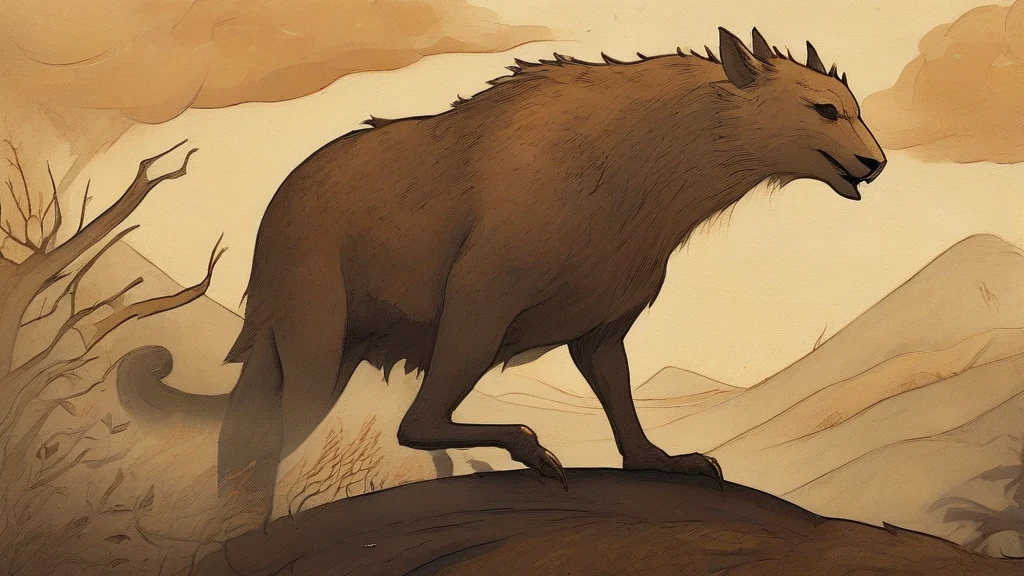
What does bestiary mean?
A bestiary is a compendium of animals, originally a distinctively medieval genre of illuminated manuscript that described beasts both real and legendary — lions, elephants, unicorns, basilisks — and interpreted them through Christian moral allegory. Each creature's supposed behavior was read as a lesson in virtue, vice, or divine order, making the bestiary part natural history, part sermon. The genre flourished in England and France between the twelfth and thirteenth centuries, drawing on earlier sources such as the Greek Physiologus. Though the original tradition faded with the rise of empirical zoology, the word endures in two ways: literally, as art historians and manuscript scholars describe surviving bestiaries, and figuratively, as writers apply the term to any modern catalogue of creatures, from field guides to the monster appendices of fantasy novels. The term lends such collections an evocative, antiquarian flavor.
nounA bestiary is a medieval collection or compendium of descriptions of real and imagined animals, typically accompanied by moral or religious allegorical interpretations. By extension, the term can refer to any catalogue or anthology of creatures, whether literal or figurative.
- A medieval illustrated compendium of animals, both real and mythical, each described alongside moralizing or Christian allegorical commentary.
- Any modern collection, catalogue, or anthology of creatures or beings, often used figuratively for works cataloguing monsters, characters, or types.
"The abbey's library held a beautifully illuminated bestiary in which the unicorn symbolized Christ."
"The manuscript contained a twelfth-century bestiary depicting griffins, elephants, and basilisks."
"Her fantasy novel opens with an appendix that reads like a bestiary of the realm's stranger inhabitants."
Standard English plural following the -y → -ies pattern.
"Several surviving medieval bestiaries are preserved in the British Library."
Medieval bestiaries taught morality through animals — the pelican was said to pierce its own breast to feed its young, making it a symbol of Christ's sacrifice.
Reviewed by Deb Chak, Editor. AI-assisted content curated by RJS Tech Solutions LLP.
Etymology of bestiary
Bestiary derives from the Latin "bestiarius," an adjective formed from "bestia," meaning beast or wild animal; the noun came to denote a treatise on animals. The word entered English in the early modern period via Medieval Latin, borrowing the title of the manuscript genre itself. It shares its root with "beast" and "bestial," which entered English along related routes from the same Latin source.
How bestiary is actually used
The word carries a scholarly or literary register; it appears most often in discussions of medieval manuscripts, art history, and fantasy literature. In modern usage it frequently functions metaphorically to lend an air of antiquity or whimsy to any compilation of creatures.
Easily confused with bestiary
"Bestial" is an adjective meaning savage or animal-like in nature, while "bestiary" is a noun referring to a collection of animal descriptions and their symbolic meanings.