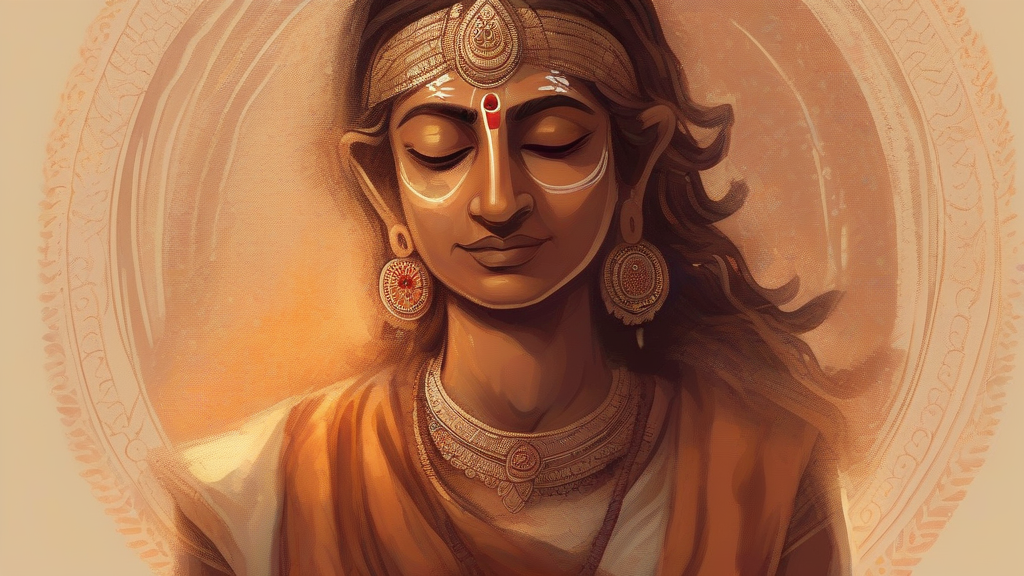
What does bhakta mean?
A bhakta is a devotee — specifically, a follower of a Hindu deity whose religious life centres on bhakti, the path of loving personal devotion to God. The term distinguishes this heartfelt, often emotional style of worship from devotion expressed purely through ritual or philosophical study. A bhakta might express faith through song, prayer, pilgrimage, or service to a guru and temple community. The word entered English through the study of Indian religion and remains most at home in religious, literary, and academic contexts, where it connotes sincere and wholehearted piety. It derives from the Sanskrit bhakta, meaning 'devoted' or 'attached', from the verbal root bhaj-, 'to share, partake, honour'. Remarkably, that same ancient Indo-European root also gave rise to the Greek verb phagein, 'to eat', making 'bhakta' a distant cousin of scientific terms such as 'bacteriophage'. For anyone writing about South Asian religion, 'bhakta' offers a precise, respectful way to describe a tradition of devotion that millions practise today.
nounA devotee or follower of a Hindu deity, especially one whose religious life is centred on loving devotion (bhakti) to God.
- A devotee of a Hindu deity, particularly one whose piety takes the form of loving personal devotion (bhakti) rather than ritual observance alone.
- More broadly, an adherent or follower within any devotional religious tradition modelled on Hindu bhakti practice.
"The temple was filled with bhaktas chanting hymns to Krishna at dawn."
"As a young bhakta, he spent hours each evening singing kirtans before the altar."
"The guru's most trusted bhakta had followed him across India for two decades."
The standard English plural adds -s; in some religious contexts influenced by Sanskrit usage, 'bhakta' is left uninflected.
"The festival drew thousands of bhaktas from across the region."
The word for a Hindu devotee and the scientific prefix '-phage' in 'bacteriophage' both trace back to the same ancient root meaning 'to share or partake'.
Reviewed by Deb Chak, Editor. AI-assisted content curated by RJS Tech Solutions LLP.
Etymology of bhakta
Bhakta comes directly from Sanskrit bhakta, meaning 'devoted, attached, loyal', formed from the verbal root bhaj-, which originally meant 'to share, distribute, or partake in' and later 'to honour or worship'. The word was borrowed into English in the nineteenth century, primarily through missionary accounts and scholarly writings on Hinduism, alongside the related term bhakti. Because both descend from the Proto-Indo-European root *bhag- ('to share out'), they are genuine cognates of the Greek phagein ('to eat'), seen in English borrowings such as 'sarcophagus' and '-phage' compounds like 'bacteriophage'.
Related word forms
How bhakta is actually used
The term belongs chiefly to religious and scholarly registers; outside discussions of Hinduism it may need brief glossing for general readers. It carries warm connotations of sincere, heartfelt piety rather than mere formal observance. The plural is usually 'bhaktas', though 'bhakta' is occasionally left unchanged.
Easily confused with bhakta
Bhakti refers to the practice or spirit of devotional worship itself, while a bhakta is the individual person who practises that devotion.