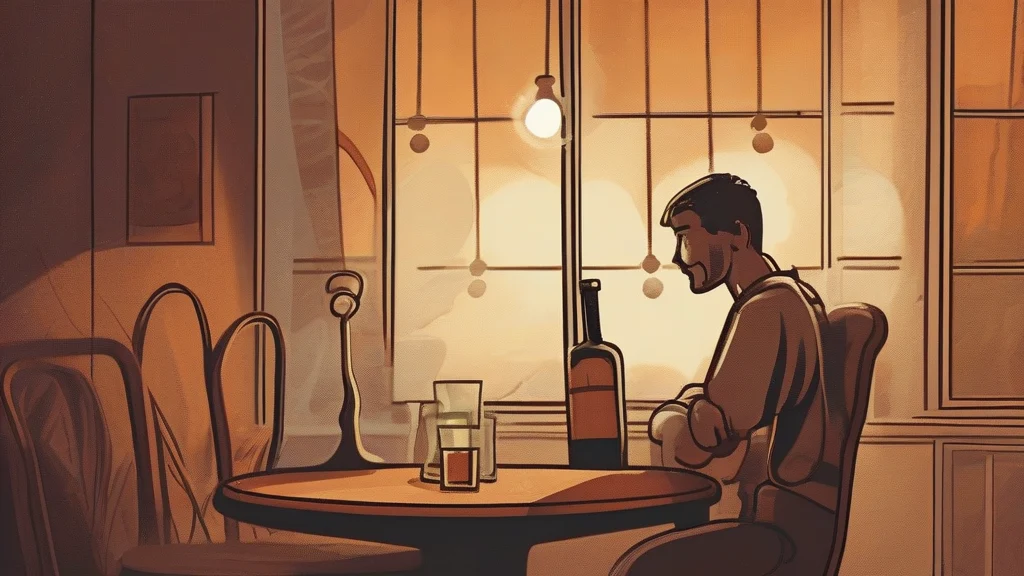
What does bibbing mean?
Bibbing is the act of drinking, particularly the steady consumption of alcoholic beverages. It is the gerund and present participle of the verb "bib," an old English word for drink that ultimately traces back through Middle English to the Latin verb bibere, "to drink," the same root that gives us "imbibe," "bibulous," and "beverage." Though once common enough to appear freely in novels and tavern talk, "bibbing" now sounds archaic, dialectal, or deliberately quaint; modern speakers would more often say drinking or boozing. It retains a cheerful, convivial flavor, evoking the hearty tippler rather than the tragic drunkard, which is why it lingers in humorous phrases like "bibbing and nibbling." The same word also gave its name to the bib — originally a cloth worn while eating or drinking to catch drips — making "bibbing" a small linguistic fossil that connects a toddler's mealtime gear to centuries of tavern culture.
verb (gerund/present participle)The act of drinking, especially drinking alcohol steadily or heartily; the present participle and gerund of the verb "bib."
- Drinking, especially consuming alcohol regularly or to excess (now chiefly archaic, dialectal, or humorous).
"After a long week at the mill, the old hands could be found bibbing at the corner pub until closing time."
"He was known for bibbing late into the night with his fellow journalists."
"The inn sign showed a jolly figure bibbing at a foaming tankard."
Before it meant a baby's cloth bib, "bib" was a merry old word for drinking itself — so a baby's bib is literally named for catching spills from the family tippler's habit.
Reviewed by Deb Chak, Editor. AI-assisted content curated by RJS Tech Solutions LLP.
Etymology of bibbing
The verb "bib" arose in Middle English, likely as an expressive, sound-symbolic formation on the syllable "bib," before becoming associated with the Latin-rooted drinking vocabulary (bibere) that also produced "imbibe" and "bibulous." From it derive the noun "bib" — first the drinking sense of the word itself, later the protective cloth worn while eating — and the agent noun "bibber," meaning a habitual drinker. "Bibbing" as the verb's participial form appears in English prose from roughly the sixteenth century onward, often in descriptions of tavern life.
Related word forms
How bibbing is actually used
"Bibbing" is informal, dated, or dialectal in modern English; it survives mostly in historical writing, regional speech, and playful contexts such as party invitations advertising "bibbing and nibbling." It carries a convivial, mildly roistering connotation rather than a harshly disapproving one.
Easily confused with bibbing
"Nibbling" means taking small bites of food, whereas "bibbing" means drinking, especially alcoholic drink; the two are sometimes paired in the phrase "bibbing and nibbling."