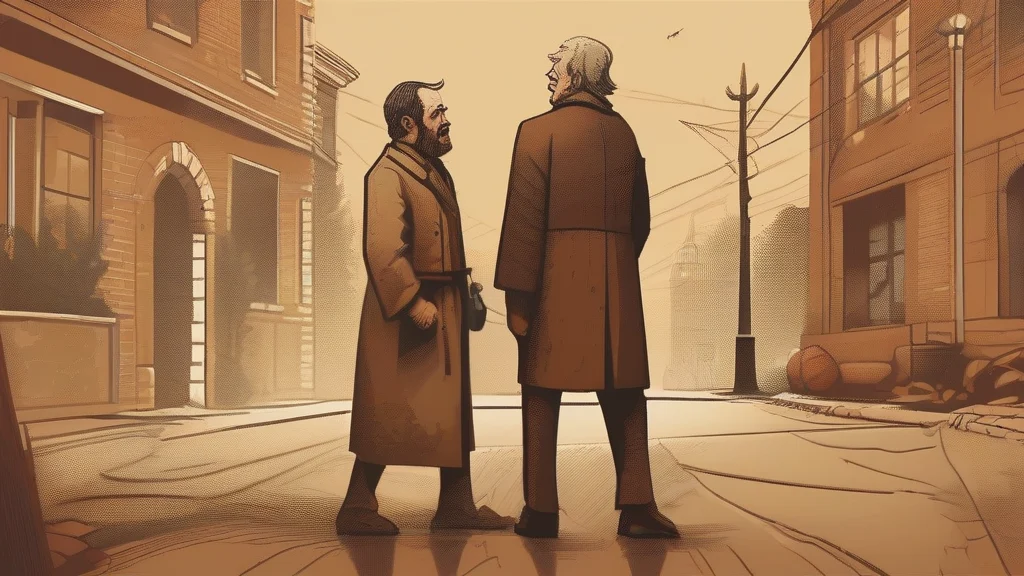
What does bickering mean?
Bickering refers to persistent, petty quarrelling — the kind of repeated, sharp-tempered arguing that flares up over trivial matters such as household chores, money, or personal habits. Unlike a serious dispute or open conflict, bickering is characterised by its smallness: the issues are minor, but the exchanges are frequent and irritating, often wearing down patience over time. The word derives from the verb 'to bicker', which appeared in English by the thirteenth century and originally carried senses of skirmishing or fighting before settling into its modern meaning of niggling argument. Today it is most often used as a gerund noun ('their constant bickering'), and it frequently appears in phrases like 'petty bickering' and 'political bickering'. Its connotation is mildly disparaging, implying immaturity or a failure to rise above trifles, which makes it a precise and useful term for describing low-level domestic or organisational friction.
nounPersistent, petty quarrelling over trivial matters, typically marked by repeated sharp exchanges rather than serious conflict.
- Persistent, petty quarrelling over minor matters.
"After an hour of bickering over whose turn it was to wash the dishes, they finally called a truce."
"The board meeting dissolved into endless bickering over budget line items."
"Despite their constant bickering, the siblings were fiercely loyal to each other."
Rare and somewhat archaic; modern usage overwhelmingly treats 'bickering' as uncountable.
"The old letters record the daily bickerings of a long-married couple."
The word 'bicker' may well imitate the sound of birds pecking at each other — which is fittingly what bickering humans sound like too.
Reviewed by Deb Chak, Editor. AI-assisted content curated by RJS Tech Solutions LLP.
Etymology of bickering
The noun 'bickering' is the gerund of the verb 'bicker', first attested in Middle English in the thirteenth century. Its earliest sense was martial, referring to skirmishing or exchanging blows, before it gradually shifted to verbal fighting. The ultimate origin is uncertain, though it has been linked to imitative or Scandinavian sources. Related forms include the agent noun 'bickerer'.
Related word forms
How bickering is actually used
Bickering carries a mildly negative connotation, suggesting childishness or pettiness in the disputants. It is informal to neutral in register and commonly describes domestic disputes, family friction, and political squabbles. It usually functions as a gerund derived from the verb 'bicker', and the plural 'bickerings' is rare and archaic.