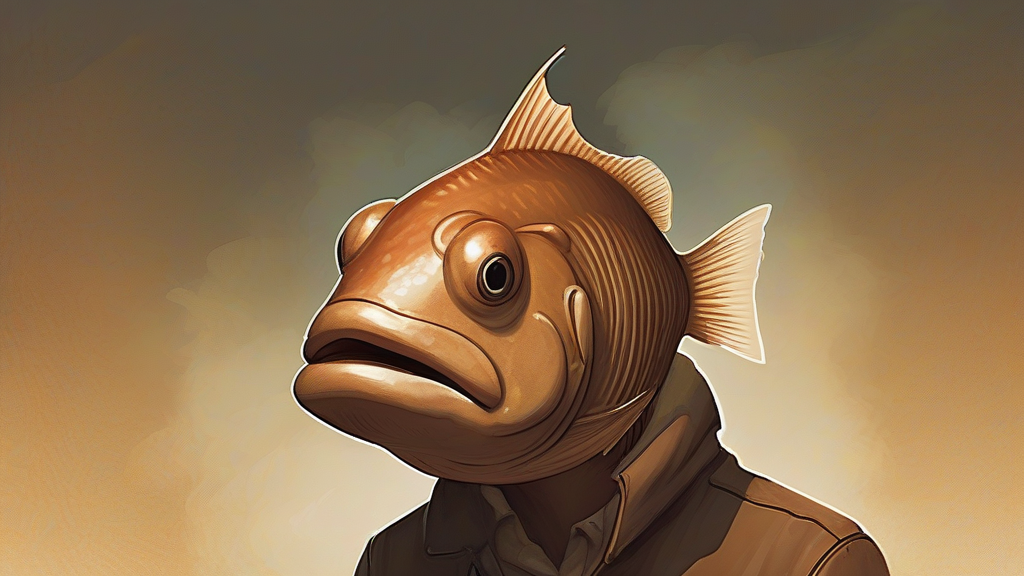
What does bighead mean?
Bighead is an informal noun with two distinct uses. Its dominant sense describes a person who is conceited, arrogant, or excessively pleased with themselves — someone whose ego, figuratively speaking, has swollen out of proportion. Used this way, it carries a mildly derogatory, teasing tone: friends might rib each other as bigheads after a stroke of luck, while the same word aimed at a stranger sounds sharper. Synonymous ideas include egotist and swellhead, though bighead is notably colloquial, particularly in British speech. The word also has a literal zoological application: several animals noted for disproportionately large heads are called bigheads, most prominently the bighead carp (Hypophthalmichthys nobilis), a large filter-feeding fish native to East Asia that has been widely introduced for aquaculture. Formed transparently from big plus head, the term is easy to remember precisely because its meaning is so vivid: pride makes the head grow.
An informal term for a conceited, arrogant person who overestimates their own importance.
"Winning one match doesn't make you a bighead, so stop bragging."
Informal and often teasing; stronger as criticism when directed at someone unfamiliar.
Any of various animals or fish distinguished by a very large head, especially the bighead carp (Hypophthalmichthys nobilis).
"Bighead carp are raised extensively in aquaculture for their fast growth."
Regular plural; used both for conceited people and for the fish or animals.
"The trophy turned the whole team into bigheads for a week."
In English slang, your head literally swells when your ego does — call someone a bighead and you're accusing them of thinking their head has outgrown the rest of them.
Reviewed by Deb Chak, Editor. AI-assisted content curated by RJS Tech Solutions LLP.
Etymology of bighead
Bighead is a straightforward English compound formed from the adjective big plus head, following a productive pattern of body-part compounds used figuratively for personality types (compare bigmouth, fathead, egghead). It emerged in colloquial English in the 19th century to describe a self-important person. The zoological sense arose independently as a descriptive name for large-headed animals and fish, including the bighead carp, which acquired its common English name in the context of aquaculture. There are no classical-language roots involved; its relatives are other native English compounds built on big.
How bighead is actually used
Primarily informal and conversational; usually mildly derogatory but often used teasingly among friends rather than as serious insult. The fish sense is technical/zoological and unrelated in connotation. In British English the 'conceited person' sense is especially common in everyday speech.
Easily confused with bighead
An egghead is an intellectual or highly educated person (often mildly derisive), whereas a bighead is someone conceited about their own importance — intelligence is not the issue.