What does bill mean?
"Bill" is one of English's most versatile everyday words, carrying several distinct meanings that share only their spelling. Most commonly, it is a written statement of money owed for goods or services — the restaurant bill, the phone bill, the utility bill — a sense so central to daily life that idioms like "foot the bill" and "split the bill" have grown around it. In politics, a bill is a formal proposal for new legislation awaiting approval by a legislature. In nature writing it names a bird's beak, and in advertising it once referred to posted notices or posters, surviving in words like "handbill." In American usage it can even mean a paper banknote. The word is neutral in tone and works equally well in casual conversation and formal contexts, making it essential vocabulary for anyone navigating commerce, law, or everyday transactions in the English-speaking world.
A statement of charges for goods or services provided; an invoice.
"Could we have the bill, please?"
British speakers typically ask for "the bill" in restaurants, while American speakers say "the check."
A draft of proposed legislation presented for debate and approval by a legislature.
"Parliament rejected the bill by a narrow margin."
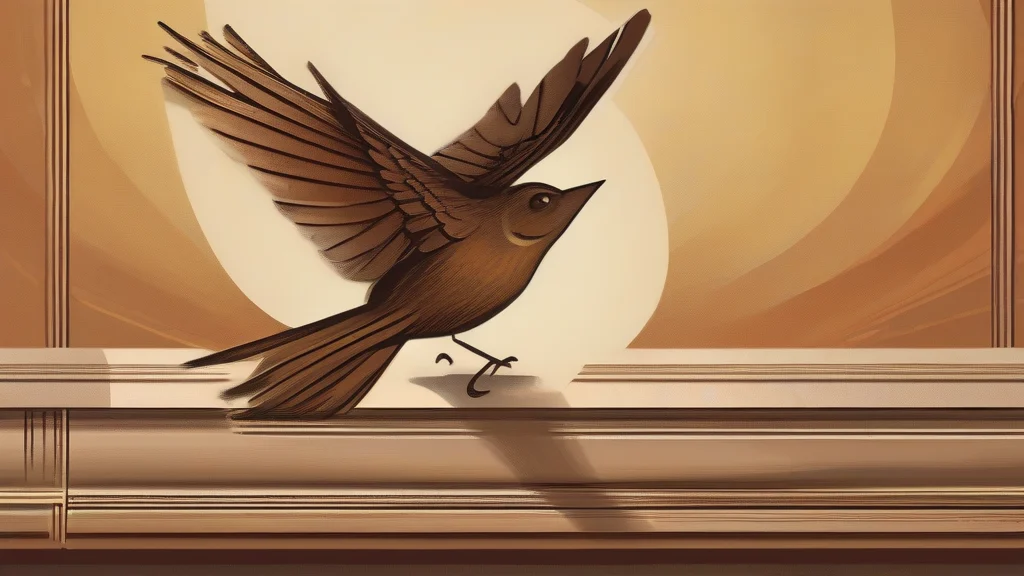
The hard, pointed mouthpart of a bird, used for eating, preening, and other tasks.
"The sparrow cracked the seed with its small conical bill."
A printed notice or advertisement intended for public display; a poster or handbill.
"Volunteers handed out bills advertising the village fete."
Regular plural; used for both invoices and paper banknotes.
"He paid off his medical bills one by one over two years."
The word "bill" wears at least five different disguises in English — from a duck's beak to a law in Congress — all spelled exactly the same way.
Reviewed by Deb Chak, Editor. AI-assisted content curated by RJS Tech Solutions LLP.
Etymology of bill
English actually has several homonymous "bills" with separate origins. The financial and legal senses trace back through Anglo-Norman and Medieval Latin to "bulla" (or its diminutive "billa"), meaning a sealed document or official paper, which also gives us "bulletin" and "billet." The word entered Middle English in the medieval period as a term for a formal written document. The bird's-beak sense came separately through Old French from a Latin root, while the American "banknote" sense developed naturally from the document sense — a banknote being, literally, a printed promise to pay.
Related word forms
How bill is actually used
In British English, "the bill" is what you ask for in a restaurant; Americans more often say "the check," though "bill" is fully understood. In American English, "bill" commonly means a paper banknote (e.g., a ten-dollar bill), a sense rarely used in Britain, where "note" is standard.
Easily confused with bill
"Bail" refers to money pledged to secure release from custody (or a bucket on a ship), while "bill" is a charge for goods or services or a legislative draft.