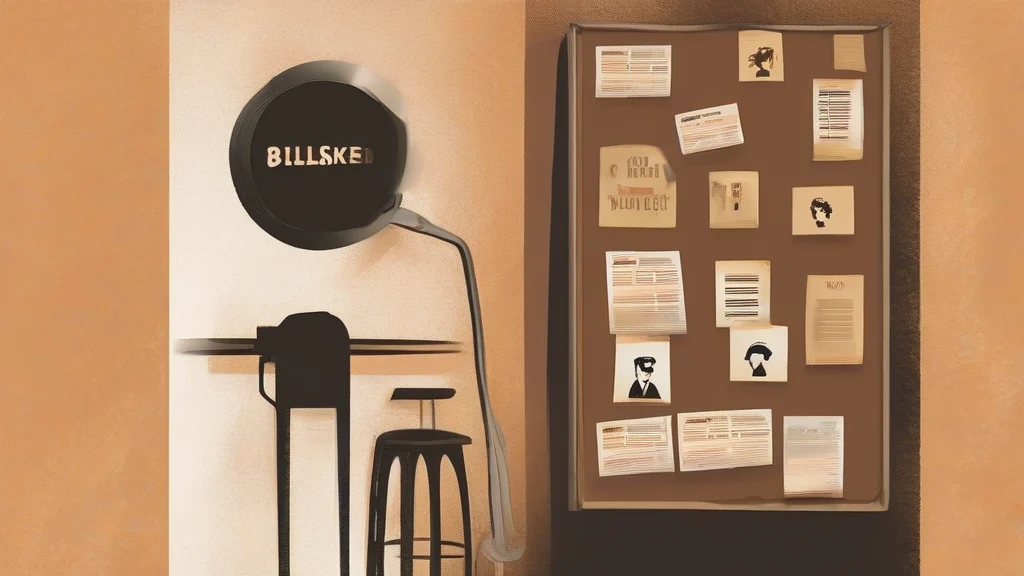
What does billsticker mean?
A billsticker is a person whose occupation is pasting printed notices, advertisements, and announcements onto walls, hoardings, fences, and other public surfaces. The word combines 'bill', meaning a printed notice or placard, with 'sticker', referring to one who applies them, typically using paste and a brush. The billsticker was a familiar figure of urban life in the nineteenth and early twentieth centuries, when theatrical productions, political campaigns, auctions, and commercial products were all promoted through paper bills glued up by hand across towns and cities. The trade carried a slightly rough, working-class connotation, and billstickers were sometimes accused of covering rivals' notices or defacing property, prompting municipal regulations on where bills could be displayed. As modern printing, billboards, and digital advertising displaced hand-pasted notices, the occupation faded, and the term now survives mostly in historical accounts and period fiction. It remains a vivid reminder of an era when advertising was quite literally done by hand on the street.
nounA person whose job is to paste printed notices, advertisements, or posters onto walls and other public surfaces.
- A person employed to paste bills, notices, or advertisements onto walls, hoardings, or other public surfaces.
"The billsticker worked his way down the high street, pasting playbills to every available wall."
"The theatre hired a billsticker to cover the town with announcements of the new production."
"By dawn the billsticker had plastered the hoarding with a fresh layer of election placards."
Standard plural formation by adding -s.
"The city council fined several billstickers for posting notices on protected buildings."
Before billboards and the internet, entire city walls were covered by hand — one billsticker with a bucket of paste at a time.
Reviewed by Deb Chak, Editor. AI-assisted content curated by RJS Tech Solutions LLP.
Etymology of billsticker
The word billsticker is a straightforward English compound formed from 'bill', a printed public notice, which derives via Anglo-Norman from Medieval Latin 'bulla' meaning a sealed document, and 'sticker', an agent noun from the verb 'to stick'. The compound arose during the eighteenth or nineteenth century as the posting of printed advertisements became a common urban trade. Related compounds from the same 'bill' root include billboard, playbill, waybill, and billfold.
How billsticker is actually used
The term is somewhat dated, reflecting a trade that flourished in the 19th and early 20th centuries before mass electronic advertising; it survives chiefly in historical writing and older dictionaries.
Easily confused with billsticker
Billposter is a near-synonymous term for the same trade, with 'poster' replacing 'sticker' in the compound; both refer to one who puts up printed notices in public places.