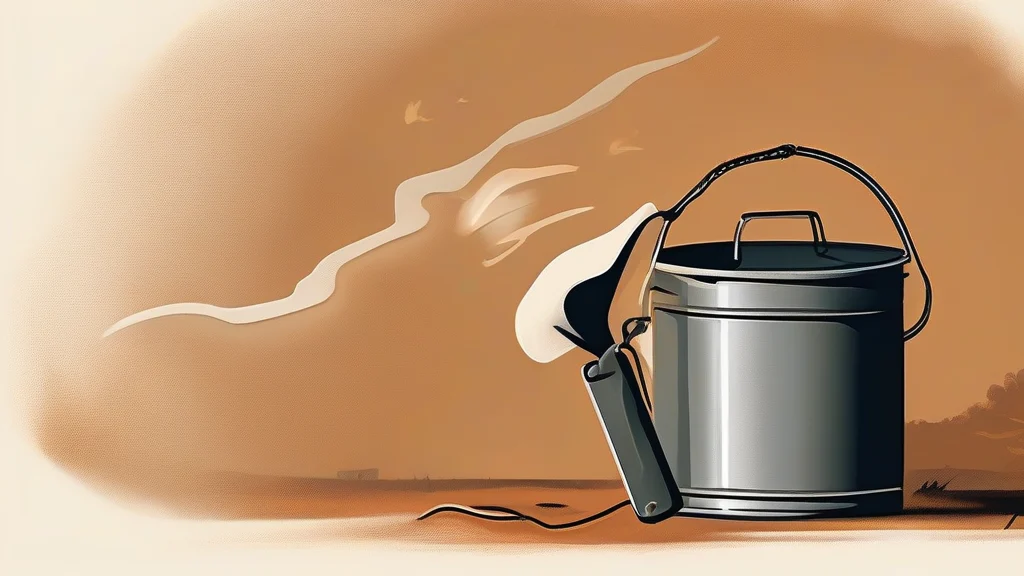
What does billycan mean?
A billycan is a lightweight metal container — typically tin or aluminium — fitted with a lid and a wire handle, used above all in Australia and New Zealand to boil water over an open fire. It is the classic implement of bush life: drovers, swagmen, and campers have long relied on it to brew tea, and the ritual of "boiling the billy" is embedded in Australian folklore, notably in Banjo Paterson's poem "Waltzing Matilda." The name appears to combine the familiar nickname "Billy" with "can," the nickname having been attached humorously to any humble household vessel. The word carries warm connotations of camaraderie, self-reliance, and the outdoors, and while largely informal and regional, it remains a beloved emblem of Australasian heritage. For readers elsewhere, it functions much like the words "mess tin" or "camp kettle."
nounA light metal can or pail with a tight-fitting lid and a wire bail handle, used especially for boiling water or cooking over an open campfire.
- A metal can or pail with a lid and wire handle, used for boiling water over a campfire, especially in Australian and New Zealand bush culture.
"The swagman hung his billycan over the flames until the water came to a boil for tea."
"After a long day's droving, they boiled water in the billycan for strong black tea."
"He filled the billycan from the creek before striking a match under the camp kettle stand."
Regular plural; used when referring to multiple vessels, e.g. at a large camp.
"Half a dozen billycans hung from the branch above the fire."
The billycan is so central to Australian identity that 'boiling the billy' became a national idiom — and it likely takes its name from the common nickname Bill, applied jocularly to any old can.
Reviewed by Deb Chak, Editor. AI-assisted content curated by RJS Tech Solutions LLP.
Etymology of billycan
Billycan is a compound of "billy" — originally Australian slang for a metal pot or can, probably from the nickname Billy (for William), which was applied jokingly to everyday objects — and "can." The term arose during the nineteenth century in colonial Australian English and spread through New Zealand as well. Its closest relatives are other humorous uses of the name Bill or Billy in compounds, such as "billycock" (a type of hat).
How billycan is actually used
Informal and strongly associated with Australian and New Zealand rural life, camping, and bush tradition. The short form "billy" is more frequent in everyday Australian speech; "billycan" is common in writing and in descriptions of bush life. Outside Australasia the word may be unfamiliar to general readers.
Easily confused with billycan
"Billy" is simply the shortened Australian form of the same word for the campfire can, while "billycan" is the fuller compound form of the identical object.