
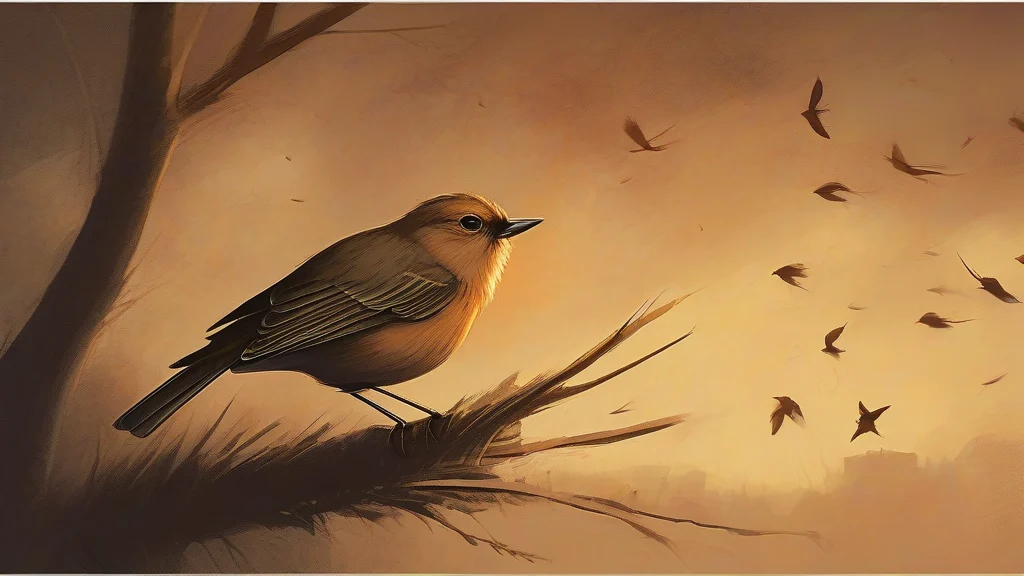
What does birdsong mean?
Birdsong is the collective term for the vocalizations — particularly the melodic, sustained songs — produced by birds, most famously by songbirds such as blackbirds, thrushes, and warblers. It is most closely associated with the early hours of the day, when the phenomenon known as the dawn chorus fills gardens, woodlands, and countryside with overlapping layers of sound. Beyond its literal meaning, birdsong carries strong cultural connotations of peace, renewal, and natural beauty, making it a frequent presence in poetry, music, and descriptions of idyllic settings. Composers across centuries have drawn on it as a source of melody, and ornithologists continue to study its role in territory defense and mate attraction. As a word, it is a simple compound of "bird" and "song," yet it evokes one of the most familiar and cherished sounds in the natural world.
The musical vocalization produced by birds, particularly songbirds, especially during the breeding season.
"The valley rang with birdsong at sunrise."
Often used with mass-noun grammar; no conventional plural in everyday use.
Any light, melodious sound suggestive of birds singing.
"Her laughter was like birdsong in the quiet room."
Rarely used; "birdsong" is typically treated as uncountable. The plural appears mainly in scientific or descriptive contexts referring to distinct songs of different species.
"The guidebook catalogued the birdsongs of over two hundred species."
Birdsong is so universally loved that composers from Messiaen to Beethoven have transcribed it directly into their music — some birds have even been shown to sing in recognizable musical scales.
Reviewed by Deb Chak, Editor. AI-assisted content curated by RJS Tech Solutions LLP.
Etymology of birdsong
Birdsong is a straightforward English compound formed from the Old English nouns "bridd" (later "bird") and "sang" ("song"), both of Germanic origin. The compound itself is relatively modern in widespread use, gaining currency as natural history writing flourished in the 18th and 19th centuries. Its components share roots with cognates across the Germanic language family.
How birdsong is actually used
A warm, positive word often associated with nature, morning, and tranquility; common in both literary and everyday register.
Easily confused with birdsong
"Birdsong" refers to the melodic singing of birds, while "birdcall" can refer to any vocalization a bird makes, including non-melodic calls, or to an imitation device used to attract birds.