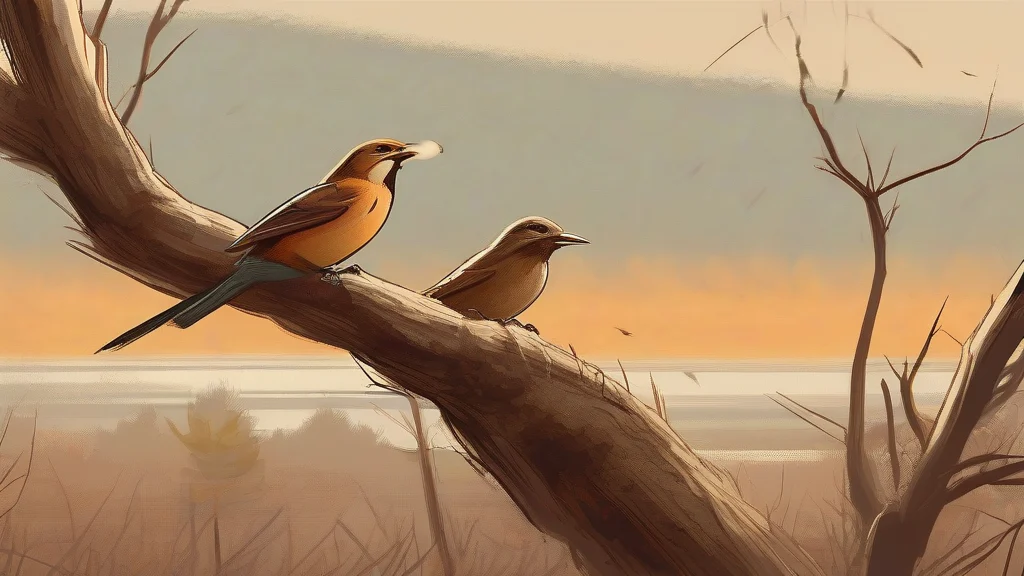
What does birdwatch mean?
To birdwatch means to observe wild birds deliberately in their natural surroundings, identifying species by their appearance, behaviour, and song. It is an intransitive verb — one birdwatches in a forest, marsh, or garden, often with binoculars and a field guide — and it belongs to one of the most widely practised nature hobbies in the English-speaking world. The word is a transparent compound of "bird" and "watch," and while the bare verb is used, its derivatives "birdwatching" (the activity) and "birdwatcher" (the person) appear far more frequently. The register is neutral to informal, fitting naturally in phrases like "go birdwatching" or "an early-morning birdwatching trip." Beyond recreation, birdwatching feeds citizen science: counts such as the Christmas Bird Count and Big Garden Birdwatch rely on ordinary people who birdwatch and record what they see. The word evokes patience, quiet observation, and a gentle enthusiasm for the natural world rather than competitive sport.
verbTo observe birds in their natural habitat as a hobby or pastime, typically identifying different species by sight or sound.
- (intransitive) To spend time observing and identifying wild birds in their natural habitat, usually as a recreational pursuit.
"They rose at dawn to birdwatch along the coastal marshes before the heat drove the waders into cover."
"Hundreds of enthusiasts gather each spring to birdwatch in the wetlands of Norfolk."
"On holiday in Costa Rica, she would birdwatch from the lodge balcony with binoculars and a field guide."
Every serious birder knows the dawn chorus — but "birdwatch" as a single word is surprisingly modern, a compact compound born from one of the world's most popular participatory hobbies.
Reviewed by Deb Chak, Editor. AI-assisted content curated by RJS Tech Solutions LLP.
Etymology of birdwatch
Birdwatch is a straightforward compound of "bird" and "watch," both ancient English words: "bird" derives from Old English "bridd" (originally meaning a young bird), and "watch" comes from Old English "wæccan," meaning to be awake or keep vigil, which shares a distant root with words such as "wake" and "vigil." The compound arose as a natural compression of the phrase "to watch birds," gaining currency in the nineteenth and twentieth centuries as recreational bird study grew popular in Britain and North America. Its derivative "birdwatching" is today the more familiar form of the pair.
Related word forms
How birdwatch is actually used
The word is informal to neutral in register and appears most often in its derived forms "birdwatching" and "birdwatcher," which are more common than the bare verb. It is understood throughout the English-speaking world, though British usage traditionally favours the hyphenated form "bird-watch" in older texts. The compound is transparent — simply "watching birds" compressed into one word — so it carries no figurative or idiomatic weight.
Easily confused with birdwatch
"Birdwatch" is the verb describing the act, while "bird-watching" (or "birdwatching") is the noun naming the hobby itself.