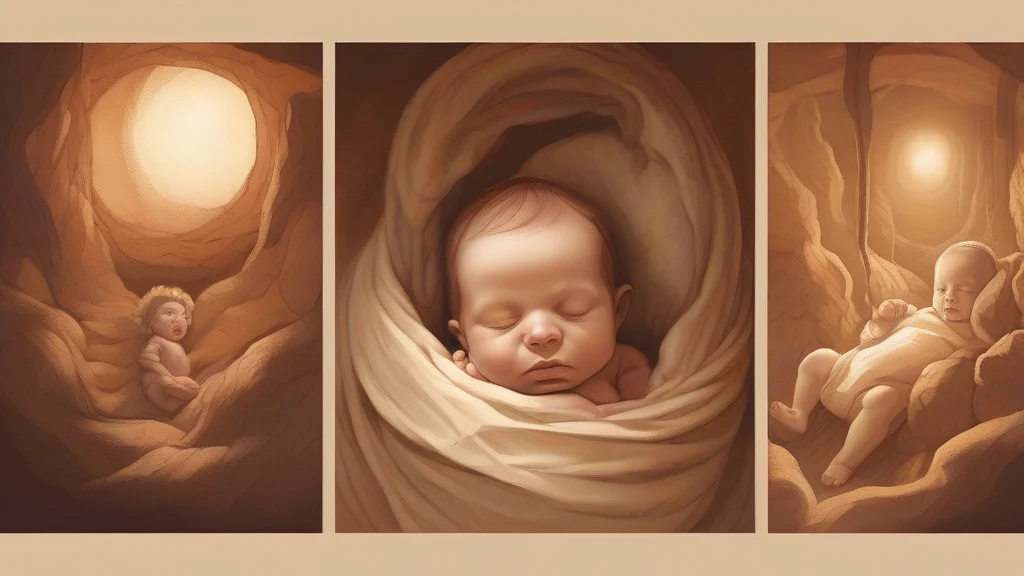
What does birth mean?
Birth refers fundamentally to the act or process of being born — the moment an infant or offspring comes into the world from its mother's body. It also extends metaphorically to describe the beginning or emergence of anything new, such as the birth of a nation, an idea, or a movement, where it conveys a sense of fresh origins and possibility. A third sense relates to lineage: one can be described as being 'of noble birth', indicating family background or social descent. The word appears in many everyday fixed expressions, including 'give birth', 'birth certificate', and 'birth control', making it deeply embedded in ordinary language. Its tone is generally neutral in medical contexts but positive when used figuratively, since beginnings carry hopeful connotations. Etymologically ancient, 'birth' derives from Old English and connects to words like 'bear' and 'burden', reflecting the long history of human experience it names.
The act or process of being born; the emergence of an infant or offspring from the mother's body.
"She gave birth to twins early on Tuesday morning."
Commonly paired with 'give' in the phrase 'give birth'.
The beginning or coming into existence of something, such as an idea, institution, or era.
"The invention of the printing press marked the birth of mass communication."
Almost always used with 'the' in this figurative sense.
Used when counting individual instances of childbirth, as in hospital statistics.
"The clinic recorded forty births in January alone."
The word 'birth' shares its ancient Germanic roots with 'bear', 'burden', and even 'berth' — all tracing back to the same idea of carrying a child.
Reviewed by Deb Chak, Editor. AI-assisted content curated by RJS Tech Solutions LLP.
Etymology of birth
'Birth' comes from Middle English 'birthe' (also 'burthe'), which developed from Old Norse 'byrðr' and related Old English forms, ultimately derived from Proto-Germanic roots connected to the verb meaning 'to bear' or carry a child. It is therefore cognate with 'bear', 'born', and 'burden', all stemming from the same Germanic root. The word has been in continuous use throughout the history of English, and its figurative sense of origins or beginnings arose naturally from the literal one.
Related word forms
How birth is actually used
In its figurative sense ('the birth of an idea'), 'birth' is common in both formal and informal writing and carries a positive connotation of beginnings. In genealogical or legal contexts, phrases like 'of royal birth' refer to ancestry and are somewhat formal. The verb phrase 'give birth' is standard for human and animal childbirth alike.
Easily confused with birth
"Berth" means a sleeping place on a ship or a space for a vessel to moor, while "birth" refers to the act of being born or an origin.