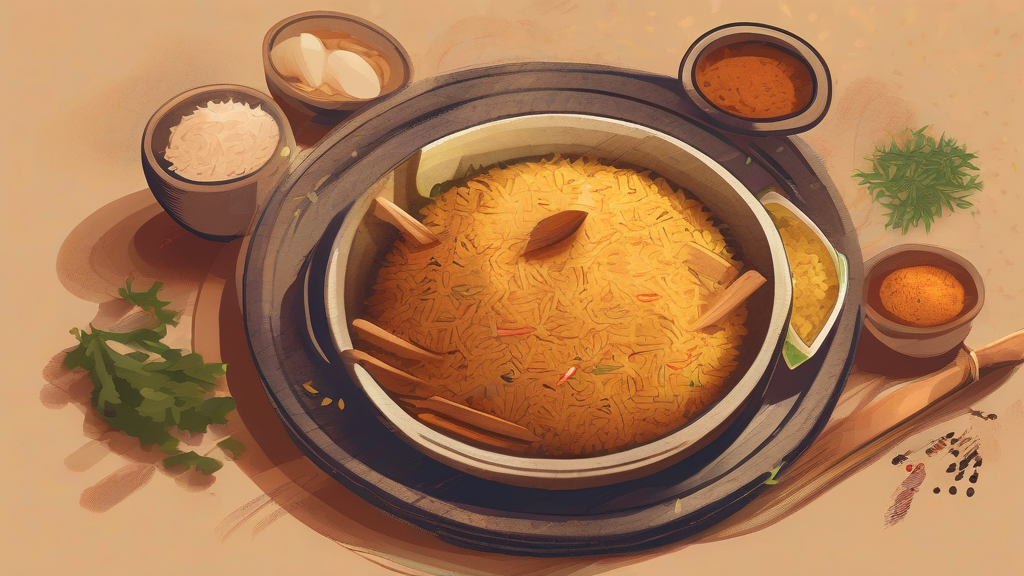
What does biryani mean?
Biryani is a celebrated South Asian dish of rice cooked with spiced meat, fish, or vegetables, distinguished from similar rice dishes by its method of preparation: layers of partly cooked, seasoned rice are combined with marinated meat or vegetables and finished by gentle steaming, allowing the flavors to meld. Aromatic seasonings such as saffron, cardamom, cinnamon, and cloves give it a characteristic fragrance and richness. The word entered English from Hindi-Urdu, ultimately deriving from a Persian term meaning 'fried' or 'roasted'. Biryani holds deep cultural significance across India, Pakistan, Bangladesh, and beyond, where countless regional variations exist — from Hyderabad's fiery dum biryani to Kerala's fragrant versions — and it is strongly associated with festive occasions, family gatherings, and generous hospitality. In English usage it appears chiefly on restaurant menus and in food writing, almost always preceded by the name of its main ingredient.
nounAn Indian and South Asian dish of spiced rice cooked together with meat, fish, or vegetables, typically layered and seasoned with saffron and aromatic spices.
- A South Asian dish of layered, spiced rice baked or steamed with meat, fish, or vegetables.
"She ordered a mutton biryani to share at the new Indian restaurant."
"The restaurant's chicken biryani is slow-cooked with saffron and cardamom."
"Every family gathering ended with her grandmother's fragrant lamb biryani."
The plural is informal and refers either to multiple servings or portions of the dish or to different varieties of biryani.
"The buffet offered three different biryanis, each from a different region of India."
Legend has it that biryani was invented as a one-pot army meal — rice, meat, and spices buried in a pit and left to cook while soldiers marched.
Reviewed by Deb Chak, Editor. AI-assisted content curated by RJS Tech Solutions LLP.
Etymology of biryani
The word 'biryani' entered English from Hindi-Urdu during the colonial period, borrowing in turn from Persian. Its ultimate source is the Persian word biriyan (or biryan), meaning 'fried' or 'roasted', which referred to rice that had been cooked before being combined with other ingredients. The dish itself developed in the Mughal culinary tradition of the Indian subcontinent, though accounts of its exact origins vary between royal kitchens and military field cooking.
How biryani is actually used
Always used as a mass noun for the dish itself; countable uses ('two biryanis') occur informally when referring to servings or varieties. The word carries warm connotations of celebration and hospitality across South Asia.
Easily confused with biryani
A pulao is made by cooking the rice together with the other ingredients in one pot, whereas a biryani involves layering partially cooked rice with spiced meat and finishing it by steaming.