
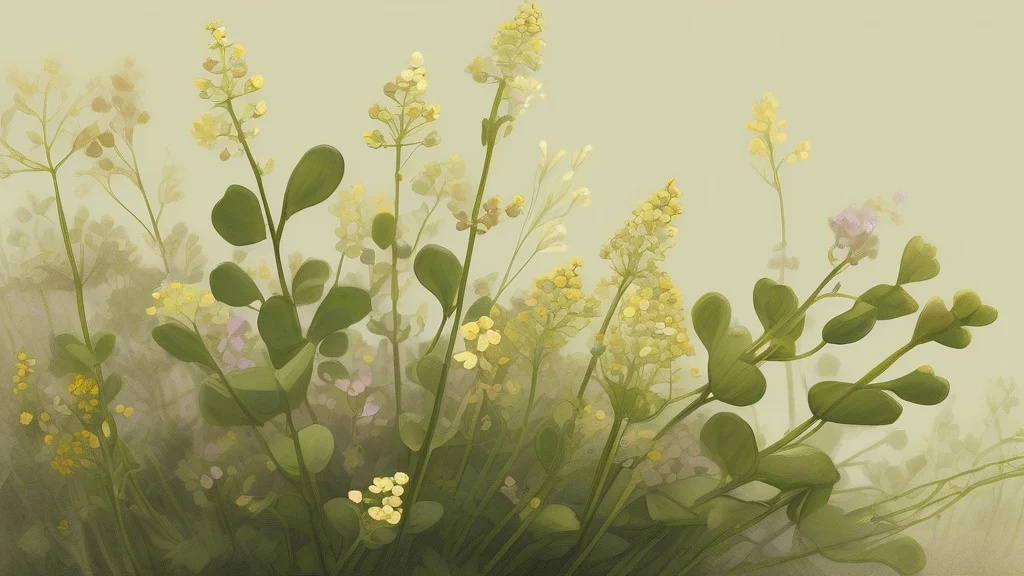
What does bittercress mean?
Bittercress is the common name for any of a group of plants belonging chiefly to the genus Cardamine, members of the mustard family found throughout temperate regions of the world. These plants produce small white or pale lilac flowers and finely divided leaves whose taste recalls the peppery snap of true cresses, hence the name. In everyday usage, the term most often refers to hairy bittercress, a fast-spreading annual weed familiar to gardeners for its ability to colonize bare soil and container plants seemingly overnight. Despite its weedy reputation, bittercress is entirely edible: foragers prize its tender young rosettes as a zesty addition to salads and garnishes. The genus also includes beloved native wildflowers such as cuckooflower, the delicate bloom associated with the arrival of spring. Whether dismissed as a nuisance or welcomed as a free salad ingredient, bittercress is one of the most commonly encountered — and most frequently overlooked — wild plants of lawns, paths, and disturbed ground.
nounAny of various annual or perennial plants of the genus Cardamine (and closely related genera) in the mustard family, typically bearing small white or pale lilac flowers and pinnate leaves with a peppery, cress-like taste.
- A plant of the genus Cardamine in the mustard family (Brassicaceae), having small white or lilac flowers and edible leaves with a sharp, peppery flavor.
"Hairy bittercress sprang up all over the freshly turned vegetable beds after the spring rain."
"The gardener pulled every clump of hairy bittercress before it could set seed and spread across the beds."
"Foragers gathered young bittercress leaves to add a mustardy bite to early-spring salads."
The regular plural "bittercresses" is used when distinguishing multiple individual plants or species; in casual gardening talk, the singular form often serves as a collective for patches of the weed.
"Several native bittercresses bloom along the stream bank each April."
Touch a ripe bittercress seed pod and it literally explodes, flinging its seeds several feet — which is exactly how this unassuming weed conquers your entire garden in one season.
Reviewed by Deb Chak, Editor. AI-assisted content curated by RJS Tech Solutions LLP.
Where does bittercress come from?
The name bittercress is a straightforward English compound of "bitter," describing the pungent taste of the foliage, and "cress," an ancient word for peppery edible plants of the mustard family that traces back through Old English "cresse" to Proto-Germanic roots. It thus shares its lineage with other cress compounds such as watercress and garden cress. The scientific genus name, Cardamine, derives from the Greek "kardamon," a name the ancient Greeks applied to a cress-like plant.
How bittercress is actually used
Most often encountered in gardening and foraging contexts, usually referring to the widespread weed hairy bittercress (Cardamine hirsuta); considered a nuisance weed by gardeners but valued by foragers as an edible wild green.
Easily confused with bittercress
Chickweed (Stellaria media) is a sprawling mat-forming weed with tiny white star-shaped flowers and a shallow fibrous root system, whereas bittercress grows as an upright rosette with pinnate leaves and explosive seed pods.
Watercress (Nasturtium officinale) is an aquatic plant with rounded compound leaves sold commercially as a salad green, while bittercress refers to terrestrial Cardamine species, many of which are common lawn and garden weeds.