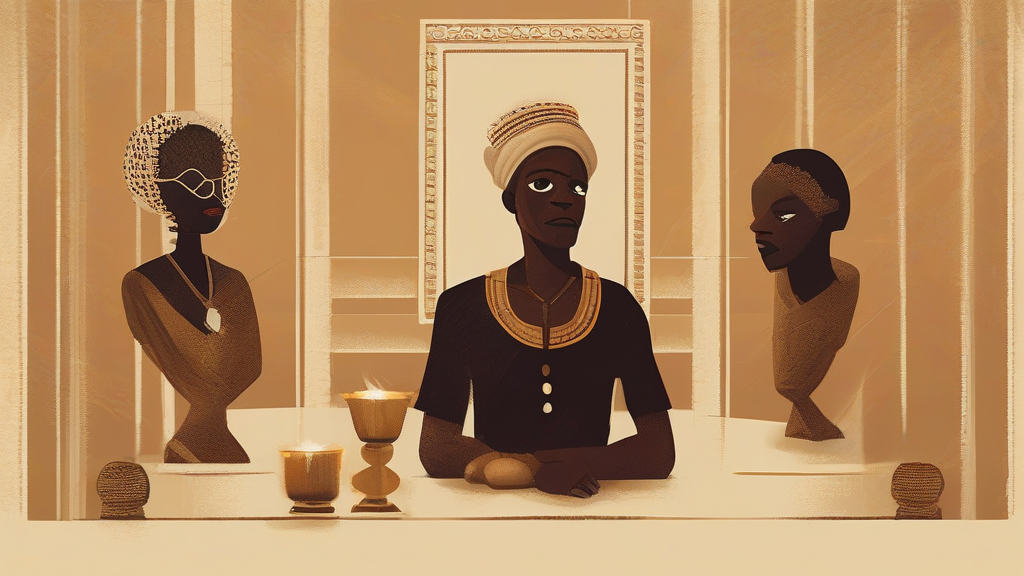
What does blackamoor mean?
"Blackamoor" is an archaic English noun that once denoted a dark-skinned person, particularly one of Black African origin. Formed by fusing "black" with "Moor," it entered English in the early modern period and appeared frequently in literature, travel writing, and commerce until the twentieth century. Today the word is obsolete in ordinary usage and is widely regarded as offensive, surviving chiefly in two contexts: quotations from historical documents, and discussions of the decorative tradition known as "blackamoor figures" — stylized sculptures and furnishings, popular in Europe from the Renaissance onward, that depict Africans as exotic attendants bearing trays, torches, or mirrors. Because of its associations with colonial-era attitudes and racial stereotyping, writers should treat the term with care, reserving it for historical citation or art-historical discussion rather than using it descriptively about people. Its decline reflects broader shifts in the language away from labels once accepted but now recognized as demeaning.
nounAn archaic and now offensive term for a dark-skinned person, especially one of Black African origin. The word survives mainly in historical texts and in references to decorative art depicting such figures.
- (dated and offensive) A dark-skinned person, especially one of Black African origin.
- A stylized decorative figure of a Black African, common in European art and furnishings from the Renaissance onward.
"The antique shop displayed several carved blackamoor figures alongside its other eighteenth-century curiosities."
"In the old travel narrative, the sailors described trading with the blackamoors along the coast."
"The palazzo's entrance was flanked by gilded blackamoor torchères, their lacquered surfaces gleaming in the candlelight."
The standard plural simply adds -s; it appears mostly in historical and art-historical writing.
"The collection included several blackamoors carved from ebony and walnut."
Venice's ornate 'blackamoor' statues — exoticized figures of Africans holding up trays and mirrors — became so controversial that modern designers like Dolce & Gabbana faced backlash for reviving the motif.
Reviewed by Deb Chak, Editor. AI-assisted content curated by RJS Tech Solutions LLP.
Etymology of blackamoor
"Blackamoor" is a compound of the native English adjective "black" and "Moor," which derives from Latin "Maurus," meaning an inhabitant of ancient Mauretania in North Africa. The compound arose in English during the early modern period, when "Moor" alone had come to signify any dark-skinned African. Cognates and derivatives of the same Latin root include "Moorish" and the place-name "Mauritania." As attitudes changed, the word fell out of respectful use and acquired its present status as an offensive historical term.
How blackamoor is actually used
The word is archaic and is now widely regarded as offensive; it should be avoided in contemporary speech and writing except when quoting historical sources or discussing the decorative-art tradition by name.
Easily confused with blackamoor
A Moor specifically refers to the Muslim inhabitants of North Africa and Iberia during the Middle Ages, whereas blackamoor was a broader, now-offensive label applied to any dark-skinned person.