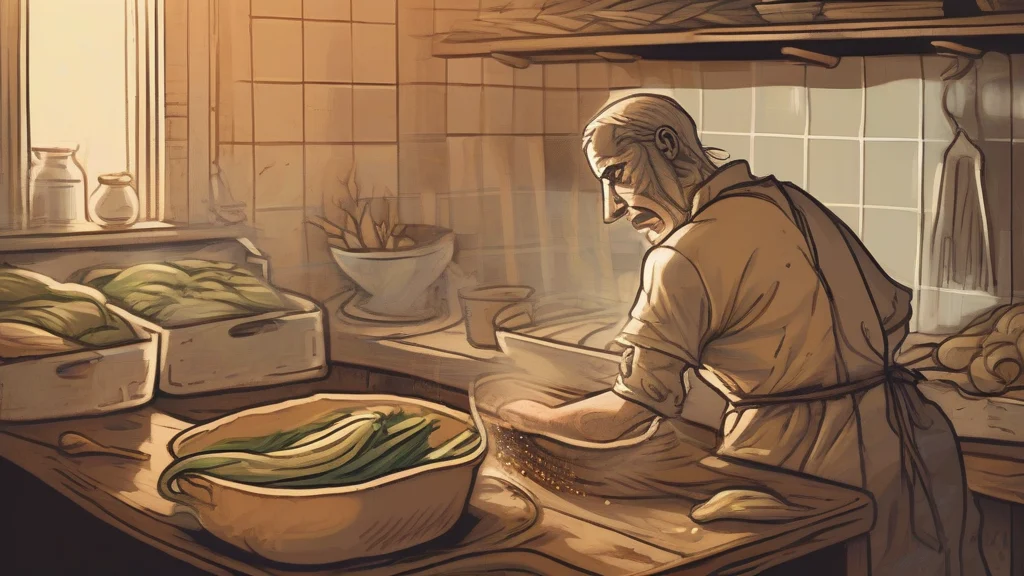
What does blanched mean?
Blanched is chiefly the past tense and past participle of the verb blanch, though it also functions as an adjective describing something that has undergone that treatment. Its most familiar modern sense is culinary: vegetables or nuts that are blanched have been plunged briefly into boiling water—often followed by an ice bath—to soften them, brighten their color, loosen skins (as with almonds), or prepare them for freezing. A second common sense describes a person's face turning suddenly white or pale with fear, shock, or horror: 'her face blanched at the news.' The word can also mean simply whitened or deprived of color, and in horticulture refers to plants deliberately grown without light to keep them pale and tender. Derived through Old French from a Germanic root meaning 'white,' blanched shares ancestry with words like blank and bleach. It appears constantly in cookbooks and recipes, and its figurative use lends writing a vivid, slightly formal way to convey visceral reaction.
Past tense and past participle of blanch: scalded briefly in boiling water; made white or pale; (of a face) turned pale from fear or shock.
"He blanched the tomatoes to remove their skins."
Culinary blanching typically involves a quick boil followed by plunging into ice water.
Whitened, pale, or scalded in this way, especially of food prepared by brief boiling.
"Garnish the dish with blanched almonds."
That pale look on someone's face when they hear shocking news literally comes from the same root as the color white—and it's why cooks 'blanch' almonds before peeling them.
Reviewed by Deb Chak, Editor. AI-assisted content curated by RJS Tech Solutions LLP.
Etymology of blanched
Blanched derives from the verb blanch, which entered Middle English from Old French blanchir ('to whiten'), formed on blanc meaning 'white.' Blanc itself came from a Germanic word (*blank-) meaning shining or white, which also gave English blank, bleach, bleak, and blink. The word has carried both literal senses—whitening things such as almonds and linen—and figurative ones, since at least the early modern period, with faces 'blanching' at frightening sights appearing in English literature centuries ago.
Related word forms
How blanched is actually used
In cooking, 'blanched' implies a brief scalding followed usually by an ice bath, distinct from full boiling. When describing faces, it carries a literary register and suggests genuine shock or dread rather than mere embarrassment. In British English the vowel is typically /ɑː/ while American English uses /æ/.
Easily confused with blanched
'Launched' means started or propelled into motion, while 'blanched' means whitened, scalded, or turned pale with fear—the two are unrelated despite a similar ending.