What does blasted mean?
Blasted functions today in two main ways. Most commonly it is an informal expletive—an intensifier expressing irritation—that speakers slot in front of nouns: 'my blasted car won't start.' It originated as a polite substitute for stronger oaths like 'damned,' making it a mild curse suitable for general company, though it now sounds slightly dated outside British English. The word's older, literal sense survives in literary contexts: something can be described as 'blasted' if it has been devastated by wind, frost, fire, or explosion—a blasted tree, a blasted landscape. This literal meaning comes from the verb 'to blast,' itself rooted in Old English 'blǣst,' related to blowing, since violent winds were believed to wither crops and trees. Over time the sense shifted from physical destruction to emotional venting, so that calling something blasted no longer implies it was literally destroyed—only that the speaker wishes it were.
Expressing irritation as a mild expletive; or describing something devastated by wind, fire, or explosion.
"He slammed the blasted door behind him."
Informal; the expletive sense is chiefly British.
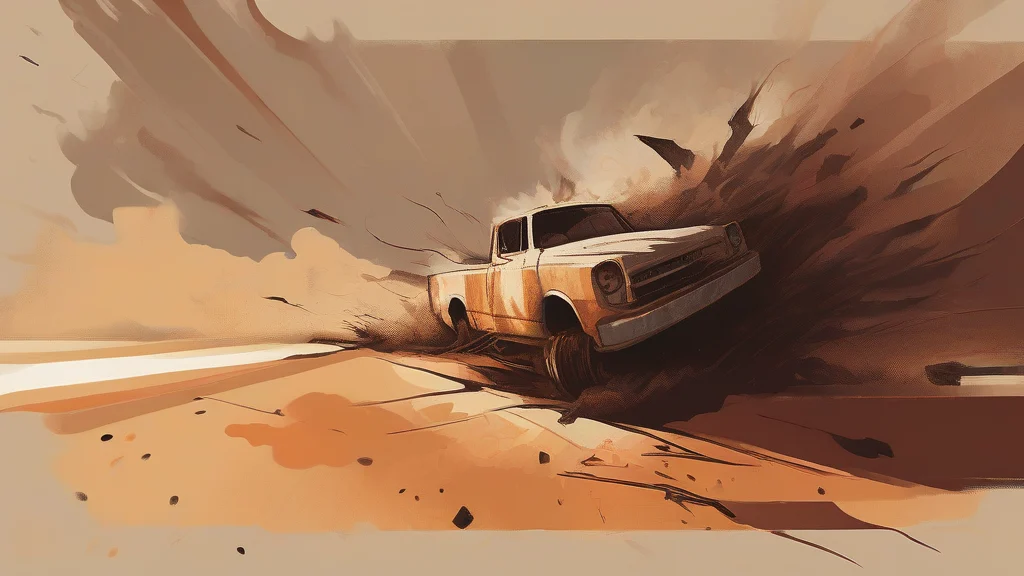
The past participle of 'blast': having been destroyed, demolished, or ruined by explosion or violent force.
"The old chimney was blasted apart during the demolition."
Blasted began life as literal destruction—trees blasted by lightning—and softened over centuries into Britain's favourite polite way of swearing without swearing.
Reviewed by Deb Chak, Editor. AI-assisted content curated by RJS Tech Solutions LLP.
Etymology of blasted
Blasted derives from the verb 'blast,' from Old English 'blǣst,' meaning a puff of wind or blowing, cognate with Old Norse 'blastr.' In Middle English, 'blast' came to mean a destructive gust that withered vegetation, so a tree struck by blight was said to be 'blasted.' By around the seventeenth century, the past participle had acquired figurative use as an imprecation, and it eventually settled into its modern role as a mild substitute for stronger curses such as 'damned.' It shares its Germanic root with words like 'blow' and, more distantly, 'bloom.'
Related word forms
How blasted is actually used
'Blasted' as an oath is informal and mildly old-fashioned in American English but still current in British English, where it sits below 'bloody' in strength. Its literal sense ('blasted by the wind') is literary and somewhat dated.
Easily confused with blasted
'Blessed' means holy or fortunate (and as a mild expletive is affectionate), whereas 'blasted' expresses irritation and derives from the verb 'to blast' (destroy).