What does blindworm mean?
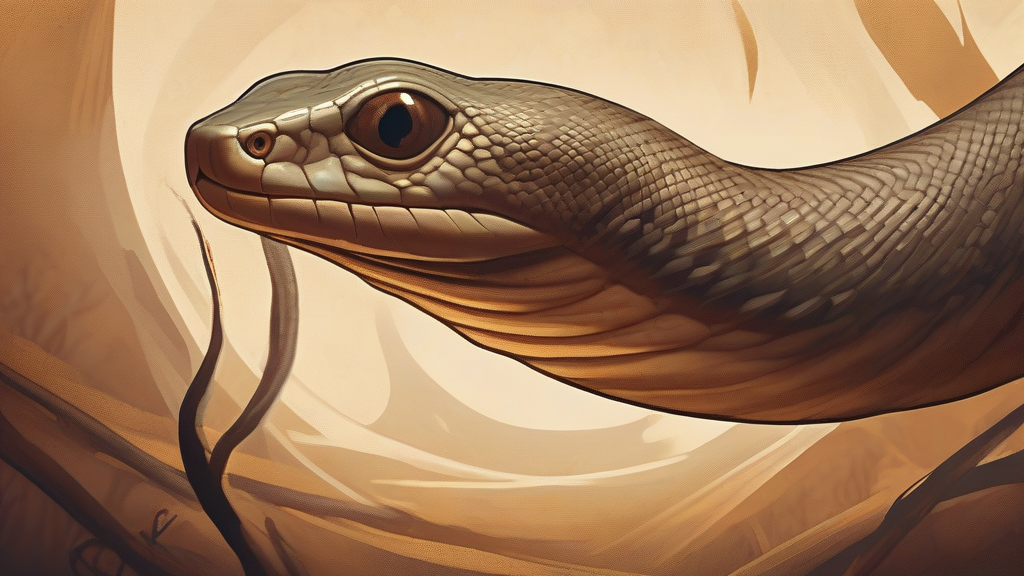
A blindworm is a small, legless lizard, most familiarly the European slow worm (Anguis fragilis), whose long, smooth body leads people to mistake it for a snake or even an earthworm. Despite the name, the animal is neither blind nor a worm: it has functional eyes and is in fact a squamate reptile more closely related to lizards than to snakes. Blindworms are harmless to humans, feed on slugs and other soft-bodied invertebrates, and are frequently welcomed by gardeners for this reason. The word is largely British and increasingly old-fashioned, having been displaced in modern usage by 'slowworm'. It survives in older natural-history writing, regional speech, and folklore, where the creature was sometimes wrongly believed to be venomous. For readers of classic nature writing, knowing the term helps decode references to an animal still common across much of Europe.
nounA blindworm is a small, legless lizard — especially the slow worm (Anguis fragilis) of Europe — which superficially resembles a snake or earthworm. The name is traditional and somewhat misleading, as the animal is neither truly blind nor a worm.
- The slow worm (Anguis fragilis), a legless lizard native to Europe and often mistaken for a snake.
- By extension, any small burrowing limbless reptile popularly called a 'blindworm', particularly in older or regional usage.
"Turning over the garden stone, she found a blindworm coiled in the damp soil beneath."
"The children watched a blindworm gliding through the grass at the edge of the meadow."
"In old English folklore, the blindworm was said to be venomous, though it is entirely harmless."
Standard regular plural; used when referring to multiple individuals of the species.
"The reserve supports a healthy population of blindworms in its south-facing banks."
Despite its name, the blindworm isn't blind and isn't a worm — it's a lizard that gave up its legs millions of years ago.
Reviewed by Deb Chak, Editor. AI-assisted content curated by RJS Tech Solutions LLP.
Etymology of blindworm
The word blindworm is a straightforward English compound of 'blind' and 'worm', formed in the vernacular rather than borrowed from Latin or Greek; it has been in use since at least the early modern period. The element 'blind' derives from Old English 'blind', and 'worm' from Old English 'wyrm', which originally meant any creeping creature, including snakes and dragons. The compound reflects a folk perception that the animal was sightless, an impression reinforced by its secretive, burrowing habits. Its closest relative in usage is 'slowworm', which eventually became the standard name for the same species.
How blindworm is actually used
The word is chiefly British and somewhat dated or dialectal; 'slowworm' is now the standard common name for Anguis fragilis in most modern field guides and everyday speech. The term carries no negative connotation, though it reflects an old folk misconception that the animal lacks sight.
Easily confused with blindworm
Slowworm is simply the more common modern name for the same animal that 'blindworm' denotes; the terms are synonyms rather than different creatures.
A blind snake is a genuine burrowing snake of the family Typhlopidae with vestigial eyes, whereas the blindworm is a legless lizard with visible eyes.