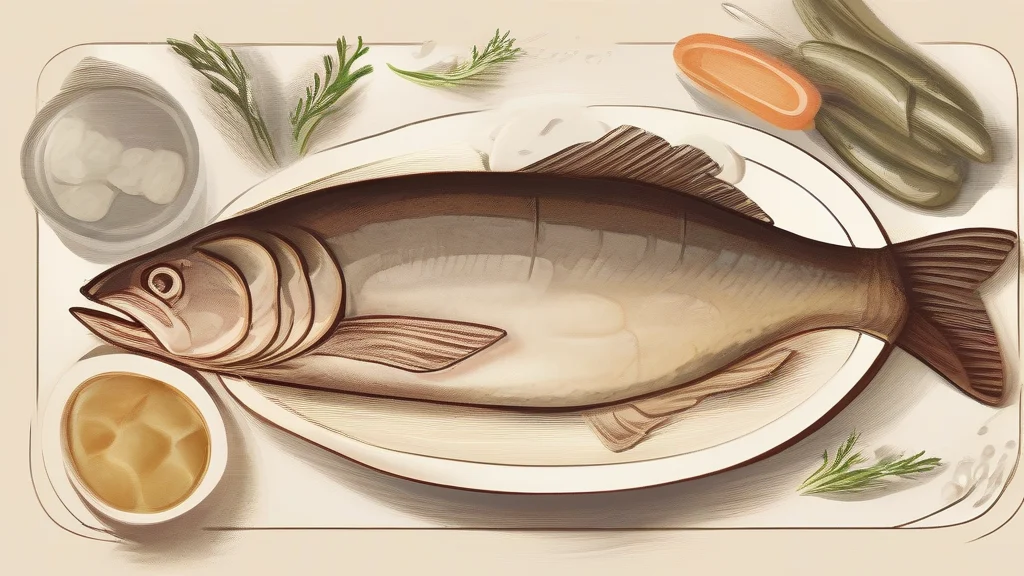
What does bloater mean?
A bloater is a whole herring preserved by light salting and cold smoking, a delicacy long associated with the Norfolk fishing port of Great Yarmouth. Unlike a kipper, which is split open before curing, the bloater is smoked intact — ungutted — which gives it its characteristic plump shape and rich, mildly smoky taste. The name derives from the old sense of the verb "bloat," meaning to smoke or cure fish rather than to swell. Bloaters were a staple of the British breakfast table through the nineteenth and early twentieth centuries, typically grilled, baked, or toasted and served with buttered bread. Today the word sounds quaint to many ears, carrying strong connotations of tradition, seaside holidays, and old-fashioned English cookery, though bloaters are still produced and enjoyed in parts of East Anglia.
nounA bloater is a whole herring that has been lightly salted and cold-smoked without being gutted, giving it a soft texture and mild smoky flavour. It is a traditional British food, especially associated with the port of Great Yarmouth.
- A whole herring cured by light salting and cold smoking, popular in Britain as a breakfast dish.
- (Rare, dated) Something that swells or bloats; occasionally used of inflated things.
"For breakfast she grilled a couple of bloaters and served them on buttered toast."
"The fishmonger's window was lined with golden-brown bloaters from Yarmouth."
"He toasted a bloater over the fire until the skin crisped and blistered."
Standard plural; commonly used when referring to the fish sold or served in quantity.
"The recipe calls for two bloaters, grilled until the skins crackle."
A bloater isn't something swollen — it's a whole herring smoked without ever being gutted, and Victorian England couldn't get enough of them.
Reviewed by Deb Chak, Editor. AI-assisted content curated by RJS Tech Solutions LLP.
Etymology of bloater
The word bloater comes from the verb "bloat," which in sixteenth- and seventeenth-century usage meant to smoke or cure fish, a sense now obsolete but preserved in this noun. It first appears in English in the seventeenth century as a term for smoked herring. The underlying Germanic root behind "bloat" also gives us words such as "bloated."
How bloater is actually used
"Bloater" is chiefly British and now somewhat old-fashioned or regional, evoking traditional seaside towns and Victorian breakfast tables. In American English it is largely unknown, and even in Britain kippers are far more common today.
Easily confused with bloater
A kipper is a herring that is split open, salted or brined, and smoked, whereas a bloater is left whole and unsplit.