What does bluecoat mean?
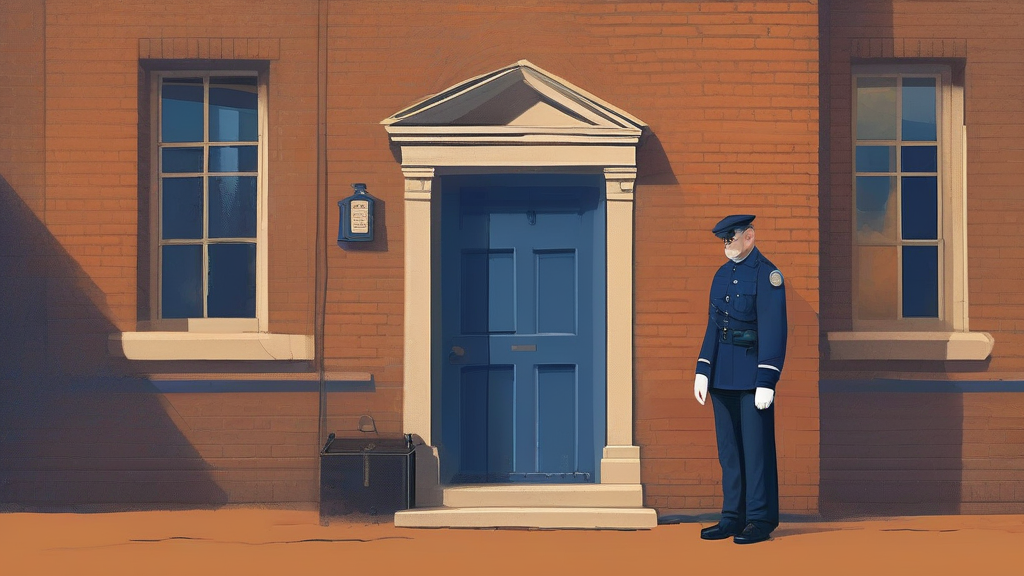
A bluecoat is a person identifiable by a blue coat, a term that has taken on two distinct historical meanings on either side of the Atlantic. In the United States, it is best known as an informal name for a Union soldier during the American Civil War, whose dark-blue uniform contrasted with the gray of the Confederacy — soldiers were often simply called 'the bluecoats' or 'the graybacks.' In Britain, the term refers to the pupils of so-called bluecoat schools, most famously Christ's Hospital in London, founded in the sixteenth century, where children still wear a striking Tudor-era uniform consisting of a long blue coat and yellow stockings. Beyond these specific uses, bluecoat can denote anyone marked out by a blue coat. The word is largely historical and literary today, carrying connotations of tradition, service, and institutional identity rather than everyday description.
nounA person who wears, or is identified by, a blue coat; historically used especially for a Union soldier in the American Civil War and for pupils of certain English charity schools such as Christ's Hospital, whose uniform includes a long blue coat.
- A Union soldier in the American Civil War, so called for his blue uniform.
- A pupil of a 'bluecoat' charity school, especially Christ's Hospital in England, whose historic uniform is a long blue coat.
- Any person distinguished by wearing a blue coat.
"The old letters described her great-great-grandfather as a bluecoat who marched with Sherman through Georgia."
"The battlefield museum displayed the tattered uniform of a young bluecoat who had enlisted at sixteen."
"At Christ's Hospital, generations of bluecoats have paraded through the City of London on St Matthew's Day."
The plural is standard and is the usual way to refer collectively to Union soldiers or groups of bluecoat-school pupils.
"Across the field stretched a line of bluecoats, bayonets glinting in the morning sun."
In the American Civil War, one word for your enemy depended entirely on the color of his coat — blue meant Union, gray meant Confederate.
Reviewed by Deb Chak, Editor. AI-assisted content curated by RJS Tech Solutions LLP.
Etymology of bluecoat
The word is a straightforward compound of 'blue' and 'coat', formed in English to describe people whose dress was a blue coat. Its two principal senses arose independently: the military sense emerged from the blue uniforms adopted by Federal forces in the nineteenth century, while the British educational sense grew from the long blue coats worn by scholars at charity schools such as Christ's Hospital. It belongs to a family of similar formations built on 'coat', including 'redcoat', 'greatcoat', 'overcoat', and 'waistcoat'.
How bluecoat is actually used
Mostly historical or literary in modern usage. In American contexts it almost always refers to Union soldiers; in British contexts it usually refers to the distinctive uniformed pupils of certain endowed schools. Rarely used as a formal designation today.
Easily confused with bluecoat
A redcoat is a British soldier in the traditional red uniform, while a bluecoat is typically an American Civil War Union soldier or a pupil in a blue-coated uniform.