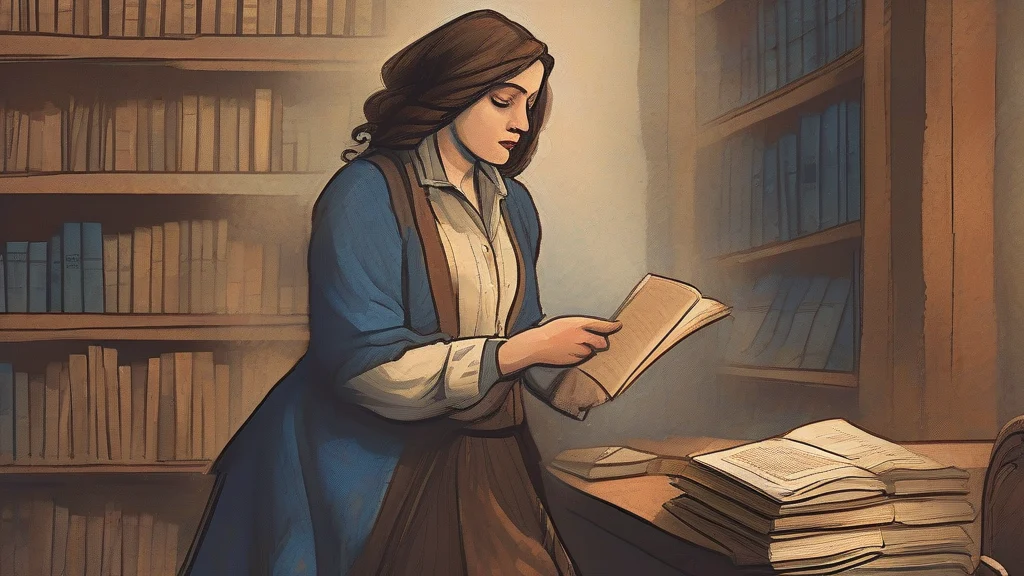
What does bluestocking mean?
A bluestocking is an educated, intellectually inclined woman, particularly one with serious interests in literature, scholarship, or learned conversation. The word originated in mid-18th-century London, where informal literary gatherings hosted by figures such as Elizabeth Montagu came to be known as the Blue Stocking Society, partly because some attendees wore plain blue worsted stockings rather than formal black silk ones. Although men attended these salons, the nickname gradually attached itself to learned women, acquiring a mildly mocking tone that implied pedantry or a lack of interest in fashion and domestic accomplishment. Today the term is largely historical or gently humorous; it survives most naturally in phrases such as 'the Bluestockings' when discussing 18th-century salon culture. In modern writing about women's education, 'bluestocking' is sometimes used neutrally or even admiringly to evoke a tradition of female intellectual independence.
nounA bluestocking is an educated, intellectual woman, especially one with scholarly or literary interests. The term is now chiefly historical or mildly humorous, often carrying connotations of pedantry or disregard for fashionable appearance.
- An educated, intellectual woman, especially one devoted to literature or scholarship; often used (now somewhat dated) with a suggestion of pedantry or indifference to fashion.
- (historical) A member of the mid-18th-century Blue Stocking Society, a London social and literary circle that included figures such as Elizabeth Montagu.
"A noted bluestocking, she filled her drawing room with poets and philosophers instead of card players."
"Her aunts dismissed her as a bluestocking for preferring Virgil to dancing lessons."
"Elizabeth Montagu hosted the gatherings that gave rise to the term 'Bluestocking'."
Standard regular plural; capitalised as 'Bluestockings' when referring collectively to the members of the 18th-century society.
"The Bluestockings of the 1750s opened literary conversation to women on their own terms."
The original 'Bluestockings' were men and women who met to discuss literature wearing plain blue worsted stockings instead of formal black silk — the nickname stuck to the women long after it faded from the men.
Reviewed by Deb Chak, Editor. AI-assisted content curated by RJS Tech Solutions LLP.
Etymology of bluestocking
The word comes from the Blue Stocking Society, a London literary circle of the 1750s associated with Elizabeth Vesey, Elizabeth Montagu, and others, whose meetings were informal enough that guests might wear ordinary blue worsted stockings instead of formal black silk. The name was applied first to the mixed company and then increasingly to its women members, giving English the noun 'bluestocking' for a learned woman by the late 18th century. It is unrelated to any deep root: 'blue' is from Old French 'bleu', ultimately Germanic, and 'stocking' is from Old English 'stocc', so the compound is purely English in formation.
How bluestocking is actually used
The word is somewhat dated in everyday use and can sound condescending when applied to modern women; in feminist and historical writing it is often reclaimed neutrally or positively, as in the phrase 'Bluestocking' for members of the 18th-century society. Capitalised forms usually refer specifically to the historical society or its members.
Easily confused with bluestocking
'Blue-collar' describes manual or industrial workers, while 'bluestocking' refers to a learned, intellectual woman — the two share only the colour blue.