What does boerewors mean?
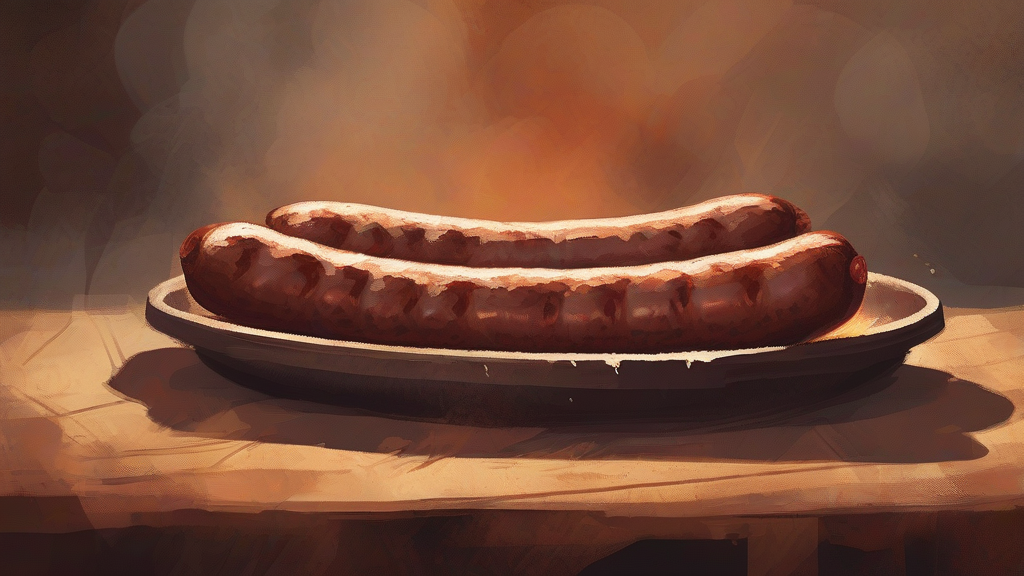
Boerewors is a thick, coiled sausage that ranks among South Africa's most beloved culinary traditions. Made from coarsely ground beef — frequently combined with pork or lamb — and seasoned generously with coriander and other spices, it is formed into one long, continuous spiral that is grilled whole over open coals, usually at a braai, the South African barbecue. The name comes from Afrikaans, combining 'boer' (farmer) and 'wors' (sausage). In South Africa the word behaves mostly as a mass noun, so people speak of buying or grilling 'boerewors' without counting pieces, though individual coils may be counted. Served in a sliced bread roll, it becomes the popular 'boerewors roll', a staple of sporting events and street food. Beyond its flavour, boerewors carries strong cultural weight: for many South Africans it evokes family gatherings, national pride, and shared hospitality, making it far more than just another sausage.
nounA thick, coiled South African sausage made from beef (often blended with pork or lamb) and heavily spiced with coriander, traditionally grilled over coals at a braai.
- A traditional South African fresh sausage made from coarsely minced beef and spices such as coriander, formed into a continuous coil and typically barbecued.
"Nothing says weekend in South Africa quite like the smell of boerewors sizzling on the braai."
"She fired up the grill and laid the boerewors across the hot coals in its familiar spiral."
"The butcher's counter offered everything from lamb chops to freshly made boerewors."
Most commonly used as a mass noun with no distinct plural; when a plural is needed, the form stays the same, e.g. 'several coils of boerewors'.
"They grilled several coils of boerewors for the crowd."
Its name literally means 'farmer's sausage' — and it's traditionally coiled into one long continuous spiral so it can be lifted off the grill in a single piece.
Reviewed by Deb Chak, Editor. AI-assisted content curated by RJS Tech Solutions LLP.
Etymology of boerewors
The word 'boerewors' entered English from Afrikaans, where it is a compound of 'boer', meaning farmer, and 'wors', meaning sausage — both ultimately derived from Dutch ('boer' and 'worst'). It reflects the dish's origins in farming communities of the Cape, where settlers developed the spiced, coiled sausage as a practical way to use fresh meat. Related terms include 'boer' itself and German 'Wurst', which share the same Germanic root as 'wors'.
How boerewors is actually used
In South African English the word functions largely as an uncountable (mass) noun — you buy 'some boerewors' rather than counting individual sausages — though it can be treated as countable when referring to individual coils. It is strongly associated with informal outdoor cooking and carries warm connotations of national identity and hospitality rather than formality.
Easily confused with boerewors
Droëwors is a thin dried version of boerewors cured like jerky and eaten as a snack, whereas boerewors itself is fresh and meant to be cooked.
Biltong is cured, dried strips of meat, not a sausage like boerewors.