What does bogged mean?
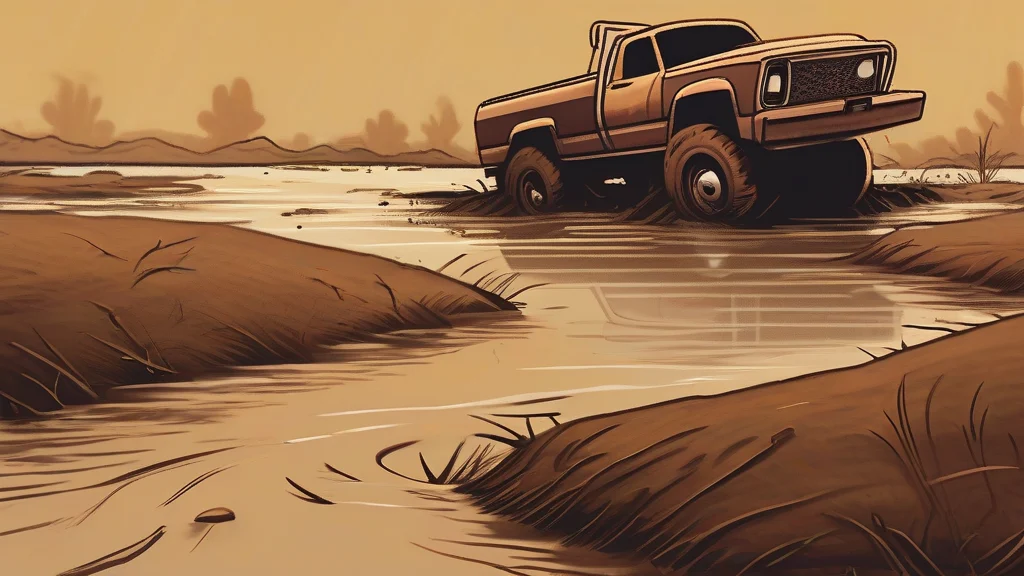
"Bogged" is the past participle of "bog", meaning to sink into or become stuck in soft, wet, muddy ground. A vehicle whose wheels cannot turn because of deep mud is said to have gotten bogged — a situation familiar enough in rural Australia and New Zealand that "getting bogged" is a routine part of off-road driving talk. The word also carries an important figurative sense: to be "bogged down" is to be stalled, overwhelmed, or unable to make progress, whether by excessive paperwork, complicated details, or mounting problems. In this extended use, the swampy imagery persists — being trapped in something thick that slows every step. Informal but widely understood across British and American English, "bogged" conveys frustration and immobility with vivid physical force, making it a memorable alternative to blander words like "delayed" or "obstructed".
Stuck fast in wet, muddy ground, especially so that a vehicle or person cannot move.
"We spent two hours digging out the Land Rover after it became bogged near the river crossing."
Most common in Australian and New Zealand English for the literal sense.
Past participle of 'bog': to have become stuck in mud or mire, literally or figuratively (as in 'bogged down').
"Having been bogged down by legal complications, the project was quietly shelved."
In Australia and New Zealand, getting your four-wheel drive 'bogged' is practically a national pastime — and an entire culture of recovery gear exists just to un-bog it.
Reviewed by Deb Chak, Editor. AI-assisted content curated by RJS Tech Solutions LLP.
Etymology of bogged
The word derives from "bog", which entered English in the late Middle Ages, most likely from Irish or Scottish Gaelic "bogach" meaning soft, marshy ground, ultimately from a Celtic root meaning "soft". Originally used to describe peat wetlands, "bog" soon developed a verb form meaning to sink into such terrain, from which "bogged" emerged as its past participle. The figurative phrase "bogged down", now the most widespread use, extends the literal image of a wheel sinking into a swamp to any situation where progress stalls.
Related word forms
How bogged is actually used
Predominantly informal. The literal sense ('the car got bogged') is especially common in Australia and New Zealand, where off-road driving makes it everyday vocabulary. The figurative sense appears almost exclusively in the collocation 'bogged down', which is standard in both British and American English.
Easily confused with bogged
'Clogged' means blocked or obstructed (as a drain or artery), while 'bogged' specifically suggests being stuck in mud or mired in difficulty.
'Bagged' means placed in a bag or captured, whereas 'bogged' means stuck in mud or stalled by difficulty.