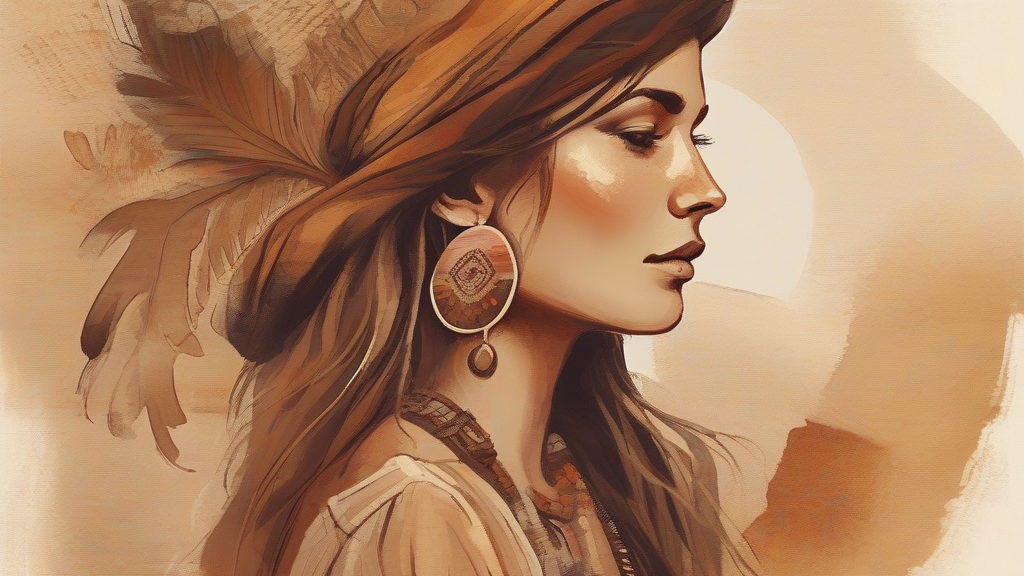
What does boho mean?
Boho describes a style marked by relaxed, unconventional, and artistic sensibilities, most often applied to fashion, hairstyles, and interior design. The word is an informal shortening of 'bohemian', itself a term coined in nineteenth-century France for artists and drifters who lived outside bourgeois norms — a label borrowed from the name of Bohemia, whose people were once mistakenly thought to be Romani wanderers. Today, boho conjures images of flowing fabrics, layered textures, vintage finds, natural materials, and an air of carefree individuality. It can also describe a person who embodies that spirit, functioning as a noun as well as an adjective. While beloved in lifestyle media under labels like 'boho chic', the term carries connotations of creativity and freedom alongside a hint of trendiness; some feel its commercial popularity has softened its original edge as a marker of true countercultural living.
Characteristic of or styled after a bohemian aesthetic; relaxed, artistic, and unconventional in appearance, especially in clothing, hair, or interior design.
"Her boho wardrobe was full of embroidered tunics, fringe bags, and worn leather sandals."
Almost always positive or neutral in fashion contexts; occasionally used dismissively to suggest affectation.
A person who lives or dresses in a bohemian, free-spirited manner.
"The café crowd was a mix of students, freelancers, and aging bohos."
Used when referring to multiple people of this type; there is no plural for the adjectival sense.
"The festival grounds were dotted with bohos in crochet tops and wide-brimmed hats."
'Boho' is just 'bohemian' with its tail clipped off — but that casual abbreviation helped turn a 19th-century counterculture into a billion-dollar fashion category.
Reviewed by Deb Chak, Editor. AI-assisted content curated by RJS Tech Solutions LLP.
Etymology of boho
Boho is a colloquial abbreviation of 'bohemian', which entered English from French in the nineteenth century to describe unconventional artists and their way of life. That term derives from Bohemia, the Central European region, reflecting a long-standing (mistaken) European association of the region's people with the Romani, whose nomadic, outsider lifestyle came to symbolize artistic unconventionality. The clipped form 'boho' emerged in twentieth-century English and gained wide currency in the early twenty-first century through fashion journalism, particularly around the 'boho chic' look popularized by celebrities in the mid-2000s.
How boho is actually used
Informal register; overwhelmingly common in fashion, beauty, and interiors media, where 'boho chic' became a staple label of the 2000s–2010s. Some critics view heavy commercialization of the term as diluting its original association with genuine artistic nonconformity.
Easily confused with boho
Bohemian is the older, fuller term for the same aesthetic or lifestyle, while 'boho' is its informal, modern abbreviation used chiefly in fashion and décor.