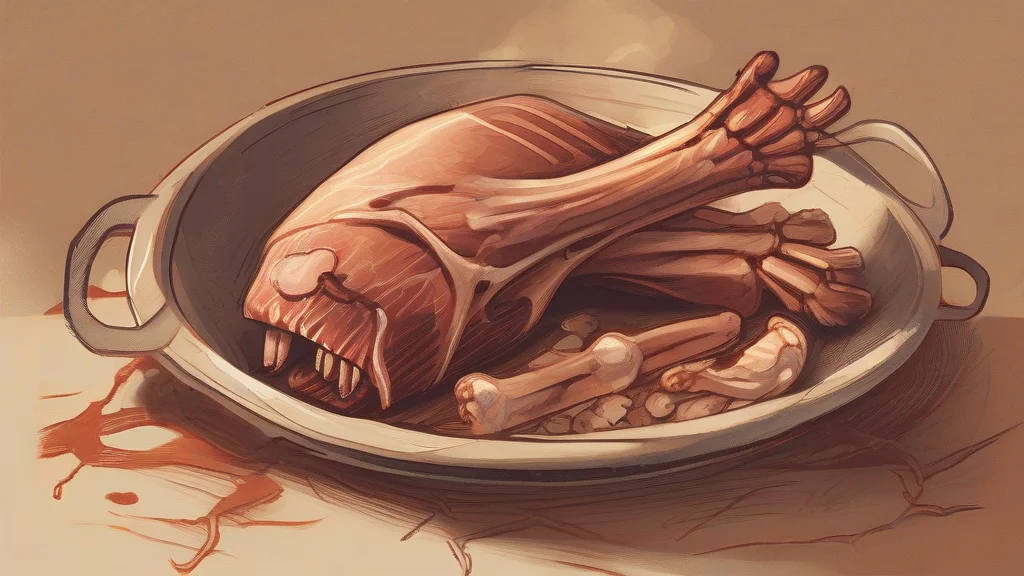
What does boned mean?
"Boned" functions primarily as an adjective describing meat or fish from which the bones have been removed, as in a boned chicken breast or a boned and rolled joint of lamb prepared by the butcher. The term also has an established place in fashion and historical dressmaking, where a bodice or corset described as "boned" is one stiffened with strips of bone — historically whalebone, or baleen — or with modern substitutes such as steel or plastic boning. Less commonly, it can describe something that possesses bones, sometimes used figuratively. As a verb form, "boned" is the past tense and participle of "bone", meaning to remove bones from flesh. The word derives from Old English "bān", meaning bone, which traces back through Germanic roots shared with related words such as German "Bein" and Dutch "been". In cooking, boned cuts are prized for ease of eating and even cooking, making the term a staple of recipes, menus, and butchery guides across the English-speaking world.
(Of meat or fish) having had the bones removed.
"He bought a boned leg of lamb for Sunday roast."
Standard in cookery writing and butchery.
Stiffened or supported with strips of bone or bone-like material, especially in corsetry.
"The bodice was lightly boned to keep its shape."
Common in historical costume and sewing terminology.
Past tense and past participle of "bone": to remove the bones from meat or fish.
"She boned the trout carefully before stuffing it."
A 'boned' corset contains actual whalebone history — before steel, Victorian corsets were literally stiffened with baleen, the keratin 'bone' from whales.
Reviewed by Deb Chak, Editor. AI-assisted content curated by RJS Tech Solutions LLP.
Etymology of boned
"Boned" derives from "bone", from Old English "bān", meaning bone, which comes from Proto-Germanic *bainą, a root shared with German "Bein" and Dutch "been". The adjectival use arose from the verb "bone", meaning to remove bones, attested in English cookery from at least the early modern period. Its extension into corsetry reflects the historical practice of stiffening garments with whalebone, or baleen, giving the word a distinctive second life in fashion vocabulary.
How boned is actually used
Most common in culinary contexts, where "boned" describes prepared meat or fish. In fashion and historical dressmaking, it refers to corsetry stiffened with whalebone or modern substitutes like plastic or steel. As a verb form, "boned" is simply the past tense and past participle of "bone".
Easily confused with boned
"Borne" is a form of the verb bear meaning carried or endured, while "boned" relates to bones, whether removed from food or used as structural support.