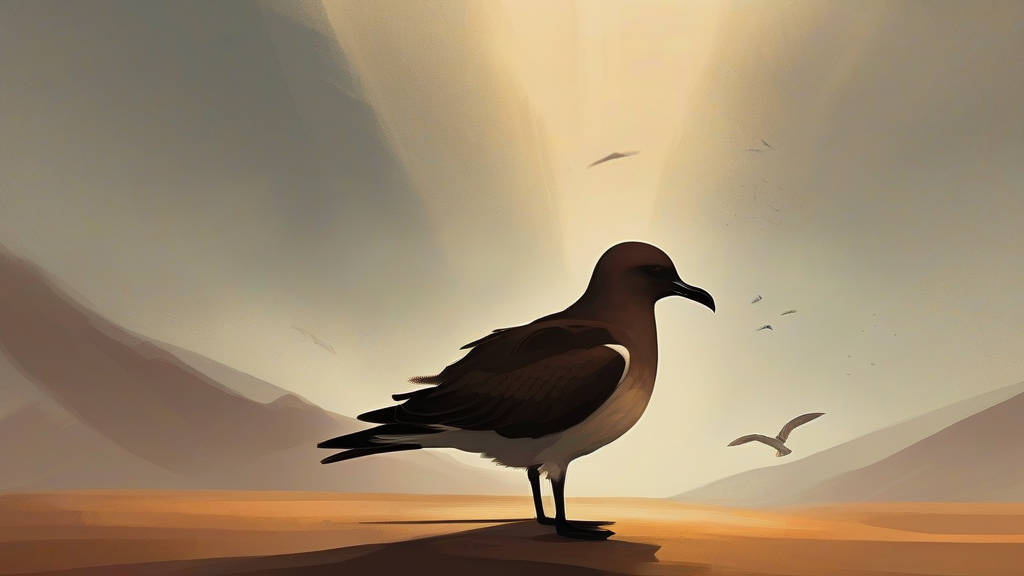
What does bonxie mean?
Bonxie is the traditional Shetland and Orkney name for the great skua, Stercorarius skua, a large and formidable seabird that breeds on northern coasts of Britain, particularly in the Northern Isles. Roughly the size of a herring gull but far more powerful, the bonxie earns its fearsome reputation through piracy: it chases gulls, terns, and other seabirds in flight, forcing them to disgorge their food, and it will also prey on fish, smaller birds, and carrion. It nests on the ground in moorland and coastal grassland, defending its territory with aggressive dive-bombing displays that any visitor to a Shetland colony soon learns to respect. Though 'bonxie' is a dialect word rooted in Scots usage of the Northern Isles, it has entered wider currency through British birding culture and nature writing, where it is cherished as an affectionate, characterful alternative to the plainer standard name. For readers of natural history, knowing 'bonxie' offers both a precise label for a remarkable bird and a small taste of the linguistic heritage of Scotland's islands.
nounA bonxie is a regional British name, especially in Shetland and Orkney, for the great skua (Stercorarius skua), a large, aggressive predatory seabird of northern coasts.
- The great skua (Stercorarius skua), a large predatory seabird of the North Atlantic.
"The bonxies harried the gulls until they dropped their fish."
"Walking the cliff path at Hermaness, we passed within yards of nesting bonxies."
"Fishermen in Shetland have long cursed the bonxie for stealing bait and catch alike."
Standard pluralization; the plural is common because the birds often nest in loose colonies.
"Dozens of bonxies patrolled the moor above the seabird cliffs."
The bonxie is the pirate of the North Atlantic — a seabird that bullies gulls and terns into surrendering their catch mid-air, and its very name comes from the windswept isles of Shetland.
Reviewed by Deb Chak, Editor. AI-assisted content curated by RJS Tech Solutions LLP.
Etymology of bonxie
The origin of 'bonxie' is uncertain, though it is firmly established in the Scots of Shetland and Orkney, where Norse influence on local vocabulary has been deep since the Viking age; some sources have suggested a connection with Old Norse, but no derivation has been conclusively demonstrated. The word long served as the everyday island name for the great skua before being adopted into English ornithological literature, where it remains a familiar alternative to the scientific-adjacent standard name.
How bonxie is actually used
The word belongs chiefly to Scots dialect, especially Shetlandic and Orcadian speech, but it is widely recognized among British birdwatchers and appears in ornithological writing. It carries a vividly local, informal register compared with the standard term 'great skua.' The plural is typically 'bonxies.'