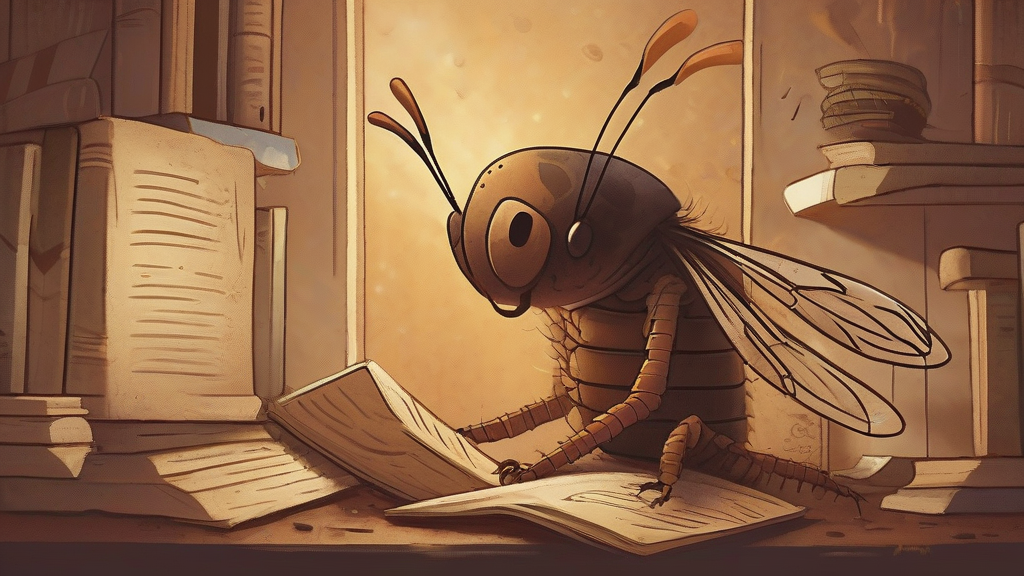
What does booklice mean?
Booklice are minute, soft-bodied insects belonging to the order Psocodea, known scientifically as psocids. Despite their name, they are not true lice and do not parasitize people or animals; instead, they feed chiefly on mold, fungi, and microscopic fragments of starchy material such as paste, glue, and paper sizing. This diet draws them to damp books, cardboard boxes, wallpaper, and stored foods, which is why they are frequently noticed in libraries, archives, and humid households. Their presence is generally regarded as a nuisance rather than a danger — they neither bite nor spread disease — but because they flourish only where moisture is high, an outbreak of booklice often signals an underlying dampness problem worth fixing. The term is used almost exclusively in the plural form, with the singular "booklouse" appearing mainly in technical writing. For librarians, conservators, and homeowners alike, booklice serve as a small but useful indicator of environmental conditions needing attention.
nounTiny, wingless or weakly winged insects of the order Psocodea (psocids) that feed on mold, fungi, and starchy materials, often found in damp books, papers, and stored foods.
- Any of various tiny psocid insects (order Psocodea) commonly found in damp books, papers, pantries, and other places where mold or starchy material is present.
"She discovered booklice among the damp volumes in the basement library and immediately ran a dehumidifier."
"The archivist wore gloves while handling the boxes, wary of the booklice thriving in the humid storage room."
"A few booklice turned up in the flour canister, a sign that moisture had crept into the pantry."
"Booklice" is the standard collective form used in nearly all contexts, from pest-control advice to entomology. The singular "booklouse" appears mainly in scientific or technical writing when referring to an individual insect.
"A single booklouse is easy to miss, but a colony of booklice on a damp shelf is hard to ignore."
Booklice don't actually eat your books — they're after the mold growing on them, which makes them a surprisingly reliable alarm bell for hidden damp.
Reviewed by Deb Chak, Editor. AI-assisted content curated by RJS Tech Solutions LLP.
Etymology of booklice
The word "booklice" is a transparent English compound formed from "book" and "lice," coined for the insect's habit of congregating on the pages and bindings of books kept in damp conditions. The compound arose in English usage as naturalists and household writers needed a common name for these tiny paper-loving insects; it parallels similar vernacular pairings like "bookworm." Although the insects were later classified in the order Psocodea alongside true barklice and parasitic lice, the everyday name reflects their habitat rather than any close taxonomic relationship with biting lice. Cognate compounds built on "book" — such as "bookworm," "booklet," and "bookseller" — share the same Germanic root.
Related word forms
How booklice is actually used
"Booklice" is almost always used in the plural; the singular "booklouse" exists but is less common. The word carries a mildly unpleasant connotation of dampness and neglect rather than dirtiness — booklice thrive in humidity, not necessarily in unsanitary conditions. In entomological contexts they may be referred to as psocids. They are harmless to humans: they neither bite nor transmit disease, though they can be a nuisance in archives, libraries, and food stores.
Easily confused with booklice
A bookworm is either a literal insect larva that bores into books or, figuratively, an avid reader, whereas booklice are tiny psocid insects that feed on mold on paper surfaces rather than boring through pages.
Head lice are parasitic insects that live on human scalps and feed on blood, whereas booklice are harmless scavengers that feed on mold and do not bite people.