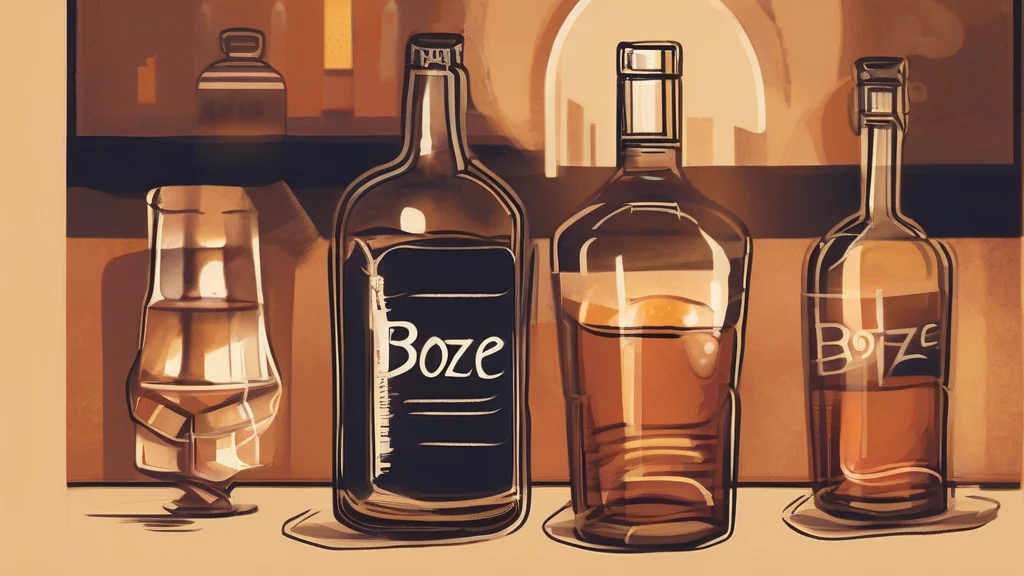
What does booze mean?
"Booze" is an informal English noun for alcoholic drink of any kind — beer, wine, or spirits — typically used when speaking casually or slightly disparagingly about drinking. Saying someone "hits the booze" or has been "on the booze" implies drinking heavily or habitually, which gives the word a rougher, less refined flavor than neutral terms like "alcohol." It also works as a verb, usually in the phrase "booze it up," meaning to drink to excess. The word entered English in the early modern period, likely from Middle Dutch "būsen," meaning to drink heavily, and its derivatives include "boozy," "boozer," and the British colloquialism "booze-up" for a drinking session. Because of its colloquial register, "booze" suits conversation, journalism, and humor far better than formal or technical contexts, where "alcohol" remains the standard choice.
Alcoholic drink, considered informally or with a hint of disapproval.
"He swore off the booze after his doctor's warning."
Colloquial; avoid in formal writing.
To drink alcohol, especially heavily or habitually.
"They spent the holiday boozing at the seaside pub."
Usually appears in phrases like "booze it up" or in progressive forms such as "boozing."
"Booze" sailed into English from Dutch — the same root gave us "boozy" and even the name of the cartoon character Popeye's pal Wimpy's favorite pastime: a good long bout of boozing.
Reviewed by Deb Chak, Editor. AI-assisted content curated by RJS Tech Solutions LLP.
Etymology of booze
"Booze" is first recorded in English in the early 17th century as a verb meaning to drink heavily, most likely borrowed from Middle Dutch "būsen" with the same sense. The noun followed naturally, coming to mean the drink itself. The same root produced "boozy" and "boozer," both well established by the 19th century. Cognate forms appear in other Germanic languages, reflecting a shared Germanic origin for the drinking sense.
Related word forms
How booze is actually used
Informal and slightly colloquial; often carries a connotation of heavy or habitual drinking rather than refined consumption, so it can sound judgmental or self-deprecating depending on context. Common in British and American speech alike; less appropriate in formal writing, where "alcohol" or "spirits" is preferred.
Easily confused with booze
"Boos" are sounds of disapproval shouted by a crowd, while "booze" is an informal word for alcoholic drink.