What does bortsch mean?
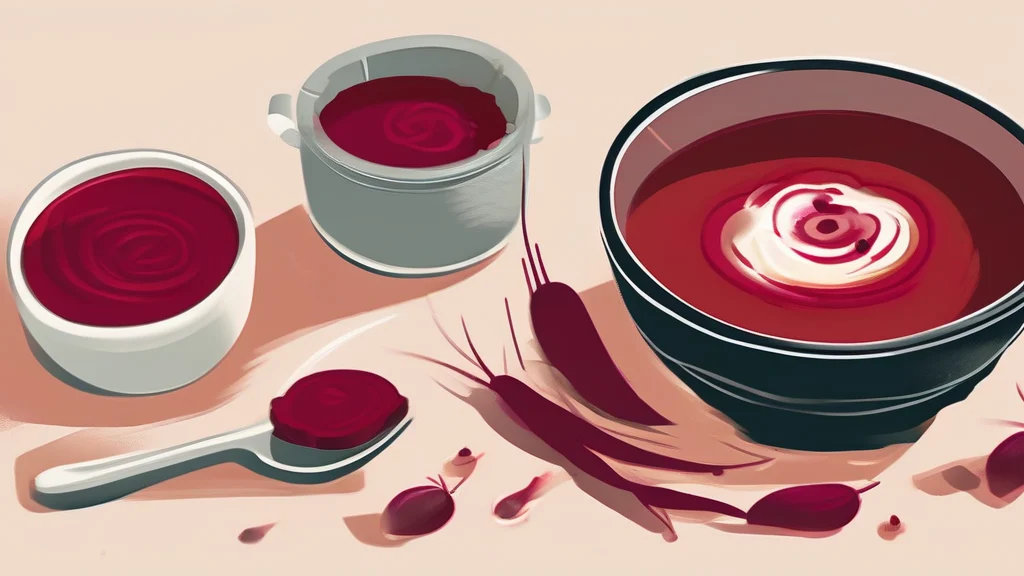
Bortsch is the traditional spelling, particularly favoured in Britain, for the vividly coloured beetroot soup of Eastern European origin known more widely today as borscht. Made by simmering beetroot with stock, vegetables, and often vinegar or other souring agents, it ranges in character from hearty hot winter fare to a refreshing chilled summer dish, and is classically finished with a dollop of soured cream and fresh dill. The word derives ultimately from a Slavic term whose earlier sense referred to hogweed, the plant from which ancestral versions of the soup were once prepared. In modern English, bortsch functions almost exclusively as a noun naming this dish, appearing chiefly in cookery writing and menus. Its deep crimson colour makes it visually unmistakable, and it remains an emblematic dish of Ukrainian, Polish, and Russian cuisine around the world.
nounA sour soup of eastern European origin made primarily with beetroot, giving it a distinctive deep-red colour; it is often served hot with sour cream.
- A hot or cold soup made with beetroot as the principal ingredient, typically flavoured with sour cream and served in Eastern European cuisine.
"On cold winter evenings she ladled steaming bortsch into bowls and topped each with a spoonful of soured cream."
"The restaurant's menu featured chilled bortsch as a summer starter, served with dill and a swirl of cream."
"Her grandmother's recipe called for simmering the bortsch slowly until the beetroot gave the broth a deep garnet hue."
Rarely used; the word normally behaves as a mass noun, though a plural may appear when comparing regional varieties of the soup.
"The cookbook surveyed the bortsches of Poland and Ukraine side by side."
This ruby-red soup gets its striking colour entirely from beetroot — and its name comes from an ancient Slavic word that originally meant hogweed, the plant used to make the soup before beets took over!
Reviewed by Deb Chak, Editor. AI-assisted content curated by RJS Tech Solutions LLP.
Etymology of bortsch
Bortsch entered English in the late nineteenth century from Russian borshch (борщ) or Yiddish borsht, reflecting the dish's spread through Russian and Jewish emigration. The ultimate source is Proto-Slavic *bъrščь, which originally denoted hogweed, a plant once used to make the fermented soup before beetroot became the defining ingredient. The spellings 'bortsch', 'borscht', and 'borshch' all render the same word according to different transliteration traditions.
How bortsch is actually used
'Bortsch' is chiefly a British spelling; 'borscht' is far more common overall, especially in North America, and both refer to the identical dish. The word carries warm, homely connotations of Russian, Polish, and Ukrainian cooking, and may appear on menus either capitalized or not. It is a mass noun in most usage, though a plural is occasionally seen when referring to varieties of the soup.
Easily confused with bortsch
There is no difference in meaning — 'bortsch' is simply a British-style spelling of the same beetroot soup more commonly written 'borscht' in American usage.