
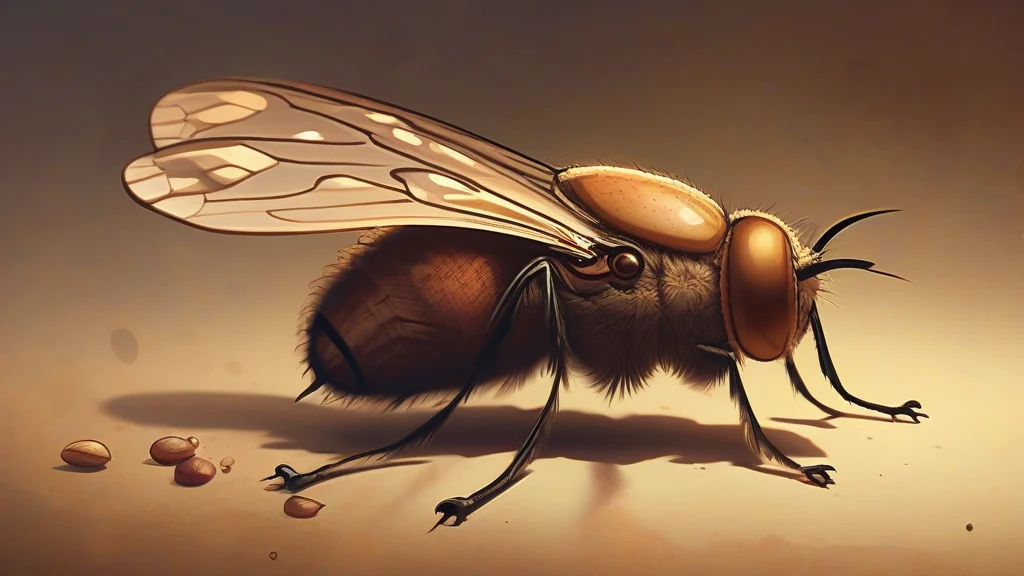
What does botfly mean?
A botfly is a parasitic fly belonging to the family Oestridae. Its adult form resembles a bee or wasp, but it is the larval stage that causes the familiar infestations in cattle, horses, sheep, and other mammals. Depending on the species, the larvae may develop beneath the skin, in the head, or in the digestive tract. Human botfly larvae are uncommon and are generally associated with tropical regions, where they can produce painful, boil-like swellings. In veterinary and medical writing, botfly may refer broadly to the fly, while botfly larva or bot is often used for the parasitic stage. The word is also familiar from descriptions of wildlife disease, particularly warble-fly infestations that damage the hides of cattle. Although the infestation can be medically serious, it is usually treatable once the larvae are identified and removed.
nounAny fly of the family Oestridae whose larvae develop as parasites in mammals. The term is especially used for species whose larvae inhabit the skin, head, or digestive tract of cattle, horses, sheep, and occasionally humans.
- A parasitic fly whose larvae develop inside or beneath the tissues of mammals.
"A botfly larva was removed from the painful swelling on the patient's arm."
"A botfly larva was removed from the painful swelling on the patient's arm."
"The veterinarian found botflies beneath the hides of several cattle."
The standard plural is botflies; bot flies is also used when the compound is written as two words.
"Botflies can seriously affect the health and hides of cattle."
A botfly can hitch a ride inside a mammal: its eggs hatch, and the larvae develop in tissue or the digestive tract.
Reviewed by Deb Chak, Editor. AI-assisted content curated by RJS Tech Solutions LLP.
Where does botfly come from?
Botfly is an English compound formed in the early 17th century from bot, an old word for a worm or larva, and fly. Bot comes from Old English botta, a word associated with a worm, grub, or larva; the modern word botch also shares this ancient root. The compound was applied to the adult fly whose larvae have a parasitic life cycle.
How botfly is actually used
The word is neutral but technical and is most familiar in veterinary, entomological, and medical contexts. In US English, the two-word form bot fly is also very common.
Easily confused with botfly
Botfly larvae develop as parasites in living mammals, whereas blowfly larvae normally develop in carrion or other decaying organic matter.