
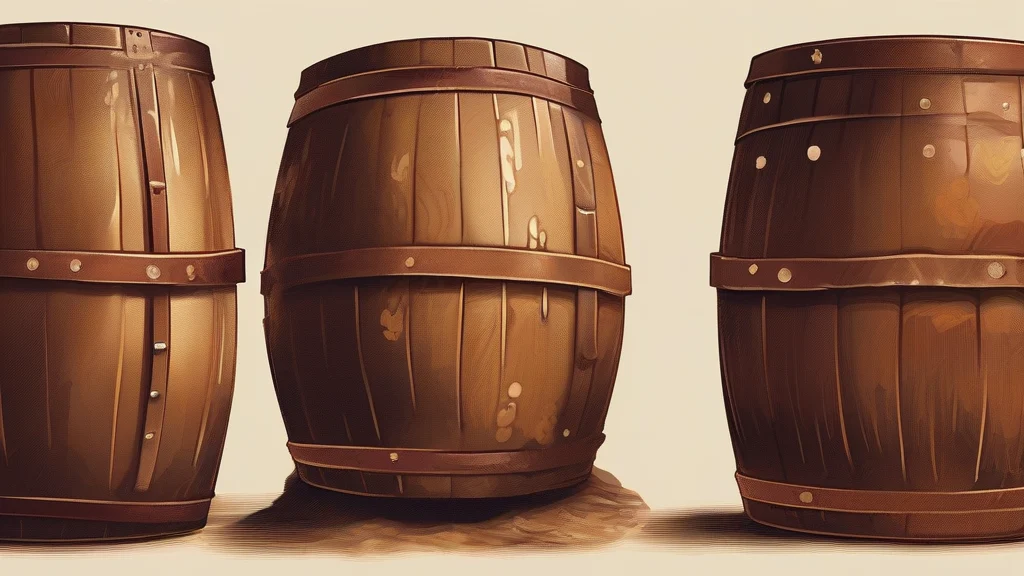
What does bouge mean?
Bouge is an archaic English noun denoting a cask or barrel — particularly one constructed of leather rather than wood — used in earlier centuries for storing wine, oil, and other liquids. By extension, the word could also refer to a bulge or swelling, describing something that puffs outward like a filled container. Derived through Old French from the Latin bulga, meaning a leather bag or sack, it belongs to a small family of words that includes budget, which originated as a diminutive form meaning a small pouch or purse. Today bouge survives only in historical writing, glossaries of obsolete vocabulary, and scholarly discussion of medieval commerce and craftsmanship. Its chief interest for modern readers lies in this etymology: the everyday word budget can be traced back to the same leather containers that once held provisions and coin. Though no longer current in speech or writing, bouge offers a vivid glimpse of how trade goods shaped the English lexicon, and how a word tied to wine casks evolved into a term for household finance.
nounAn archaic term for a cask or barrel, especially one made of leather; by extension, a bulge or swelling.
- A cask or barrel, especially one made of leather (archaic)
- A bulge or swelling of a surface (archaic)
"The cooper staved in the old bouge before fitting fresh staves."
"The merchant's cellar held a dozen bouges of Spanish wine."
"The sail bellied into a full bouge as the wind filled it."
The plural follows regular English formation and occurs only in historical sources.
"The warehouse was stacked with bouges of salted fish bound for export."
The humble 'bouge' — an archaic word for a leather cask — is the direct ancestor of your monthly 'budget', which literally began life as a little bag of money.
Reviewed by Deb Chak, Editor. AI-assisted content curated by RJS Tech Solutions LLP.
Etymology of bouge
Bouge entered Middle English from Old French, in which it denoted a leather bag or cask. The French term descends from Latin bulga, a word for a knapsack or leather sack that Latin borrowed from Gaulish. Its most famous descendant is budget, which arose from the Old French diminutive bougette, a little bag — the very pouch from which the modern sense of a financial plan developed.
Related word forms
How bouge is actually used
Bouge is archaic and appears almost exclusively in historical texts, dictionaries of older English, and discussions of medieval trade. It should not be used in contemporary writing except for deliberate period effect.
Easily confused with bouge
Budge is a common verb meaning to move slightly or shift position, whereas bouge is an archaic noun referring to a cask or barrel.
Rouge is a red cosmetic powder, while bouge is an obsolete word for a cask.