
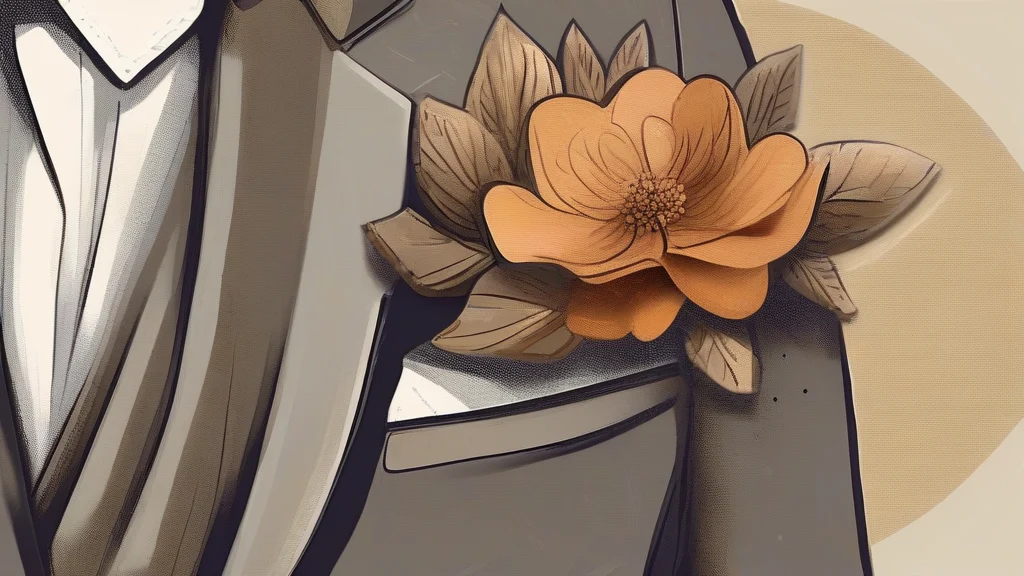
What does boutonniere mean?
A boutonniere is a single flower or small cluster of blooms worn on the lapel or in the buttonhole of a jacket, traditionally at formal occasions such as weddings, proms, dances, and funerals. Borrowed directly from French, where it literally means 'buttonhole', the word entered English in the nineteenth century alongside the fashion custom it names. Typically worn by men, a boutonniere often echoes the flowers in a bridal bouquet or matches a partner's corsage, making it a deliberate visual detail rather than mere decoration. Common choices include roses, carnations, and orchids. The word lends any sentence a note of elegance and ceremony; its anglicized variant spelling 'boutineer' is widespread but nonstandard, and in British English the simpler word 'buttonhole' frequently serves the same purpose. Knowing the term is useful for anyone navigating wedding planning, floristry, or formal dress conventions.
nounA single flower or small cluster of flowers worn in a buttonhole or pinned to the lapel of a jacket, typically at formal occasions such as weddings and proms.
- A single flower or small floral arrangement worn in a buttonhole or on the lapel of a jacket, especially at formal events such as weddings, proms, and funerals.
"The groom wore a white rose boutonniere to match the bride's bouquet."
"The florist pinned a spray of lavender onto each groomsman's boutonniere."
"He straightened his boutonniere nervously before stepping up to give the toast."
The plural is formed regularly by adding -s; no accent is used in standard English spelling.
"The florist prepared six boutonnieres for the wedding party."
A boutonniere is literally French for 'buttonhole' — the flower you wear was named after the hole it's stuck through.
Reviewed by Deb Chak, Editor. AI-assisted content curated by RJS Tech Solutions LLP.
Etymology of boutonniere
Boutonniere comes from French, where it means 'buttonhole', formed from 'bouton' ('button') plus the suffix '-ière'. The underlying notion is simply the hole through which a button passes — the natural spot on a jacket lapel for a decorative flower. English borrowed the word in the nineteenth century as the fashion for wearing flowers at formal occasions spread. It shares its root with the everyday English word 'button', which itself came into Middle English from Old French.
How boutonniere is actually used
The word carries a formal, ceremonial connotation and appears most often in wedding, prom, and funeral contexts. The anglicized spelling 'boutineer' is common but considered incorrect; 'boutonniere' without an accent is standard English usage. In British English, the plainer term 'buttonhole' is often preferred.
Easily confused with boutonniere
A corsage is a small arrangement of flowers worn by women, usually on the wrist or dress, while a boutonniere is a single flower worn by men on the lapel.