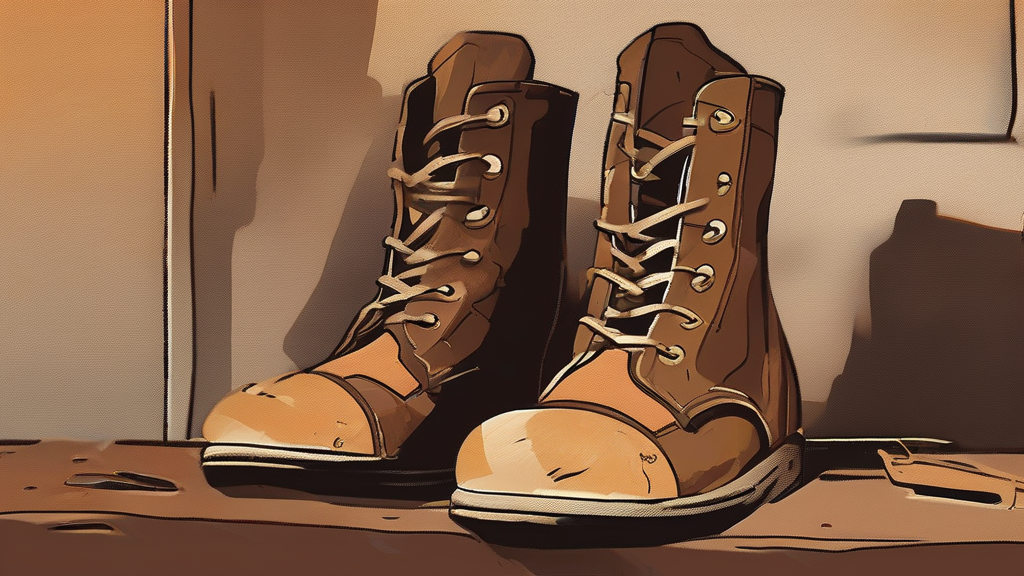
What does bovver mean?
"Bovver" is a piece of British slang meaning trouble, fuss, or a fight — essentially a phonetic rendering of "bother" as pronounced in Cockney speech, where the /ð/ sound becomes /v/. It rose to prominence in the 1960s and 1970s through its association with skinhead culture, most famously in the compound "bovver boots," the heavy lace-up work boots worn by skinheads and later by punk and Oi! subcultures. In everyday use it appears in phrases like "a bit of bovver," suggesting scuffling or disorder rather than serious conflict. The word is strongly informal and regionally marked as British; to an outsider it can look like a misspelling of "bother," but writers deliberately use it to evoke working-class London speech or a rough, streetwise register. It remains largely a period-flavoured term, encountered in journalism about football crowds, music subcultures, or nostalgia for that era.
Trouble or a fight; informal British slang for disorder or scuffling.
"There was some bovver at the game on Saturday."
Almost always used with the indefinite article in phrases like 'a bit of bovver'.
A deliberate phonetic spelling of 'bother' used in writing to represent Cockney or rough working-class pronunciation.
"'Can't be doing wiv all this bovver,' he grumbled."
Rarely pluralized; the word almost always appears uncountably or in fixed phrases like 'bovver boots'.
"All that bovver over nothing."
Bovver is what happens when Cockneys spell 'bother' exactly as they say it — and gave the world the 'bovver boot'.
Reviewed by Deb Chak, Editor. AI-assisted content curated by RJS Tech Solutions LLP.
Etymology of bovver
"Bovver" is an eye-dialect or phonetic spelling of "bother," reflecting the Cockney pronunciation in which the interdental fricative /ð/ becomes a labiodental /v/ — the same process behind pronunciations like "fink" for "think" (though with the opposite substitution). The word "bother" itself is of obscure origin, first attested in the early eighteenth century, possibly imitative in nature. "Bovver" gained cultural currency in late twentieth-century Britain through skinhead and punk subcultures.
Related word forms
How bovver is actually used
Strongly informal and distinctly British; carries working-class, sometimes thuggish connotations. Often used ironically or in nostalgic references to 1960s–70s skinhead culture.
Easily confused with bovver
'Bother' is the standard English verb/noun meaning to annoy or take trouble, while 'bovver' is a slang phonetic spelling of it, chiefly British and often connoting violence.